Diplomacy
Georgia Pledges to Double Rail and Port Capacity for Middle Corridor

September 22, 2026

4
Min
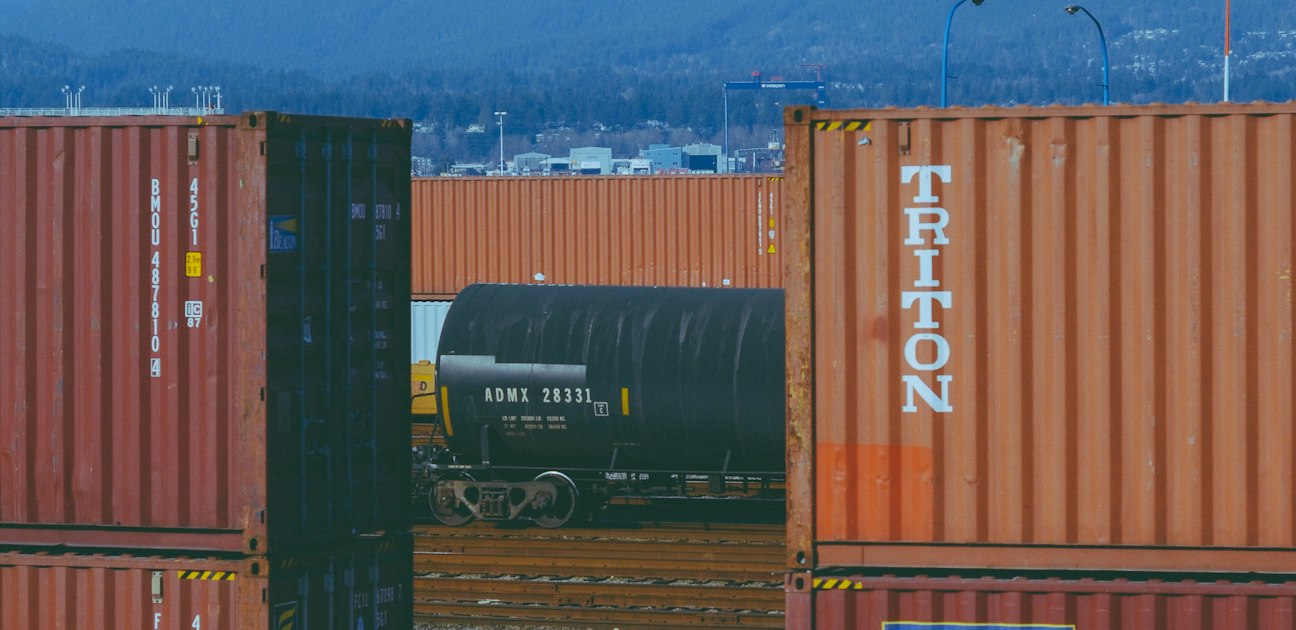
Georgia intends to double the capacity of its maritime and railway networks and triple the capacity of its airport infrastructure, Economy and Sustainable Development Minister Mariam Kvrivishvili said, setting out the country’s commitments as Middle Corridor volumes rise.
Speaking at the Global Sustainable Transport Forum in China, Kvrivishvili said transit rail freight through Georgia has increased by 14%. “Such growth requires us to prepare for the next stage of the corridor’s development,” she said, according to APA.
The minister framed China as the corridor’s central driver rather than one participant among many. “Georgia is ready to cooperate closely with China and other countries participating in the Middle Corridor to achieve concrete and tangible results along the route,” she said, adding that Beijing plays an important role in strengthening partnerships across Central Asia and the South Caucasus.
The positioning is consistent with recent investment data. China was the largest single foreign investor in Georgia in the first half of 2026, and Chinese contractors have been prominent in the country’s road and tunnel programme.
It also sits somewhat awkwardly alongside the European Commission’s announcement this week of a €12 billion Global Gateway package for the same corridor, explicitly framed in Brussels as a route diversification play. Tbilisi is, in effect, inviting capital from both directions for the same assets.
Doubling rail and maritime capacity is a substantial undertaking for an economy of Georgia’s size. The country’s deep-water ambitions rest largely on Anaklia, where a railway tender is due in October and the first vessel is not expected before 2029. Phase one of the landlord-model port has been costed at around $1.1 billion.
Georgian Railway’s existing corridor runs from the Azerbaijani border to the Black Sea ports of Poti and Batumi, and the Baku-Tbilisi-Kars line extends the route into Turkiye. Prime Minister Irakli Kobakhidze discussed the importance of that line with President Erdogan this week.
Airport capacity is the more unusual pledge. Tripling it implies terminal and runway works at Tbilisi, Kutaisi and Batumi, and is oriented more toward tourism and air cargo than to the container traffic that defines the Middle Corridor.
A 14% rise in transit rail freight is meaningful but should be read against the corridor’s persistent reliability problem. Freight moving from China to Georgia has at times taken around 45 days, well outside the window that would make the route competitive with maritime shipping on anything other than time-sensitive cargo.
Georgia’s own macroeconomic backdrop is supportive. Real GDP grew 7.9% in the first half of 2026, with TBC Capital holding its full-year forecast at 7.4%, while quarterly GDP reached $10.5 billion. Construction output, however, has fallen 7.7% over two years, a reminder that the infrastructure build has not yet begun at the scale the minister’s targets imply.
The commitments are directional rather than budgeted: Kvrivishvili did not attach a capital figure or completion date to the doubling and tripling targets. What the speech establishes is that Georgia is presenting itself as the corridor’s willing middle section, open to Chinese and European money alike, ahead of the investment decisions that will determine whether the route works.
Photo: Unsplash