Business
Georgia's Q2 GDP Hits $10.5bn as Real Growth Eases to 6.9%

September 20, 2026

3
Min

Georgia's economy grew 6.9% in real terms in the second quarter of 2026, with nominal output reaching 28.15 billion lari ($10.51 billion), according to preliminary estimates released by the National Statistics Office of Georgia on Friday 18 September.
In dollar terms the figure is up 12.7% year on year, from $9.33 billion in the second quarter of 2025, flattered by a firmer lari. Nominal GDP in lari rose from 25.58 billion a year earlier. The GDP deflator came in at 3.0%, down from 4.2% in the same quarter of 2025 — evidence that the headline expansion is being driven by volume rather than price.
The 6.9% real print is a step down from 7.4% in the second quarter of 2025. That still places Georgia among the faster-growing economies in the wider Black Sea and Caucasus region, and ahead of the 5.3% full-year 2026 pace the International Monetary Fund has projected.
The deceleration is mild and the composition is healthy. What has changed is the breadth: two significant sectors are now contracting outright.
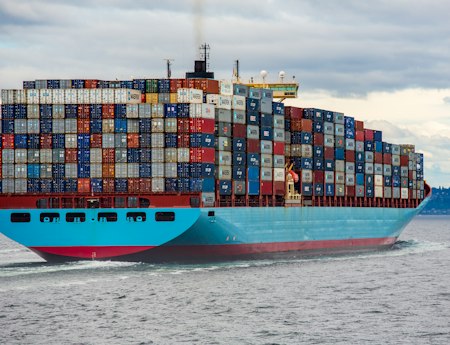
Transport and warehousing expanded 19.8% year on year, the fastest of any major sector — consistent with rising east-west freight volumes through Georgian territory. Arts, entertainment and recreation grew 17.4%, information and communications 16.6%, healthcare and social services 15.0%, wholesale and retail trade 8.0% and manufacturing 7.3%.
Against that, construction contracted 4.8% and agriculture, forestry and fishing fell 3.5%. Geostat identified those two as the principal drags on growth.
The construction number deserves attention from investors. It sits awkwardly beside a government infrastructure agenda that includes the Anaklia deep-sea port, railway modernisation and a Black Sea submarine cable, and suggests that public capital spending has not yet translated into activity on the ground.
By share of output in the quarter, trade remains the largest single sector at 14.9%, followed by real estate at 9.1%, manufacturing at 8.9%, information and communications at 7.6%, public administration and defence at 6.5%, construction at 6.5%, agriculture at 6.4% and education at 6.4%.
The information and communications share is the number to watch. At 7.6% of GDP and growing at 16.6%, the sector is now larger in the Georgian economy than agriculture, and is compounding at more than double the overall rate.
GDP per capita reached 7,141.9 lari for the quarter, roughly $2,667, up from 6,904.3 lari and $2,518 a year earlier.
The picture is of an economy still growing well above regional averages, with inflation pressure in the deflator easing and the services side — transport, logistics, communications and trade — doing the work. The weak spots are the traditional ones: a construction sector in outright decline and an agricultural sector shrinking for a second consecutive reading.
For the banking system, which the IMF has described as resilient with non-performing loans stable around 2.5% and return on equity near 22%, a 6.9% real expansion with a 3.0% deflator is a benign combination. For the government, the question raised by these figures is why a declared infrastructure push is not yet showing up in construction output, and whether the transport and logistics boom can hold if regional corridor bottlenecks persist.
Geostat's figures are preliminary and subject to revision.