Business
Yerevan Apartment Sales Nearly Double as Construction Drives Growth

September 22, 2026

4
Min
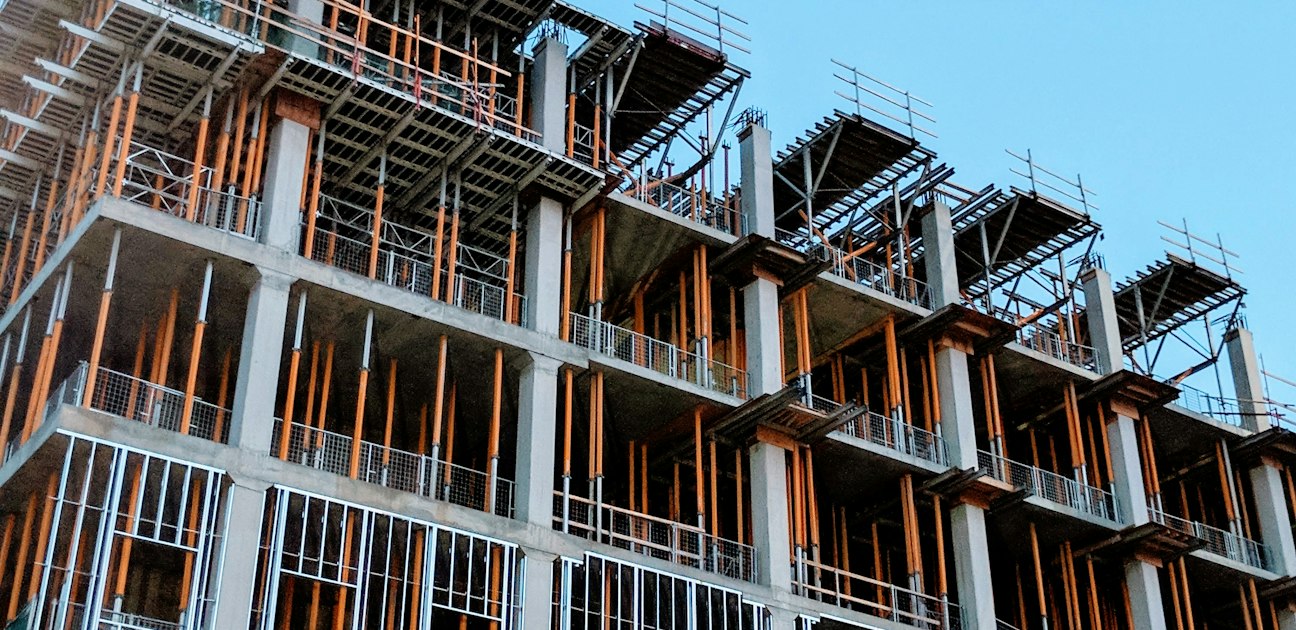
Apartment transactions in Yerevan nearly doubled in July and prices in the city centre rose 12.7% year on year, according to Central Bank of Armenia figures cited in the World Bank’s September monthly economic update, confirming that the Armenian capital’s property market has moved from recovery into acceleration.
The World Bank attributed the pickup to demand from a new influx of Russians and from the Armenian diaspora.
The property market is not an isolated phenomenon. Construction expanded 26.5% year on year in July, making it the single largest contributor to Armenian growth alongside non-trade services at 17%. Cumulative economic activity rose 7.7% in January-July.
That composition is unusual and worth pausing on. Industrial output grew only 3.1% over the same month, held back by a 24.5% contraction in electricity and energy following the planned maintenance shutdown of the Armenian Nuclear Power Plant. Armenia’s expansion is being carried by building things and serving people, not by making goods for export.
Business formation is following the same curve. Business registrations rose 29% year on year in July, driven by a 45.7% increase in limited liability company registrations.
The buyer base matters more than the transaction count. Migration from Russia, which began in 2022, has proved more persistent than many forecasters assumed, and tourist arrivals, mainly from Russia, grew 6% over January-July.
Net non-commercial money transfers rose 40% year on year in July, with Russian inflows up 37.3%. That is the funding channel behind a substantial share of Yerevan purchases, and it links the housing market directly to conditions inside the Russian economy and to the rouble, against which the dram depreciated 8.6% over the year.
Developers have read the demand signal. AVA Residences, with interiors by ELIE SAAB Maison, broke ground in Yerevan this month, one of several projects targeting the upper end of a market that historically had little premium inventory.
A housing market driven by inbound migration and foreign transfers carries a specific vulnerability: the demand can leave as quickly as it arrived. Should conditions in Russia change, or should Armenian residency and tax treatment shift, both the transfer inflows and the buyer pool would contract at the same time.
Monetary policy has already begun to lean against the cycle. The Central Bank raised its policy rate by 0.25 percentage points to 6.75% on 15 September, the first increase in more than three years, with Chairman Martin Galstyan attributing the decision primarily to increased domestic demand. The Lombard repo rate was set at 8.25%.
Bank balance sheets remain sound, with non-performing loans at 1.4% and a capital adequacy ratio of 20.4%, so there is no immediate credit-quality concern. The risk is to the growth rate rather than to financial stability.
For investors, the read is that Armenian construction is currently the region’s fastest-moving real economy sector, and also its most externally dependent. A 12.7% annual price rise in the centre of a capital city of roughly one million people is a strong number, but it is not the same thing as a structurally deeper market.
Photo: Unsplash