Global
EU Details 12 Billion Euro Middle Corridor Package to Triple Trade

September 22, 2026

4
Min
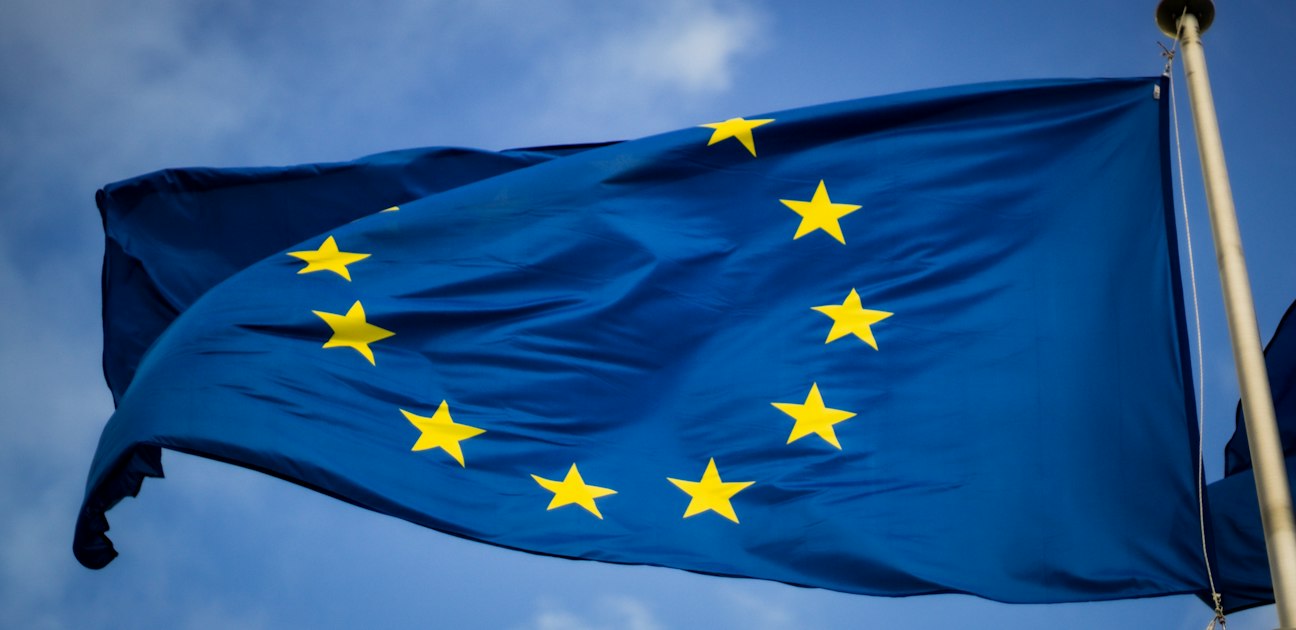
The European Commission has put detail behind the €12 billion figure Ursula von der Leyen attached to the Middle Corridor in her 2026 State of the Union address, confirming that the sum covers both public and private money and is intended to be mobilised jointly with partner countries, international financial institutions and companies.
“As President von der Leyen announced during SOTEU 2026, through Global Gateway, we aim to crowd in up to €12 billion in public and private investment,” a Commission spokesperson told Trend News Agency on 22 September. “The Connectivity agenda should result in over €12 billion of investments in the Corridor, together with the partner countries, IFIs and private sector.”
The wording is important. This is a crowding-in target, not a disbursement pledge, and the Commission has not published a breakdown between grants, concessional lending, guarantees and commercial capital.
The Commission set out three measurable goals for 2030: diversify routes, triple trade flows and cut freight transit times. The corridor it describes runs from Central Asia across the Caspian Sea into the South Caucasus, then to the European market via Turkiye and the Black Sea.
Von der Leyen framed the initiative in her State of the Union speech as a new international connectivity project, and said a Regional Connectivity Summit would be organised with the Prime Minister of Bulgaria. No date has been announced.
Beyond hard infrastructure, the Commission singled out regulatory cooperation and digital connectivity. “Expanding digital connectivity in line with the highest international standards is essential for the efficient functioning of the trade routes,” the spokesperson said, a nod to the paperwork and customs friction that has repeatedly been identified as the corridor’s binding constraint rather than track or berth capacity.
The Middle Corridor bypasses Russia and Iran, which is the source of both its political appeal in Brussels and its commercial difficulty. Volumes remain small relative to the northern rail route and to maritime shipping, and the Caspian crossing introduces a transhipment step that rail-only corridors avoid.
Capacity on the western Caspian shore is the acknowledged pinch point, with pressure falling on the ports of Azerbaijan, Kazakhstan and Turkmenistan. Operators from Kazakhstan, China, Azerbaijan, Georgia and Turkiye approved a 2026 work plan earlier this year focused on digitalising transit processes to improve transit time and transparency.
Maritime security has also become a live concern. Conflict affecting Caspian shipping during 2026 has underlined that physical security of the sea leg is a precondition for treating the route as a reliable alternative conduit.
For Azerbaijan and Georgia, the package is the clearest signal yet that EU money will follow EU rhetoric on the corridor. Georgia’s economy minister said this week that transit rail freight through the country is up 14% and that Tbilisi intends to double maritime and railway capacity.
The practical question is absorption. Tripling trade flows inside four years implies a build-out at both ends of the Caspian that no single government has yet financed, and the Commission’s own language leans heavily on private capital arriving alongside public funds. Until the Regional Connectivity Summit produces a project pipeline with named sponsors and financial close dates, the €12 billion remains an ambition rather than a committed programme.
What has changed is the framing: the corridor is now a named EU flagship with a headline number attached, which materially improves the odds that IFIs and European contractors engage.
Photo: Unsplash