Global
China-Georgia Freight Transit Blows Out to 45 Days on Corridor Delays

September 20, 2026

3
Min
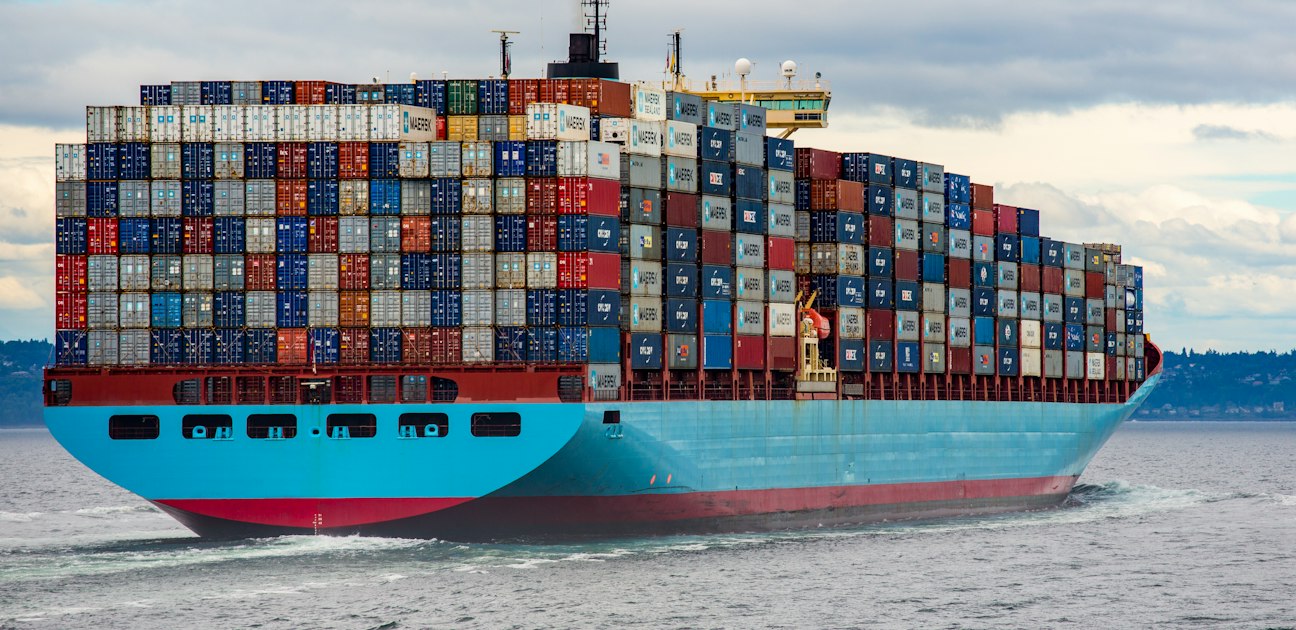
Cargo moving from China to Georgia now takes approximately 40 to 45 days, up from around 16 to 17 days previously, as surging demand for the Middle Corridor outstrips the capacity of the route's ports and railways, logistics operators say.
The closure of the Strait of Hormuz and heightened tensions in the Middle East have pushed freight onto the trans-Caspian route, with additional demand arriving from countries including India and the United Arab Emirates, according to Anna Kakabadze, Head of the Maritime and Railway Department at Georgian logistics firm SKYLOG.
Speaking on the Georgian programme Saqmis Kursi, Kakabadze said several countries along the corridor, including Azerbaijan and Kazakhstan, were not fully prepared for the volumes now arriving.
She identified two specific chokepoints. At the Port of Aktau in Kazakhstan, cargo volumes have reached two to three times the levels the connecting railway system had been handling routinely, creating significant congestion. On Azerbaijan's railway, container processing that previously took around two to three days before dispatch to Georgia has stretched to 10 to 14 days.
Preparations for the New Year shipping season are adding further volume, Kakabadze said.
The figures complicate an otherwise positive corridor narrative. Middle Corridor freight volumes rose 22% over January to August, with east-west transit up 55%, and Azerbaijan has been importing new locomotives from China in anticipation of higher transit flows. Trans-Caspian International Transport Route operators have spent two years marketing the corridor on the strength of its speed relative to the maritime route around the Cape of Good Hope.
A 40-to-45-day transit removes much of that advantage. The Middle Corridor's commercial case has rested on delivering containers from China to Europe in a window that beats deep-sea shipping; at current processing times, the route's competitive edge narrows to resilience and political routing rather than pure speed.
The constraint is not track or berth alone. It is the number of vessels able to cross the Caspian, the throughput of transhipment at Aktau and Alat, and the customs and documentation steps at each modal change. Azerbaijan has separately flagged plans to add roll-on/roll-off capacity on the Caspian, and Azerbaijan Railways has named securing consistent return cargo from Turkish and European manufacturing hubs as its priority for the remainder of 2026 — an empty-backhaul problem that raises the cost of every eastbound container.
Georgia sits at the western end of the bottleneck, and the delays land directly on its logistics sector. Georgian port cargo processing rose 33% to 5.36 million tonnes in the second quarter, and transport and warehousing was the fastest-growing part of the Georgian economy in the same period, expanding 19.8% year on year.
That growth is real, but it is being generated by volume arriving unevenly rather than by a smoothly functioning corridor. For Georgian forwarders, longer and less predictable transit means higher working-capital requirements, more demurrage exposure and harder conversations with shippers about delivery windows.
It also sharpens the case for the infrastructure Georgia has been promising. Tbilisi has set out a programme covering the Anaklia deep-sea port, railway modernisation and digitalised customs procedures, with the stated aim of cutting cargo transit times through Georgia by up to 30%. None of that addresses congestion at Aktau or on Azerbaijani rail, which is where the current delay is being generated.
The corridor's constraint, on these numbers, is not Georgian. It is everything upstream of Georgia.