Mining
Aliyev Orders Full Mining Value Chain in 2027-2030 Metals Programme

September 22, 2026

4
Min
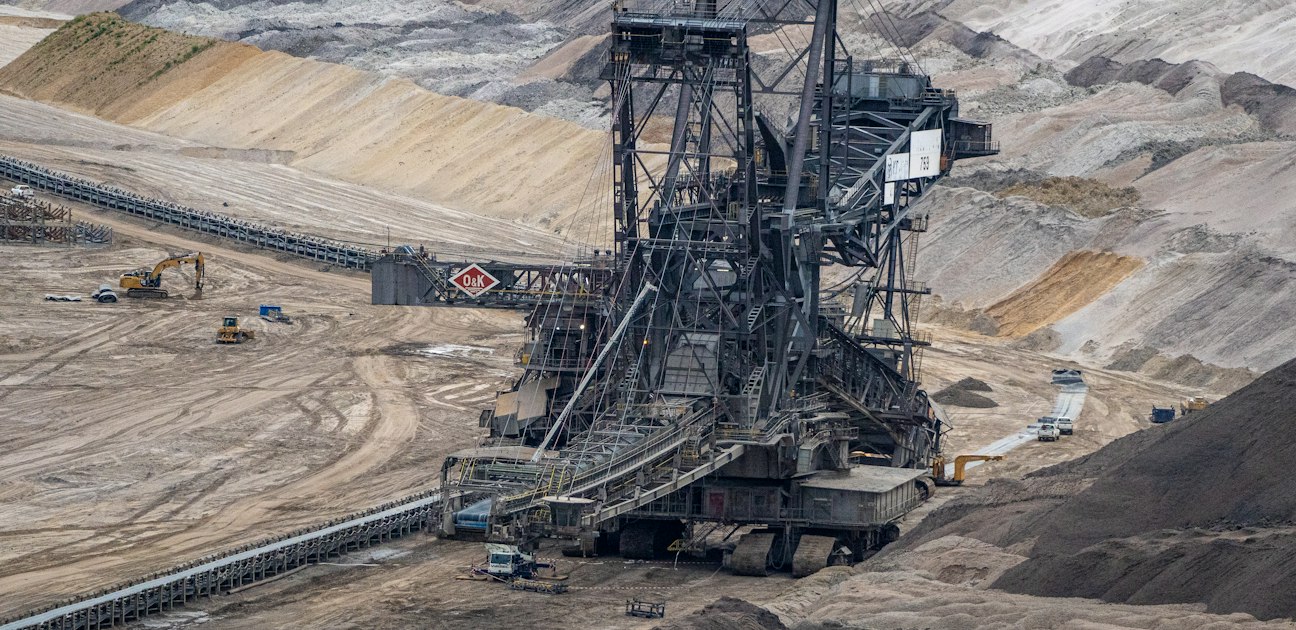
President Ilham Aliyev has instructed the Azerbaijani government to build a complete metals value chain inside the country, carrying ore from extraction through smelting to finished industrial products, under a four-year state programme now being finalised in Baku.
Chairing a meeting on 22 September devoted to the draft State Program on the Development of the Mining (Metal Ores) and Metallurgical Industry for 2027-2030, Aliyev said Azerbaijan should stop settling for the export of raw and semi-processed material. “A complete chain of the mining industry — all the way to the final product — must be created,” he told officials, according to APA.
The president also set out the factors he sees as holding the sector back, and tied the new programme to the government’s wider regional development agenda. “The new program reflects our agenda on the socio-economic development of regions,” he said, pointing to the country’s substantial reserve generating capacity as an input advantage for energy-intensive metallurgy.
The programme arrives as Azerbaijan’s metals output is being reshaped by two separate developments. State precious-metals company AzerGold completed its first drilling and blasting operation at the Soyudlu (Zod) deposit in the Kalbajar district, opening up what is regarded as the largest gold deposit in the Caucasus. The company expects roughly 700 direct and indirect jobs across the 2026-2029 construction and initial production phase.
At the same time, London-listed Anglo Asian Mining has pivoted decisively toward copper. The company reported on 21 September that copper has become its primary product in Azerbaijan, with first-half copper output up more than sevenfold year on year and silver production up almost 49%. Total revenues more than tripled in the first half of 2026. The producer simultaneously cut its 2026 gold guidance to 26,000-30,000 ounces from 28,000-33,000, while guiding to 20,000-25,000 tonnes of copper.
The shift from gold toward copper matters for the state programme’s logic. Copper is a feedstock for wire, cable and electrical equipment — industries that can plausibly be built domestically. Gold is overwhelmingly exported as bullion or concentrate and supports far less downstream activity. Azerbaijan’s annual copper production stands at about 5,300 tonnes and gold production at roughly 3,124 kilograms, figures that are modest by global standards but that the government hopes to convert into higher-value manufacturing.
Baku has also been recruiting foreign capital and technical partners. AzerGold agreed this year to jointly evaluate and explore mineral potential across the Nakhchivan Autonomous Republic with Terra Mining, a subsidiary of Abu Dhabi’s International Resources Holding.
For investors, the programme is a signal rather than a commitment. No capital envelope, project list or fiscal incentives were published alongside the 22 September meeting, and the document still has to be formally adopted before it takes effect in 2027. What the meeting establishes is direction: Azerbaijan is treating metals as the next diversification lever after gas, at a moment when the 2027 draft budget already assumes the non-oil sector will supply 60.5% of state revenues.
The practical test will be whether downstream capacity follows. Smelters and fabrication plants require reliable baseload power, long-term offtake and skilled labour, none of which can be legislated into existence inside a four-year window. Detail on financing will determine how much of the ambition converts into plant.
Photo: Unsplash