Business
Uzbekistan Bets $1.6bn on Nine Logistics Hubs to Reach 80m Tonnes

November 29, 2026

4
Min
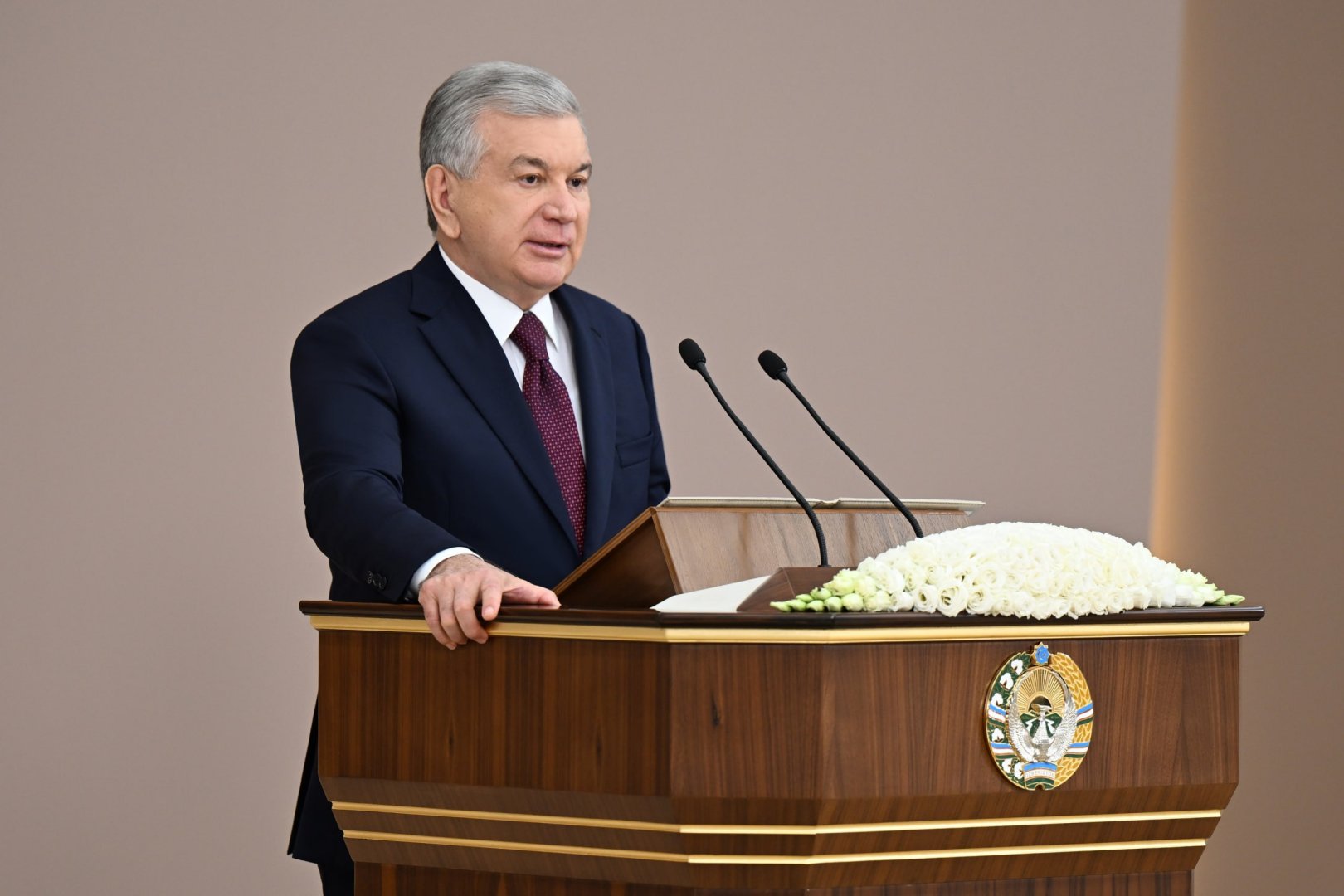
Uzbekistan wants to raise its logistics capacity to 80 million tonnes over the next decade and attract $1.6 billion to build nine large logistics centres, according to a statement by presidential press secretary Sherzod Asadov after a meeting chaired by President Shavkat Mirziyoyev in Tashkent on 27 November.
The plan names Khanabad and the Olot, Termez, Yangiyul and Ohangaron districts as future specialised transport and logistics hubs. Mirziyoyev said modern logistics centres are exempt from land and property taxes, and told officials and regional governors to use those incentives to bring in investors.
Spread across nine centres, $1.6 billion works out at roughly $178 million each. That is the scale of a serious rail-connected dry port or bonded warehouse park, not a truck stop. It also tells investors what the state expects: private capital to carry most of the build, with tax exemptions doing the work that direct subsidy does elsewhere.
The geography explains the logic. Olot sits on the Turkmen border on the route west towards the Caspian; Termez is Uzbekistan's gateway to Afghanistan and the planned trans-Afghan rail line; Yangiyul and Ohangaron serve the Tashkent industrial belt and the Fergana Valley. A landlocked country that wants to trade in volume needs consolidation points where cargo is sorted, cleared and switched between rail and road before it reaches a border. Without them, every crossing becomes a bottleneck.
The Middle Corridor only works for Central Asian shippers if cargo can be gathered inland and moved to the Caspian in full trains. Kazakhstan already reports the results of that approach: it ran 522 container trains on the Trans-Caspian route in the first ten months of 2026, up 79% on a year earlier, as CBJ reported. Uzbekistan's hubs are an attempt to plug into the same flow from the south and east, alongside the reopened Gisht Kuprik crossing with Kazakhstan and the government's separate push for private money in toll roads.
The same meeting set out an aviation programme. Uzbekistan says it has modernised 11 international airports and restored seven more, taking the total to 18. Airports in Urgench, Samarkand, Bukhara and Namangan have been handed to private investors under trust-management arrangements. Passenger traffic is expected to reach 17 million this year, with a target of 25 million in the coming years.
A new international airport is planned on a 1,300-hectare site with companies from Saudi Arabia, Japan and South Korea, next to a $5 billion Aerocity on 800 hectares that is meant to include logistics and e-commerce centres, hotels and housing. Officials have until 1 July 2027 to finish the master plan and present it to investors.
Tax exemptions attract developers, not cargo. Logistics parks earn money from throughput, and throughput depends on rail capacity, border processing times and freight rates on legs Uzbekistan does not control, including Turkmen and Kazakh rail and Caspian shipping. Nine hubs built at once also risk competing with each other for the same flows. And an 80-million-tonne target over a decade needs rolling stock and wagons as much as warehouses.
The statement did not give Uzbekistan's current logistics capacity, so the scale of the increase to 80 million tonnes cannot be measured. It also did not name investors, a timeline for each hub or how the $1.6 billion splits between state and private money.
The first named investor or operator for any of the nine hubs, and whether Olot or Termez is prioritised. Either would show which direction, west to the Caspian or south to Afghanistan, Tashkent is betting on first.
Photo: Press service of the President of Uzbekistan, via Trend