Energy
Azerbaijan's Wind and Solar Wait on a Chinese Grid Study

November 29, 2026

4
Min
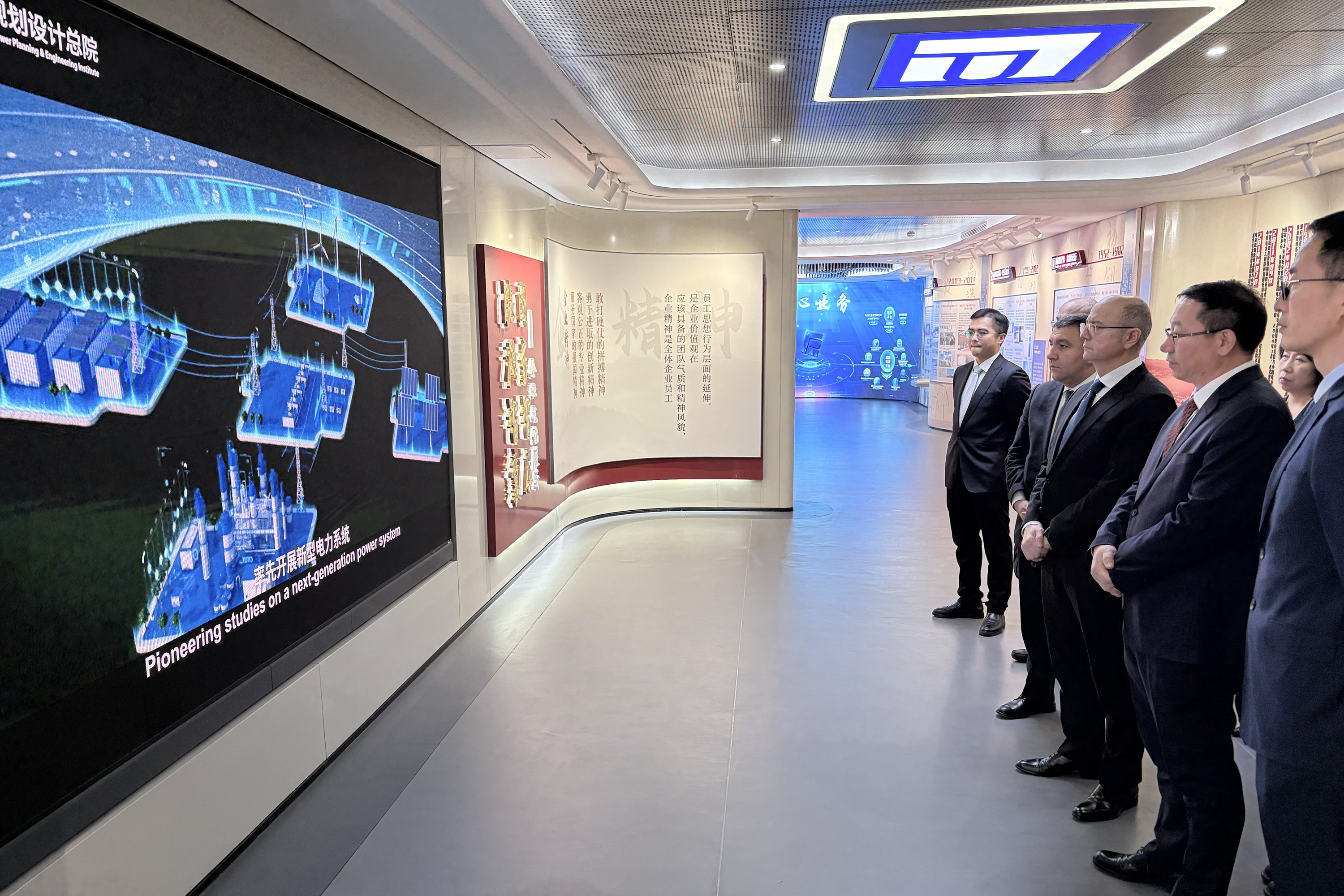
The document that will decide how fast Azerbaijan can add wind and solar is not a power purchase agreement. It is a grid study, and it is almost finished. Energy Minister Parviz Shahbazov met Zhou Yi, President of China's Electric Power Planning and Engineering Institute (EPPEI), in Beijing on 27 November to review progress on the study of Azerbaijan's electricity transmission network. The final report is "expected to be submitted shortly", according to the Ministry of Energy.
The study is being carried out under a 2025 agreement between the ministry and EPPEI. Its stated purpose is to integrate new solar and wind capacity into the grid and to make the network more resilient.
Azerbaijan's first renewable project built with Chinese investment is a 100 MW solar plant, now in operation. On paper, the pipeline behind it is twenty times larger. In April 2025 the ministry, SOCAR Green, China Datang Overseas Investment and PowerChina Resources signed a memorandum on a 2 GW offshore wind project in the Caspian, AzerNews reported. Last week in Qingdao the minister pressed Chinese groups on 160 MW of solar at Hajigabul and a 200 MW Caspian wind pilot. On 27 November the Cabinet designated 8.8 hectares in Garadagh for a 70 MW wind plant, Trend reported.
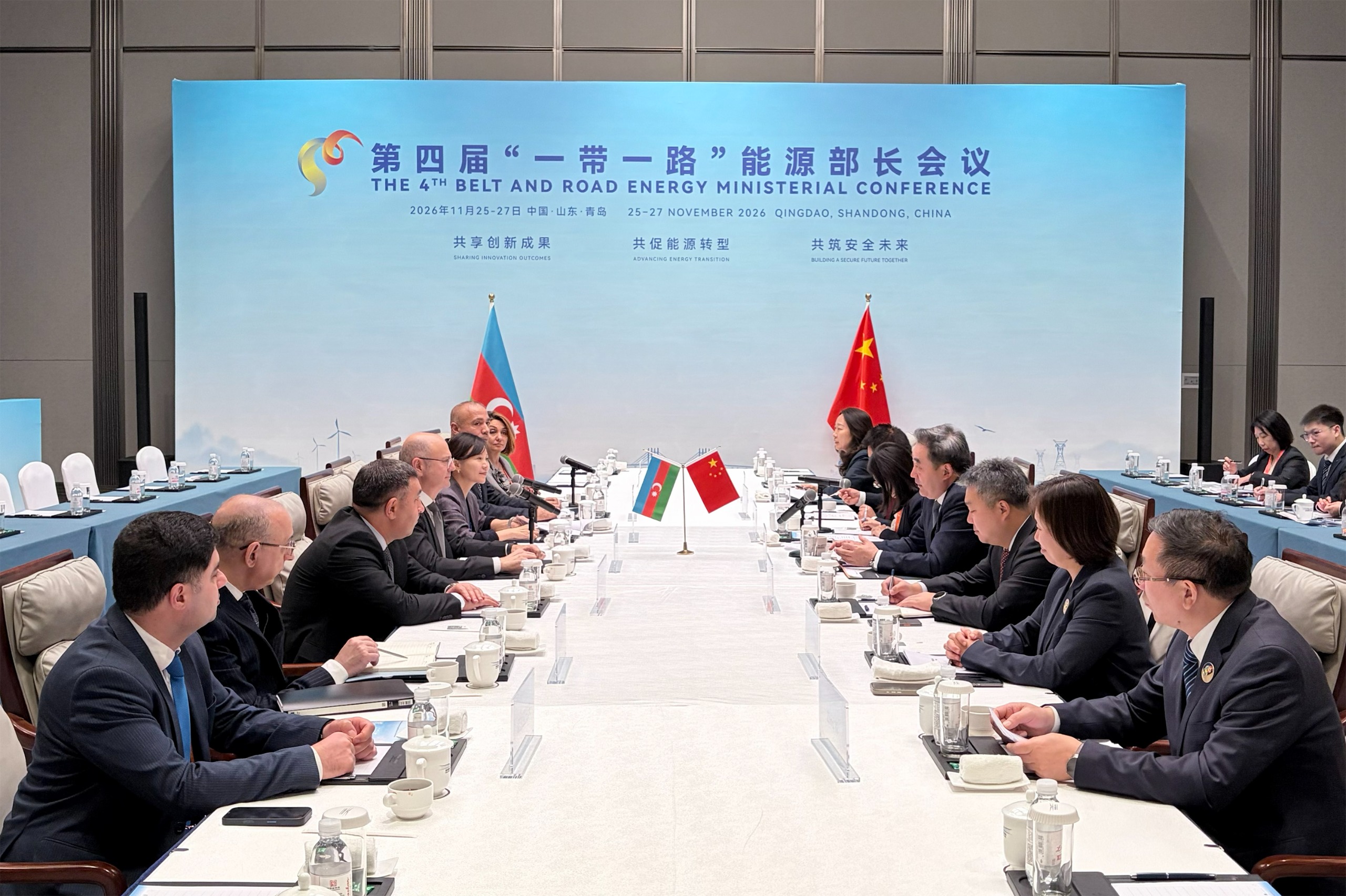
Moving from 100 MW to gigawatts is not mainly a question of finding investors. Chinese partners have repeatedly said they will build and finance. Wang Hongzhi, Administrator of China's National Energy Administration, told Shahbazov on 26 November that he supports Chinese companies acting as contractors and investors in Azerbaijan's renewables, the ministry said. The real constraint is whether the network can absorb the power.
Wind and solar output rises and falls with the weather. A transmission system built around steady gas-fired plants has to be re-planned before it can take large variable inputs: new substations, reinforced lines, reserve capacity and the controls to balance them. Without that work, new plants get curtailed and their revenue falls, which in turn makes them harder to finance.
That is why the EPPEI study sits upstream of every generation deal. Its findings will indicate where new plants can connect, how much they can export to the grid at each node, and what reinforcement Azerbaijan must pay for first. The same applies to the export ambition. The Caspian–Black Sea–Europe green energy corridor targets a final investment decision in 2029. It cannot carry power that the domestic grid cannot collect.
Both meetings in Beijing also pointed the same way. The ministry said it would expand its cooperation with EPPEI on grid planning and design. It also invited Chinese companies into green corridors linking Central Asia, the South Caucasus, Türkiye and Europe.
Developers bidding for Azerbaijan's renewable zones should treat the study's connection limits as the real ceiling on project size. The Garadagh decision is a useful test: the ministry must now select a producer for the site, and a construction permit is due within the legal window of up to two years.
The ministry has not published the study's findings, its cost, or a submission date beyond "shortly". We could not confirm how much new variable capacity the current network can take. We also could not confirm whether the 2 GW offshore memorandum has moved beyond feasibility work. See more coverage on our Azerbaijan hub.
If the final EPPEI report is submitted by the end of the first quarter of 2027, and the ministry follows it with a named grid-reinforcement programme, the gigawatt pipeline is real. If the study stays unpublished and the Garadagh producer selection slips past mid-2027, the 20-to-1 gap between built and planned capacity will hold.
Photo: Ministry of Energy of Azerbaijan