Business
Gisht Kuprik Reopens After 658 Days: The 50,000 That Matters

November 24, 2026

3
Min
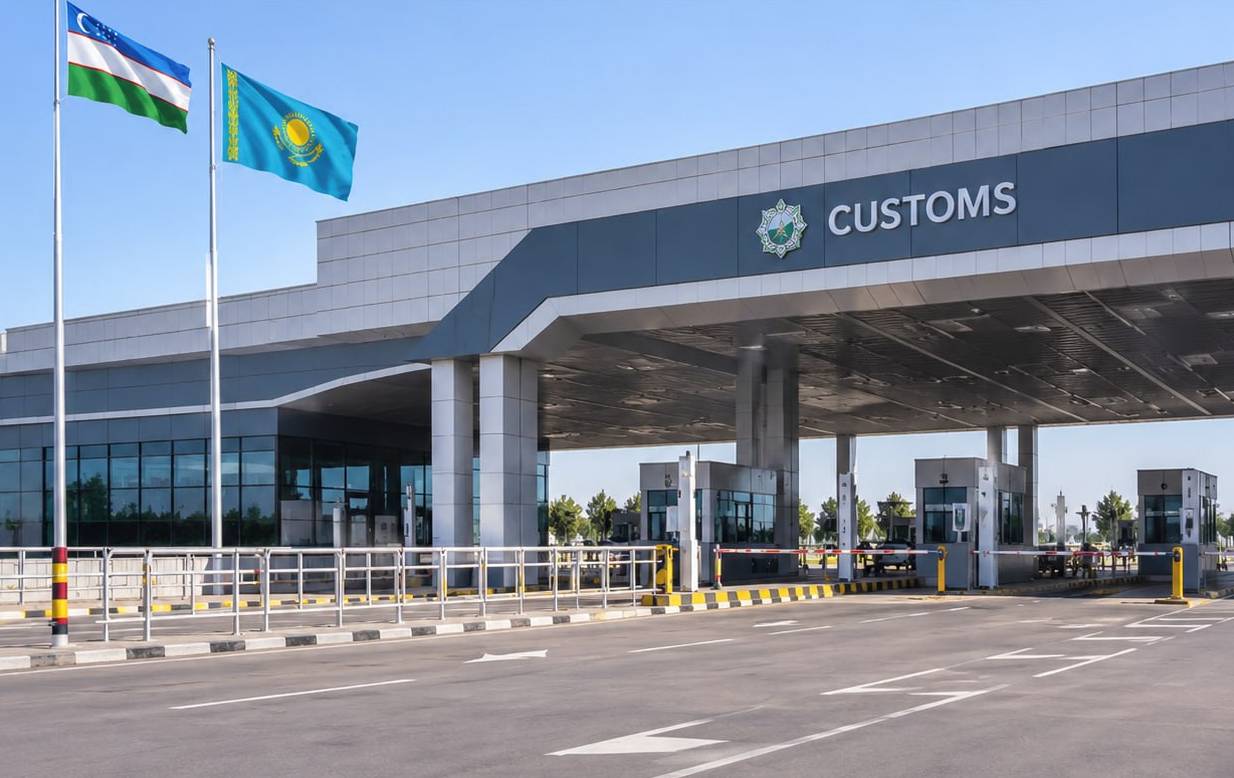
The Gisht Kuprik crossing between Uzbekistan and Kazakhstan reopens at 4 p.m. on 25 November after 658 days of reconstruction, five times longer than the four months originally planned. The headline capacity is 70,000 people a day. The figure that will decide queue times is lower: 50,000, the Uzbek side's own limit.
Uzbekistan's Customs Committee said passenger traffic through the renovated checkpoint, also known as Chernyaevka, would begin after an opening ceremony and handover attended by delegations from both countries, UzDaily reported. The crossing sits in the Tashkent region and pairs with Kazakhstan's Zhibek Zholy post in the Turkistan region, on the main road between Tashkent and Shymkent.
The rebuilt Uzbek post covers nine hectares. Across the line, two passenger terminals of 10,000 square metres each have been built on the 2.7-hectare Zhibek Zholy site. On the Uzbek side there are 16 lanes for cars with "green" and "red" customs channels and a Z-portal scanner, according to the state newspaper Yangi O'zbekiston.
Reports of the crossing's capacity differ, and the difference matters. UzDaily and Trend describe the two posts together as able to handle up to 70,000 people a day, rising to 100,000 at peak, against roughly 30,000 before. Yangi O'zbekiston gives separate figures: up to 50,000 people and 1,500 cars a day on the Uzbek side, and up to 70,000 people and 2,000 cars on the Kazakh side.
A border crossing is a pair of gates in series. Whatever the Kazakh terminals can process, travellers leaving Uzbekistan pass the Uzbek post first, so the practical daily ceiling in that direction is closer to 50,000 than 70,000. That is still a large step up from the old 30,000, but it is the number to hold officials to.
Kazakhstan and Uzbekistan are each other's most important regional partners. Bilateral trade rose 28.6% to $4.3bn in the first nine months of 2026, as CBJ reported. Much of the small-scale trade between Tashkent and Shymkent moves with people: traders, drivers and service workers crossing daily. For nearly two years that traffic was pushed onto other posts.
The delay also tests the region's infrastructure promises. Kazakhstan has said customs checkpoints on its international highways will be fully reconstructed by 2027. A four-month job that took 21 months is a useful reference point when reading those timetables, including the road and rail projects in Kazakhstan's push toward the Caspian. Our Middle Corridor hub follows the wider network.
The crossing's location helps explain why it was missed. Gisht Kuprik sits on the main road between Tashkent and Shymkent, Kazakhstan's third-largest city. When it closed in February 2025, traffic shifted to other posts on the Tashkent region border, lengthening trips for commuters and small traders who move goods in cars and minibuses rather than trucks.
New buildings do not guarantee throughput. Staffing, IT systems and the coordination of two customs services decide how many people actually clear in an hour. If the Uzbek side runs below its design capacity, queues will reappear on the first holiday weekend. Freight is not the focus of this crossing, so it does little to relieve truck congestion at other posts.
We could not reconcile the joint 70,000 figure with the separate side-by-side capacities, or confirm whether the 30,000 baseline refers to one side or both. Neither government has published the cost of the reconstruction or the reason for the delay.
Daily crossing numbers in December. If either customs service reports more than 50,000 people a day leaving Uzbekistan through Gisht Kuprik, the higher capacity is real. CBJ will report the first published figures.
Sources: UzDaily; Yangi O'zbekiston (yuz.uz); Trend; The Astana Times.
Photo: Yangi O'zbekiston / yuz.uz