Business
Georgia's Transit Corridor Handles 286,000 Trucks as Digital Permits Expand

August 27, 2026

4
Min
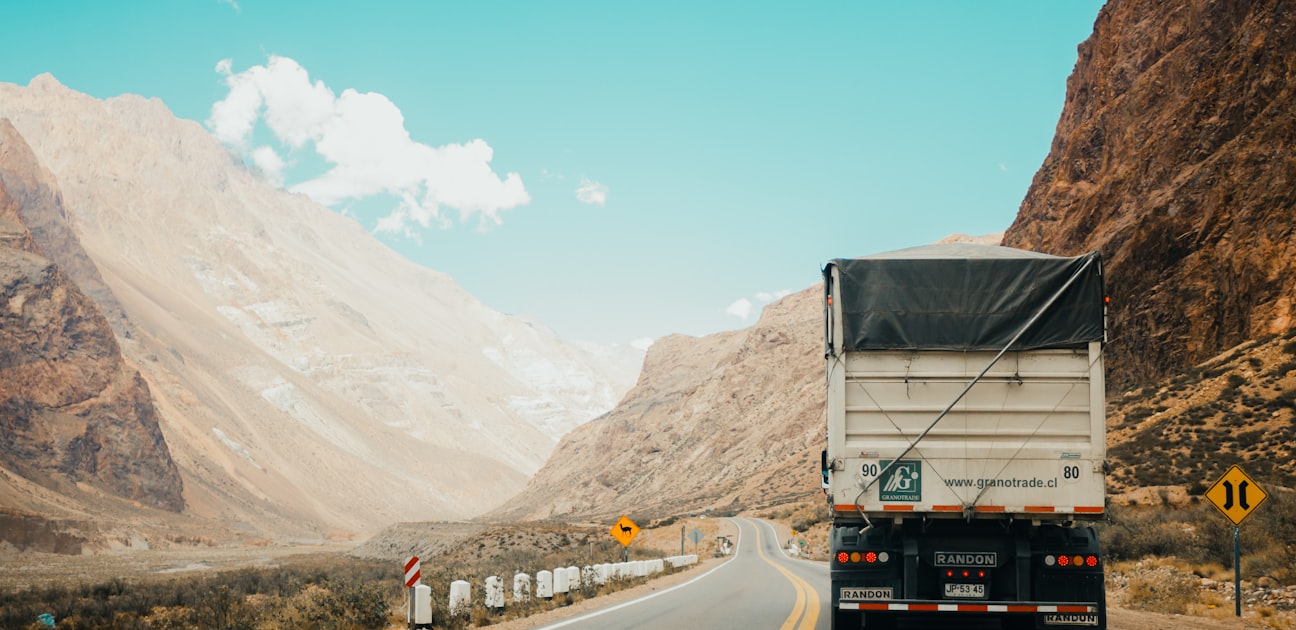
Georgia's role as the road bridge of the Middle Corridor keeps strengthening. Around 286,000 trucks have passed through the country's transport corridor since the beginning of the year, roughly 9,200 more than during the same period in 2025, according to figures reported on August 24 by JAMnews.
Freight transport has generated 100.2 million lari (about $40 million) in budget revenue so far this year, up 3.2 million lari (about $1.5 million) year-on-year.
Alongside the volume growth, Georgia and Uzbekistan have launched a digital permit system for international road freight, allowing carriers to obtain and use transit permits entirely electronically. Georgia already operates similar electronic systems with Azerbaijan, Türkiye and Kazakhstan, and the Land Transport Agency says the new mechanism will cut administrative barriers and speed the movement of goods along the Middle Corridor.
The digitalisation push mirrors the route-wide agenda: members of the Trans-Caspian International Transport Route — including Kazakhstan, China, Azerbaijan, Georgia and Türkiye — approved a 2026 work plan earlier this year focused on digitalising transport processes to improve transit times and transparency.
The trucking data adds a road-freight dimension to a corridor story usually told through rail and ports. Georgia's economy grew 7.9 percent in the first half of 2026, and transit services are one of the visible engines: the government has linked rising corridor volumes to customs revenue growth and to investment cases such as the Anaklia deep-sea port, where land expropriation for connecting road and rail infrastructure was approved this week in three villages of Zugdidi municipality.
Sustaining the growth is not guaranteed. Corridor analysts caution that road freight competes with subsidised rail alternatives and that border throughput, rather than highway capacity, remains the binding constraint. For now, though, the direction of travel is clear: more trucks, more revenue, and progressively less paper at the border.
Photo: Unsplash