Energy
Georgia to Add 300MW of Renewables as Energy Lending Hits GEL 3.18bn


4
Min
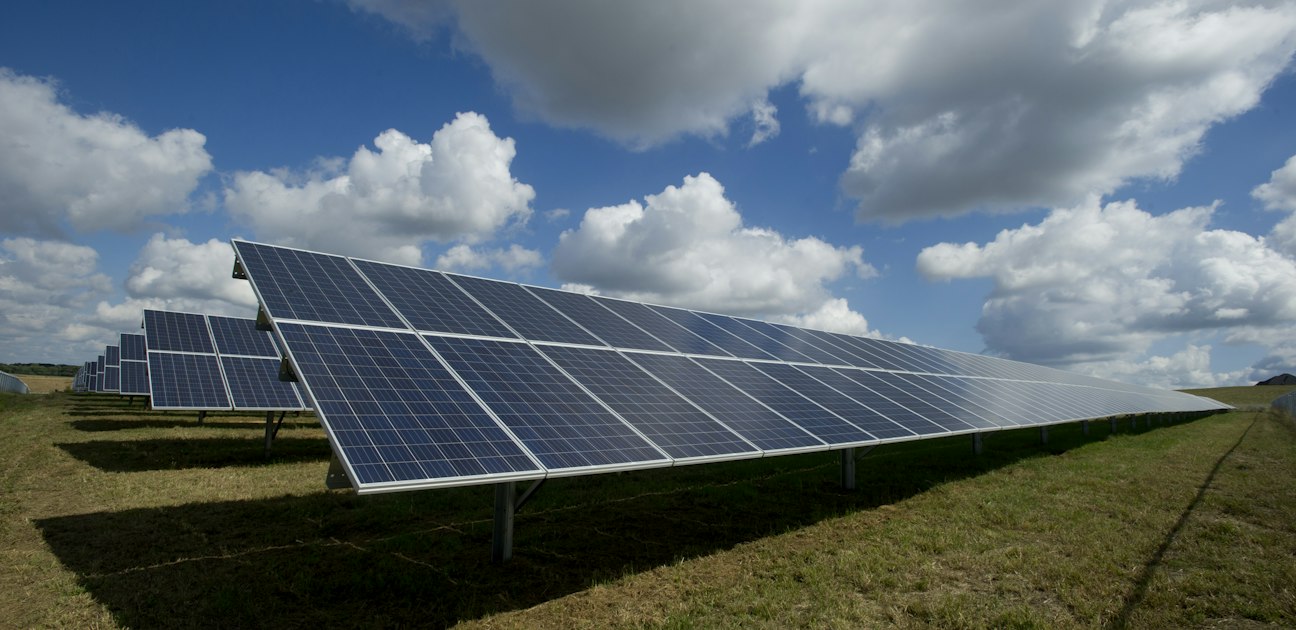
Georgia will add more than 300 megawatts of new renewable capacity in 2026, Economy Minister Mariam Kvrivishvili said this week, as bank lending to the energy sector reached GEL 3.18 billion — up 30% year on year and now ahead of tourism.
"This year alone, more than 300 MW of new renewable capacity will be added to Georgia's energy system. This momentum is continuing," Kvrivishvili said at an Energy Workers' Day event, in remarks reported by BM.ge on 17 September.
Three hydropower plants and one wind project have already been completed in 2026. One further hydropower plant, two wind projects and three solar projects are due before year-end.
The 2027 pipeline looks different in character: 12 projects with combined capacity of more than 70 MW, backed by around $100 million of investment. That implies roughly $1.4 million per megawatt and a shift toward many small plants rather than a few large ones.
Procurement has been completed, with Asian Development Bank support, for a 250 MW energy storage battery system. Construction begins in 2026 and completion is scheduled for 2029.
That asset matters more than its headline capacity suggests. Storage is the enabling technology for absorbing intermittent wind and solar, and its 2029 delivery date effectively sets the ceiling on how much variable generation Georgia's grid can integrate before the end of the decade.
The hardest number in the package is the credit data. Bank lending to the energy sector exceeded GEL 3.18 billion as of July 2026, up GEL 731 million or 30% year on year, Kvrivishvili said. Energy now ranks fifth among industries by lending volume, having overtaken tourism.
Asset quality is the striking part: overdue loans in the energy portfolio total just GEL 0.8 million, or 0.03%, against 1.94% across business lending as a whole.
"Energy is not only one of the most important sectors of Georgia's economy. It is independence, security and economic strength," the minister said.
These are ministerial figures rather than independently audited data, drawing on National Bank of Georgia banking statistics.
Khudoni, Namakhvani and Nenskra remain unbuilt. Tamaz Akhvlediani, Director of Project Management at the Georgian Energy Development Fund, told BM.ge on 18 September: "All three projects are viable, but everyone knows there were major social problems in relations with the population. Work is currently underway to raise awareness and provide people with more objective information."
That framing — technically viable, socially blocked — signals the state is re-litigating the projects through public communication rather than new contracts. Namakhvani remains politically live.
Kvrivishvili also pointed to regional cooperation. "Georgia is working on a large-scale green corridor project and is strengthening cooperation with Azerbaijan, Turkiye, Bulgaria, and Romania in this process," she told APA on 17 September.
She added that months of negotiations with Baku produced an agreement this year on full operation of the Baku-Supsa oil pipeline, which "brings economic benefits and also serves a strategic function."
Context for the build-out: Georgia's economy grew 6.9% year on year in the second quarter of 2026, with transport and storage the second fastest-growing sector at 19.8%.