Business
Georgia's Exports Jump 22.1% to $5.42bn as Trade Gap Widens to $7.08bn

September 22, 2026

4
Min
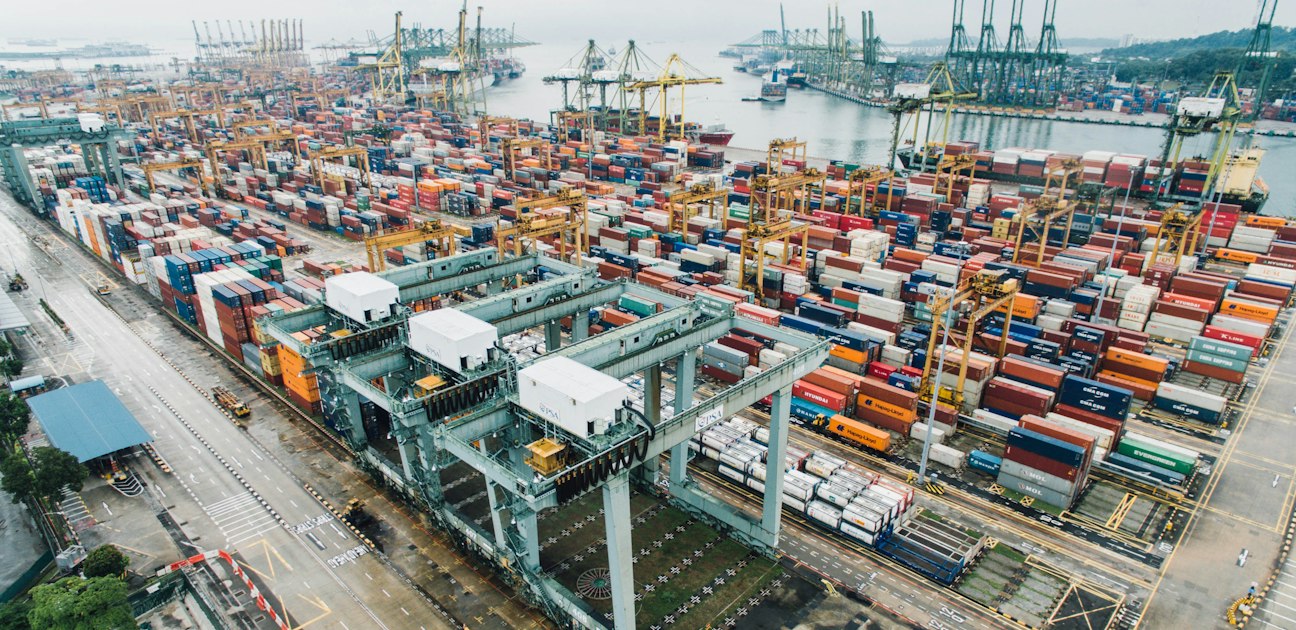
Georgian merchandise exports rose 22.1% year on year to $5.422 billion in the first eight months of 2026, according to figures published by the National Statistics Office of Georgia, while imports grew only 3.4% to $12.504 billion.
Total external trade turnover reached $17.927 billion for the period. The negative trade balance stood at $7.082 billion, equivalent to 39.5% of total turnover.
The headline story is the gap between the two growth rates. Georgian exports have historically tracked imports closely, with both driven by the same cycle of domestic demand and re-export activity. An export line growing at more than six times the pace of imports is unusual and, if sustained, changes the arithmetic of the current account.
It has not yet closed the deficit. A $7.08 billion shortfall over eight months remains large relative to an economy whose nominal GDP reached GEL 28.147 billion in the second quarter alone. But the ratio is moving in the right direction: a deficit worth 39.5% of turnover is narrower than the structural position Georgia has run for most of the past decade.
The three leading destinations were Kyrgyzstan at $577.6 million, China at $543.7 million and Russia at $500.7 million. That ordering is itself notable. Kyrgyzstan ahead of both China and Russia points to re-export flows through Central Asia rather than to a surge in Georgian-origin manufacturing.
Analysts at TBC Capital have characterised recent export strength as commodity-led, with a moderate pass-through to the real economy. The distinction matters for anyone modelling Georgian growth: commodity re-export generates trade statistics and some margin, but far less domestic value added, employment and tax revenue than an equivalent rise in locally produced goods.
Separate Geostat data showed Georgia's producer price index rising 5.8% year on year in August, indicating that input costs are still climbing faster than the headline consumer measure. Combined with a lari that has strengthened roughly 4.9% against the dollar over twelve months, that squeezes exporter margins from both directions — higher production costs at home, weaker translated receipts abroad.
The currency has been steady in the near term, with the dollar-lari rate unchanged at 2.5990 on 18 September.
Three questions follow from this release. Whether the export surge holds once the commodity cycle turns. Whether the Kyrgyz channel reflects durable trade routing or a temporary sanctions-adjacent flow that could reverse. And whether import growth of 3.4% signals genuinely cooling domestic demand — which would be consistent with forecasts of growth moderating toward 5.0% — or simply a base effect after several very strong years.
Georgia's real GDP grew 6.9% year on year in the second quarter, so the domestic-demand slowdown has not yet shown up in the output data.