Diplomacy
Georgia and China Upgrade Ties to 'Comprehensive Strategic Partnership'

June 28, 2026

4
Min

Georgia and China have elevated their relationship to a "comprehensive strategic partnership," the highest tier in Beijing's diplomatic hierarchy, in a move that underscores Tbilisi's deepening eastward tilt even as its ties with Western capitals fray.
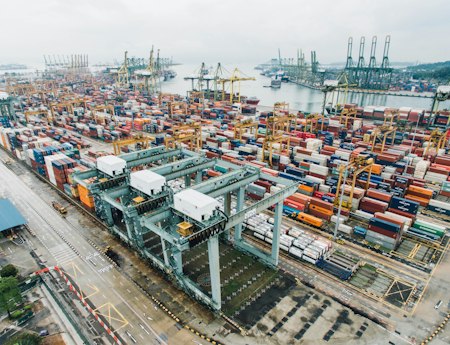
Photo: Unsplash
Prime Minister Irakli Kobakhidze announced the upgrade on 9 June, and it was formalised through congratulatory messages between Chinese President Xi Jinping and Georgian President Mikheil Kavelashvili marking the 34th anniversary of diplomatic relations, according to Civil Georgia. The two countries first established a strategic partnership in 2023; the new label marks the next rung up.
The economic case is striking. Bilateral trade turnover rose 17% in 2024 and 21% in 2025, then jumped 45% between January and April 2026, according to Georgian officials. Tbilisi points to visa-free travel, direct flights and expanding air links as concrete dividends, alongside a free-trade agreement in force since 2018 and a Chinese-led consortium shortlisted to build the long-stalled Anaklia deep-sea port on the Black Sea coast.
For Georgia, China offers capital and market access at a time when relations with the European Union and the United States have cooled over domestic political disputes. Closer alignment with Beijing gives the government an alternative growth narrative — and leverage — as Western financing and accession momentum stall.
Yet the substance of the upgrade is contested. Neither side has published the text of the new agreement, and no fresh framework documents or cooperation agenda have been released, leading some analysts to characterise the move as a rebranding rather than a renegotiation — a louder signal than a new set of commitments.
The Anaklia question captures the ambiguity. More than two years after a Chinese-Singaporean consortium emerged as lead bidder, no contract has been signed, and Tbilisi has said negotiations should conclude by the end of 2026. Critics argue the government is keeping the strategic port in limbo as a bargaining chip with Washington, even while courting Beijing rhetorically.
There are risks in leaning hard toward China. Heavy reliance on a single great-power partner can narrow Georgia's options, and Western governments have voiced unease about Chinese control of critical Black Sea infrastructure. For a small economy that has spent two decades branding itself as a reform-minded gateway between East and West, the partnership upgrade is a notable repositioning.
Whether it delivers beyond the headline will depend on what follows: signed contracts, disbursed investment and operational projects. For now, the trade figures are real, the diplomatic warmth is genuine, and the details — as so often with Tbilisi and Beijing — remain to be filled in.