Business
World Bank Approves $372M Upgrade to Georgia's Middle Corridor Rail, Roads

June 28, 2026

4
Min
The World Bank Group's Board of Executive Directors has approved a $372 million project to upgrade the Georgian segment of the Trans-Caspian International Transport Route, handing Tbilisi fresh capital to ease the bottlenecks throttling the fast-growing Middle Corridor between Europe and Asia.
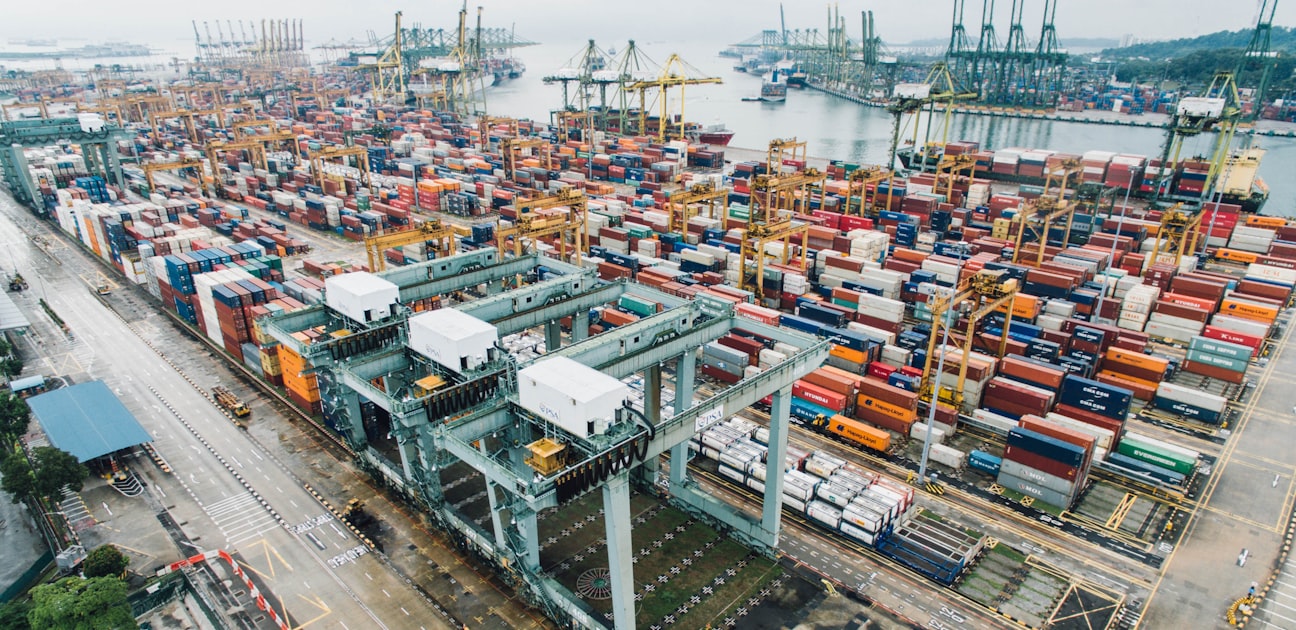
Photo: Unsplash
The Trans-Caspian Transport Corridor – Georgia Accessibility and Transport Enhancement (TC-GATE) Project, approved on 2 June, will finance higher rail freight capacity, the modernisation of key road segments and reforms of the country's rail and road institutions, the World Bank said. The aim is to improve the performance and resilience of the route linking Central Asia and China to European markets via the Caspian Sea, Azerbaijan and Georgia.
The timing reflects a corridor straining under its own success. Cargo volumes across the Caspian along the Middle Corridor rose more than 63% year on year in 2024 to 4.1 million tonnes, and throughput at Georgia's two largest ports, Poti and Batumi, suggests the climb continued through 2025. As carriers reroute away from the Russia-bound Northern Corridor, the trans-Caspian path has become the most stable land bridge between Asia and Europe.
That demand is testing physical limits. The Baku-Tbilisi-Kars (BTK) railway, the corridor's spine through the South Caucasus, has effectively reached its design capacity. Traffic on some segments has surged and freight queues at border crossings have stretched for kilometres, underscoring why investment in Georgian rail and road links has become urgent.
For Georgia, the project is as much about institutions as asphalt and track. The World Bank package pairs capital spending with reforms intended to make the rail and road agencies run more efficiently — the softer infrastructure that determines whether a corridor moves cargo predictably or merely owns the map.
Georgia's government has framed connectivity as a pillar of its growth model, alongside an economy that expanded sharply in early 2026. Large transport, logistics and energy projects are central to the European Bank for Reconstruction and Development's decision to lift its 2026 Georgian growth forecast to 6%.
Questions remain. Analysts have warned that the Middle Corridor's promise depends on coordinated investment across multiple borders — Kazakhstan, the Caspian fleet, Azerbaijan and Georgia — and that any single weak link caps the whole chain. Domestic political friction in Tbilisi has also raised doubts about delivery timelines on flagship infrastructure.
Still, a $372 million vote of confidence from the World Bank is a concrete marker. It signals that multilateral lenders see the Caucasus less as a transit afterthought and more as load-bearing infrastructure for Eurasian trade.