Diplomacy
Uzbekistan and Oman Line Up $5bn of Deals for State Visit

November 16, 2026

3
Min
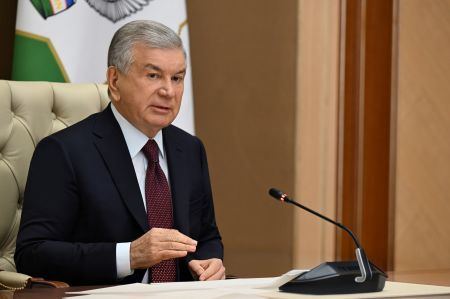
Uzbekistan and Oman have prepared about 30 agreements and documents, covering projects and contracts worth about $5 billion, for signing during President Shavkat Mirziyoyev's state visit to Oman, according to Oman's Ministry of Foreign Affairs. The figure emerged from the sixth session of the two countries' joint committee for economic and trade cooperation, held in Muscat on 15 November.
The committee was co-chaired by Laziz Kudratov, Uzbekistan's Minister of Investment, Industry and Trade, and Anwar bin Hilal Al Jabri, Oman's Minister of Commerce, Industry and Investment Promotion. The two sides signed the minutes of the session, and the next meeting will take place in Uzbekistan, UzDaily reported, citing the Uzbek ministry. The state visit begins on Monday 16 November, according to the Diwan of Royal Court as carried by the Times of Oman.
The striking feature of the relationship is the gap between investment plans and actual trade. Kudratov told the committee that bilateral trade was $2.3 million in 2025 and reached $3.3 million in January to September 2026, which the Omani ministry described as growth of more than 70 per cent. The two sides set a target of $500 million "in the coming years", which would be roughly 150 times the nine-month figure by our calculation.
Kudratov acknowledged the shortfall, saying the figures remain below the true potential of the two economies, according to the Oman News Agency report republished by Fana. The same report said the two sides are working on a preferential trade agreement covering 200 tariff lines, with a first round of negotiations proposed for December 2026.
Capital has moved faster than goods. The Oman Investment Authority's portfolio in Uzbekistan stands at $510 million, with 12 projects completed and 16 under way, according to the ONA report. The joint vehicle, the Uzbek Omani Investment Company, has capital of $200 million and has invested more than $256 million, the Oman Observer reported. The Omani foreign ministry said there are plans to raise the company's authorised capital to $500 million.
Logistics is the other pillar. The Oman Observer reported that Oman's Asyad Group and its partners hold majority stakes in dry ports in Tashkent, and that Oman Air began direct flights between Muscat and Tashkent in July 2026. The Omani ministry said the agenda also covers manufacturing, renewable energy, food security, tourism and education, while the Uzbek side highlighted the use of Omani ports to bring Uzbek goods to new markets.
For Uzbekistan, which has set a target of $65 billion in foreign investment for 2027 (as CBJ reported), Gulf sovereign capital is a practical source of equity for infrastructure and industry. For Oman, the relationship offers a role as a southern outlet for a landlocked economy, which fits its push to grow port and logistics revenue.
The $5 billion headline should be read with care. It refers to documents prepared for signing, and such packages typically mix binding contracts with memoranda of understanding. The Oman Observer separately described a pipeline of about 35 projects worth over $5 billion, and it is not yet clear whether the two figures describe the same set of projects.
First, the official list of documents signed during the visit, and how many are binding contracts rather than memoranda. Second, whether the preferential trade talks open in December as proposed. Third, whether the capital increase for the joint investment company is formally approved. Trade data for the full year will show whether the reported growth rate holds from such a small base.
Sources: Ministry of Foreign Affairs of Oman, 15 November 2026; Oman News Agency via Fana, 15 November 2026; UzDaily, 16 November 2026; Oman Observer, 14 November 2026; Times of Oman, 14 November 2026.
Image: Press Service of the President of Uzbekistan, via president.uz (CBJ archive)