Global
Uzbekistan Targets $232bn GDP and $65bn Foreign Investment

November 14, 2026

4
Min
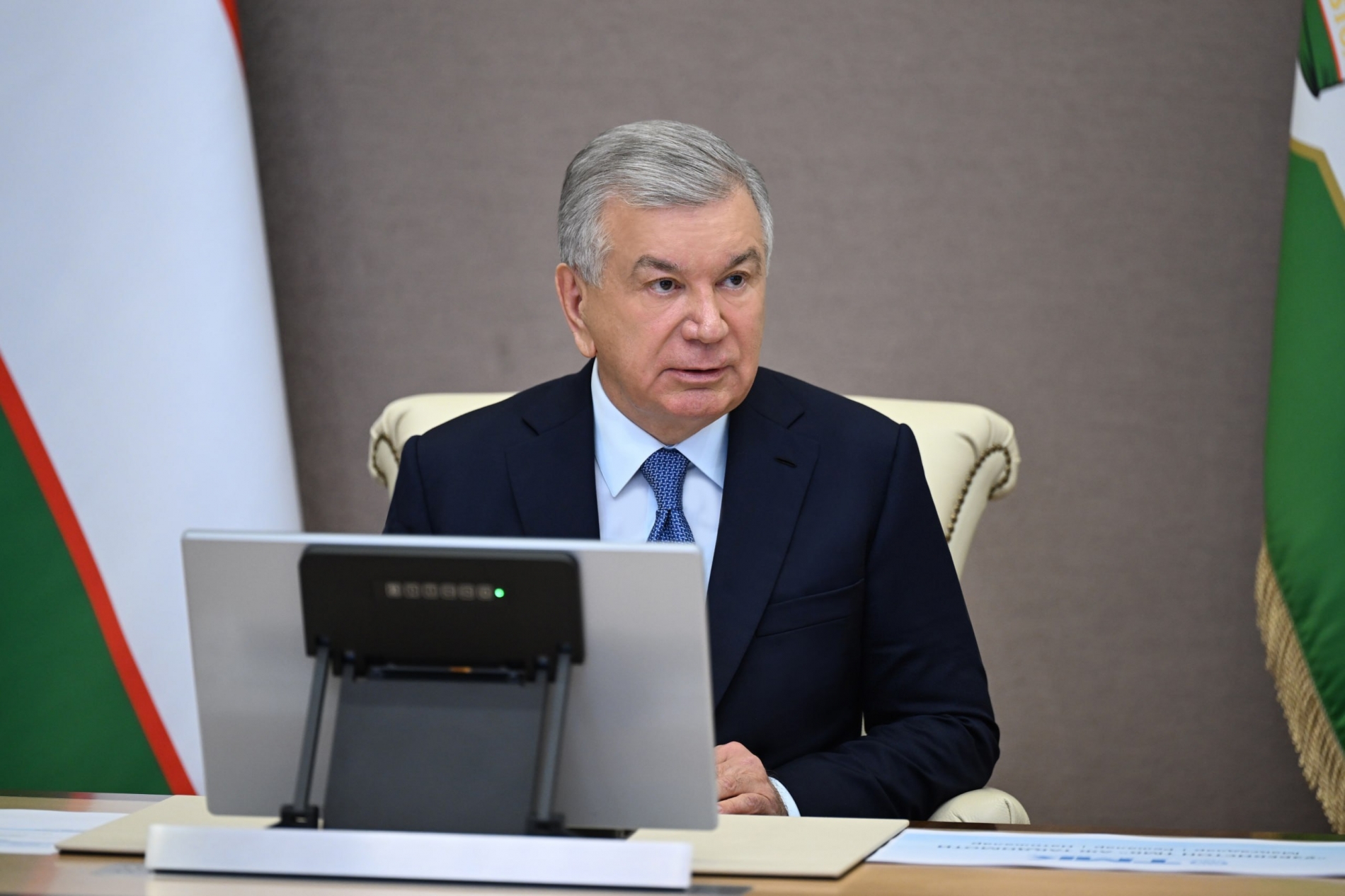
Uzbekistan's government is planning for a $232bn economy in 2027 and $65bn of foreign investment, according to the presidential press service's account of a meeting chaired by President Shavkat Mirziyoyev on 13 November 2026 to review the draft 2027 state budget and macroeconomic forecast.
The president's own release sets growth of at least 8% and GDP above $200bn for 2026, then assumes 7% growth in 2027, inflation of 6% falling to 5% in 2028 and 2029, and non-gold exports of nearly $40bn. The budget is pencilled in at 416 trillion soums of revenue and 464 trillion soums of spending, with the overall fiscal deficit held within 3% of GDP.
Social spending takes the largest visible share. Education gets 114.3 trillion soums, 14 trillion more than this year, and healthcare 61.4 trillion soums, up 12 trillion, which together come to about 176 trillion soums. A further 70 trillion soums is earmarked for regional and neighbourhood infrastructure, employment, household incomes, human capital and social protection. Reporting by Gazeta.uz and YuzNews carries the same numbers.
On revenue, UzDaily reports that main tax rates will stay unchanged. Growth in receipts is meant to come from a broader tax base, a smaller shadow economy and better tax and customs administration rather than higher rates.
The targets follow a strong year. CBJ has reported that the economy grew 8.3% in the first nine months of 2026 (see Uzbekistan's Economy Grows 8.3% in Nine Months). The longer-term goals are a GDP of $300bn by 2030 and per capita income of $10,000 within a decade, against more than $5,200 expected this year.
The investment goal is a step up. A February 2026 presidential release planned $50bn of foreign investment for 2026, so the 2027 figure of $65bn is 30% higher. That same release set a 2026 GDP target of $167bn with 6.6% growth; the latest figures, above $200bn and at least 8%, show how far the year has outrun the original plan. Officials have been told to prepare sectoral and regional plans to reach the $65bn.
Three points stand out. First, the plan assumes a modest slowdown, from at least 8% to 7%, which gives the budget some room if momentum fades. Second, the stated revenue and spending figures leave a gap of about 48 trillion soums (a CBJ calculation, not a figure in the release), equal to roughly 11.5% of planned revenue. The government's pledge is to keep this within 3% of GDP, so the real test will be whether spending stays on plan.
Third, a $65bn foreign investment target is ambitious by any measure and depends on large project financing and on investors committing in sectors the government wants to grow. Partners are watching delivery closely: CBJ noted that Seoul pressed Tashkent to deliver on a $12bn project pipeline.
The draft must still pass local councils and then the Legislative Chamber of the Oliy Majlis, so the numbers could move. The release gives no sector breakdown of the $65bn.
Sources: Press Service of the President of Uzbekistan, "The 2027 State Budget will also be socially oriented", 13 November 2026; Press Service of the President of Uzbekistan, 13 February 2026; Gazeta.uz, 13 November 2026; YuzNews, 13 November 2026; UzDaily, 13 November 2026; Trend, 14 November 2026.
Image: Press Service of the President of Uzbekistan, via president.uz