Finance
Azerbaijan's Reserves Near $91bn as Cabinet Drafts 2027 Budget

September 26, 2026

4
Min

Azerbaijan's strategic foreign-currency reserves stand at approximately $91 billion, Prime Minister Ali Asadov told a Cabinet meeting on September 24 convened to review the draft 2027 state and consolidated budgets, Trend reported.
Asadov said the reserve stock is nearly 20 times the country's external public debt. As of September 1, direct external public debt was $4.5 billion, or 5.6% of projected GDP.
The split in the growth figures is the main story. Headline expansion of 1.2% was achieved despite a contraction in hydrocarbons output, with the non-oil economy doing the lifting. Asadov said the government had deployed a nationwide interest-rate subsidy for loans, transport and logistics subsidies, and partial compensation of export costs this year to support activity.
The Finance Ministry's baseline for 2027–2030, published earlier this month, assumes an average export oil price of $65 per barrel – well below current market levels, which Trend put above $121 per barrel on September 24. That conservative assumption gives the budget a cushion if prices stay elevated, but also means medium-term planning does not rely on the current spike.
Trend also reported that the government plans to allocate $2 billion to reconstruction of the territories regained from Armenia in 2027, continuing one of the largest items of public investment.
A reserve-to-debt ratio of roughly 20:1 is exceptionally strong for a sovereign of Azerbaijan's size and gives authorities room to keep the manat stable and fund infrastructure without heavy external borrowing. The weak spot remains growth: 1.2% is modest, and the non-oil sector's 2.1% pace sits below the 5.1% average the government projects for the 2022–2026 strategy period. The 2027 budget will show whether Baku leans harder on fiscal stimulus to close that gap.
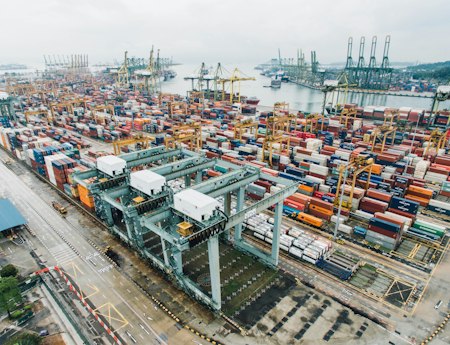
Photo: Unsplash (illustrative)