Business
Uzbekistan Offers 1% Tax Rate for $50m City Projects

November 14, 2026

4
Min
Uzbekistan has introduced tax breaks and a regulatory sandbox for large urban development projects worth at least $50m in New Tashkent and other designated areas, under a presidential decree published on 11 November. The state news agency UzA set out the incentives, and UzDaily and Spot identified it as decree UP-243, signed by President Shavkat Mirziyoyev on 10 November.
The decree turns promises made to investors in October into law. Its central offer is a corporate income tax rate of 1% on income from leasing and selling the buildings, with the length of the relief tied to the size of the investment.
The measures follow a presentation of the New Tashkent project on 12 October, about a month before the decree. According to the President's press service, more than $2bn has been invested in New Tashkent so far, 20,000 hectares have been allocated to the city and a first phase of $50bn of projects is planned across 6,000 hectares. "New Tashkent is not just a place for building new housing," Mr Mirziyoyev said at the time.
The government portal reported at the time that infrastructure connection payments would be cut threefold for trade, service and business centres, fivefold for hotels and tourism facilities and tenfold for cultural and entertainment venues. It said 100 hectares in New Tashkent would be set aside for each Tashkent district and each of the 13 other regions, with the first 50 plots reserved for foreign investors, and that the Shirin area in Samarkand would get the same benefits as New Tashkent.
The tiered tax holiday is designed to pull in fewer, larger investors rather than many small developers. A project of $500m or more gets three times the relief period of one at $50m, and the dividend exemption rewards those who keep profits in the country. For Tashkent, the logic is to use tax and land policy to finance a new city that the budget could not fund alone, a pattern that fits the rapid investment growth recorded in Uzbekistan's nine-month GDP data.
The risks sit in delivery. Deep tax relief on property income narrows the future tax base of the new districts, and the sandbox gives local directorates wide powers over planning rules. Foreign developers will judge the offer on how quickly plots, permits and connections are delivered, and on whether the rules stay stable over a 15-year horizon. International lenders are also expanding in the country, as shown by the World Bank portfolio nearing $16bn, which may help with the public infrastructure the projects need.
Sources: UzA, 11 November 2026; Press Service of the President of Uzbekistan, 12 October 2026; Government of Uzbekistan portal; UzDaily, 11 November 2026; Spot, 11 November 2026
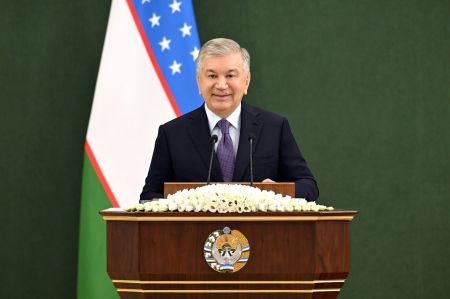
Image: Press Service of the President of Uzbekistan, via president.uz