Energy
SOCAR Pushes Into Africa, the Gulf and Israel as Foreign Energy Bets Multiply

June 28, 2026

4
Min

Azerbaijan's state energy company SOCAR is accelerating its expansion into foreign markets, adding upstream and downstream positions across three continents as it tries to reposition from a national oil firm into an internationally diversified energy group.
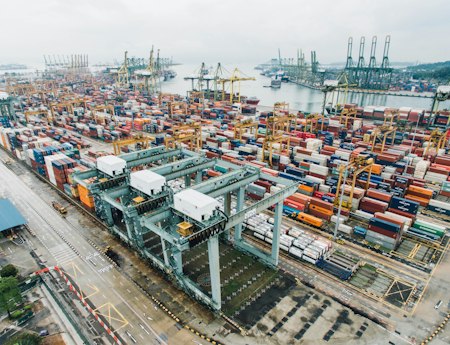
Photo: Unsplash
The company has launched investment projects in the United Arab Emirates and, for the first time, on the African continent at a large field in Ivory Coast, and has secured participation in a gas-production project in Israel, Azerbaijan's economy minister said. SOCAR also acquired shares in Italian fuel retailer Italiana Petroli from API Holding, deepening its European downstream presence and giving it a larger retail and refining footprint in the Mediterranean.
The moves extend a strategy SOCAR has pursued aggressively over the past two years: using cash from Caspian oil and gas to buy optionality abroad. Management has signalled it intends to keep expanding in foreign energy markets rather than treating overseas assets as a sideline, framing geographic diversification as a hedge against the eventual decline of legacy Azerbaijani fields.
At home, the centrepiece remains gas. SOCAR recently joined TotalEnergies, ADNOC investment platform XRG and Türkiye's BOTAŞ in a long-term agreement to market output from the offshore Absheron field, with exports starting in 2029 via the Southern Gas Corridor. The company has reiterated plans to expand gas production and reinforce its role as a reliable supplier to Europe, which has leaned on Azerbaijani volumes to replace Russian pipeline gas.
The expansion is not confined to molecules. SOCAR has been broadening into adjacent sectors — including high-performance data centres and artificial-intelligence infrastructure — as it tries to capture energy-intensive growth markets and build revenue streams less tethered to crude prices. Baku has also set a target for renewables to reach 30% of the national energy balance by 2030, with green hydrogen and ammonia flagged as longer-term ambitions.
The strategy carries execution risk. International upstream ventures in frontier markets are capital-hungry and politically exposed, and integrating retail assets like Italiana Petroli demands management bandwidth far from Baku. Energy executives have also warned that the sector faces long-term investment shortages, which cut both ways — supporting prices for incumbents while raising the cost of new projects.
For Azerbaijan, though, the logic is strategic as much as commercial. By planting flags in the Gulf, Africa, Israel and Europe, SOCAR is trying to ensure that when Caspian output fades, Baku's energy influence does not fade with it.