Business
Azerbaijan Cement Plant Lifts Clinker Capacity 14% to 2 Million Tonnes

November 25, 2026

4
Min
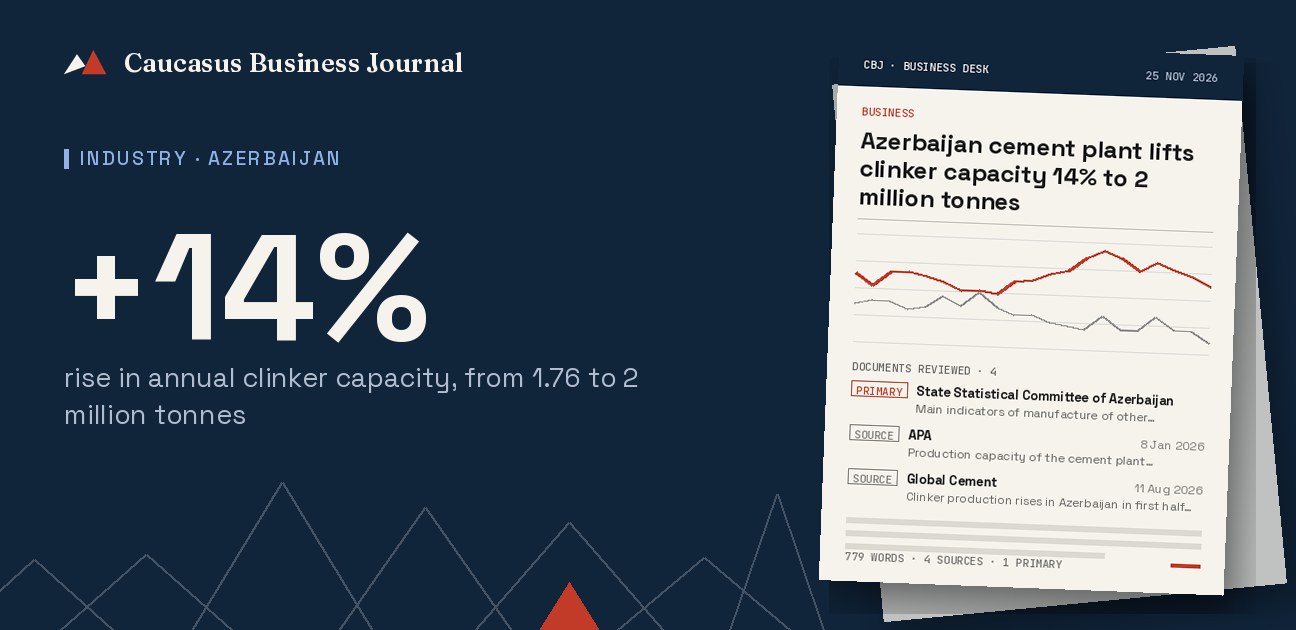
Norm OJSC has raised the annual clinker capacity of its cement plant in Azerbaijan from 1.76 million tonnes to 2 million tonnes, an increase of 240,000 tonnes or nearly 14%, according to a company statement of 8 January 2026 reported by APA. The expansion came in a year when first-half national cement output fell 4% and clinker stocks rose, and the company itself has said that domestic supply exceeds demand.
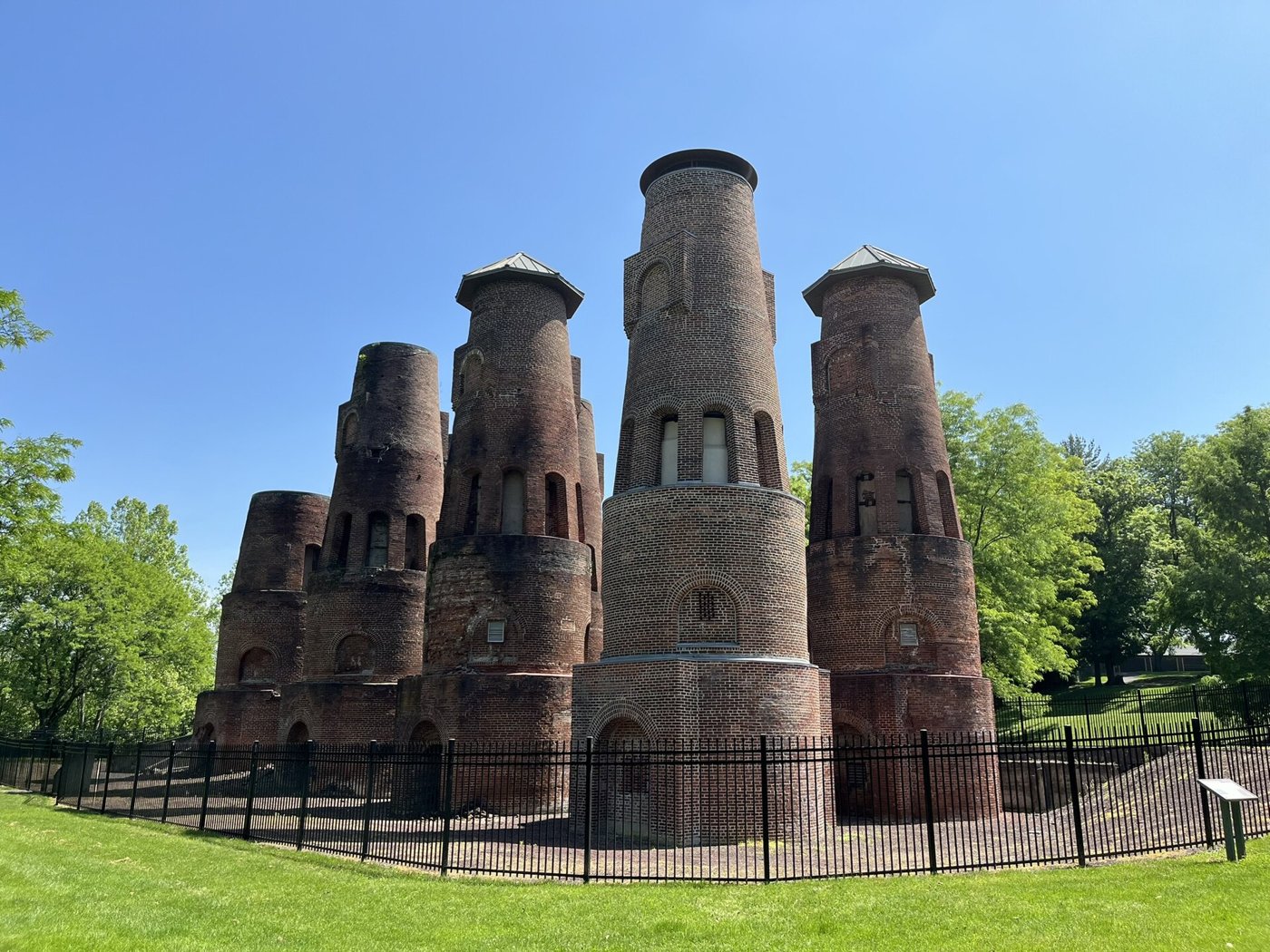
The project was carried out with international partners, including China's BTIEC and the German equipment suppliers Gebr. Pfeiffer and Claudius Peters, per the statement. Clinker is the intermediate product of a cement kiln, ground with additives to make cement, so a higher clinker capacity raises how much cement the plant can make and how much clinker it can sell on its own.
Henning Sasse, chief executive of Norm OJSC, gave the reasoning in the statement as reported by Global Cement: "We decided to increase the plant's production capacity, considering the expanding infrastructure needs and export opportunities of the country and the region. Increasing the clinker production capacity of the Norm Cement plant was an important step for us, both to meet domestic demand and to expand clinker export opportunities to foreign markets."
APA's version adds that Sasse acknowledged domestic cement supply currently exceeds demand and described the expansion as aligned with the company's long-term strategy. Global Cement also reports that Norm has cut the clinker ratio in its cement by 5% since 2024, which redirected about 85,000 tonnes of clinker into additional cement without raising clinker output.
The State Statistical Committee's industry tables put cement production at 4,166,600 tonnes in 2025, up 2.3% from 4,074,700 tonnes in 2024 and up from 2,683,000 tonnes in 2015. Clinker moved the other way in 2025. The Committee's clinker figures, as relayed by Global Cement, give the rest of the backdrop. Azerbaijan produced 3.95 million tonnes of clinker in 2025, down 12% on 2024, according to a March report. In the first two months of 2026 production reached 654,000 tonnes, up 7% on the same period of 2025, and 354,000 tonnes of clinker sat in stock on 1 March.
The first-half picture, published on 11 August, is mixed. Cement production was 1.85 million tonnes in January to June, down 4% year on year, while clinker production rose 3% to 1.91 million tonnes. On 1 July, stocks stood at 206,000 tonnes of cement and 391,000 tonnes of clinker. Between 1 March and 1 July, clinker stocks therefore rose by about 37,000 tonnes, or roughly 10%.
The two series diverged in 2025, cement up and clinker down, and the Committee's figures do not say why. These national figures do not break out Norm's own output, and the sources reviewed for this article do not give it. They also contain no 2026 export figures, so the stated export rationale for the added capacity cannot yet be tested against shipment data.
CBJ's October analysis of South Caucasus construction demand asked whether regional cement supply would keep pace with a corridor-building cycle. First-half cement output was 4% lower, clinker output 3% higher, and clinker stocks rose from 354,000 t on 1 March to 391,000 t on 1 July. The company's stated aim, in the same Global Cement report, is that local production meet cement and clinker demand over the next 15 to 20 years.
The plant's other recent announcement, an industrial trial of treated drill cuttings as a cement input at the end of last year, was covered earlier by CBJ.
Sources: State Statistical Committee of Azerbaijan, table 15.14 (2025 data); APA, 8 January 2026 (company statement); Global Cement, 8 January, 24 March and 11 August 2026 (citing the State Statistical Committee and Trend News Agency).
Written with AI tools by Caucasus Business Journal's editorial system; the publisher is responsible for it.
Disclosure: the publisher has a commercial relationship with an organisation mentioned in this article.