Business
NEQSOL Holding Explores Bahrain Investment as Titanium Push Extends to the Gulf

January 23, 2026

4
Min
A NEQSOL Holding delegation led by Chairman Yusif Jabbarov paid an official visit to the Kingdom of Bahrain to explore investment opportunities and assess the country's industrial and mining landscape, meeting senior government officials and business representatives as the Amsterdam-headquartered group looks beyond its established Caspian and Central Asian footprint toward the Gulf.
The delegation included Kirill Rubinski, then Senior Advisor to the Shareholder and a member of NEQSOL's Advisory Board — four months before his appointment as Chief Executive Officer — alongside Israil Asaliyev, Head of Industry & Mining, and Teymur Taghiyev, Chief of Staff. The composition of the delegation signalled that Bahrain was being evaluated specifically through an industrial and mining lens, rather than as a general market-entry exercise.
The NEQSOL team met with representatives of Bahrain's public sector, including H.E. Noor bint Ali Al Khulaif, Minister of Sustainable Development and Chief Executive of the Bahrain Economic Development Board, for discussions centred on the Kingdom's industrial priorities and the support mechanisms available to new investors in the sector.
"Bahrain's clear industrial vision, strategic location, and consistent policy framework create a strong foundation for long-term industrial investment," said Jabbarov. "We consider the Kingdom an attractive market and a promising foundation for the development of advanced industrial capabilities at a regional level."
Rubinski, commenting on the outcomes of the visit, highlighted the value of the discussions in understanding Bahrain's industrial priorities and how the Kingdom structures support for incoming investors — a framing consistent with the operational, execution-focused mandate he would formally take on as CEO later that year.
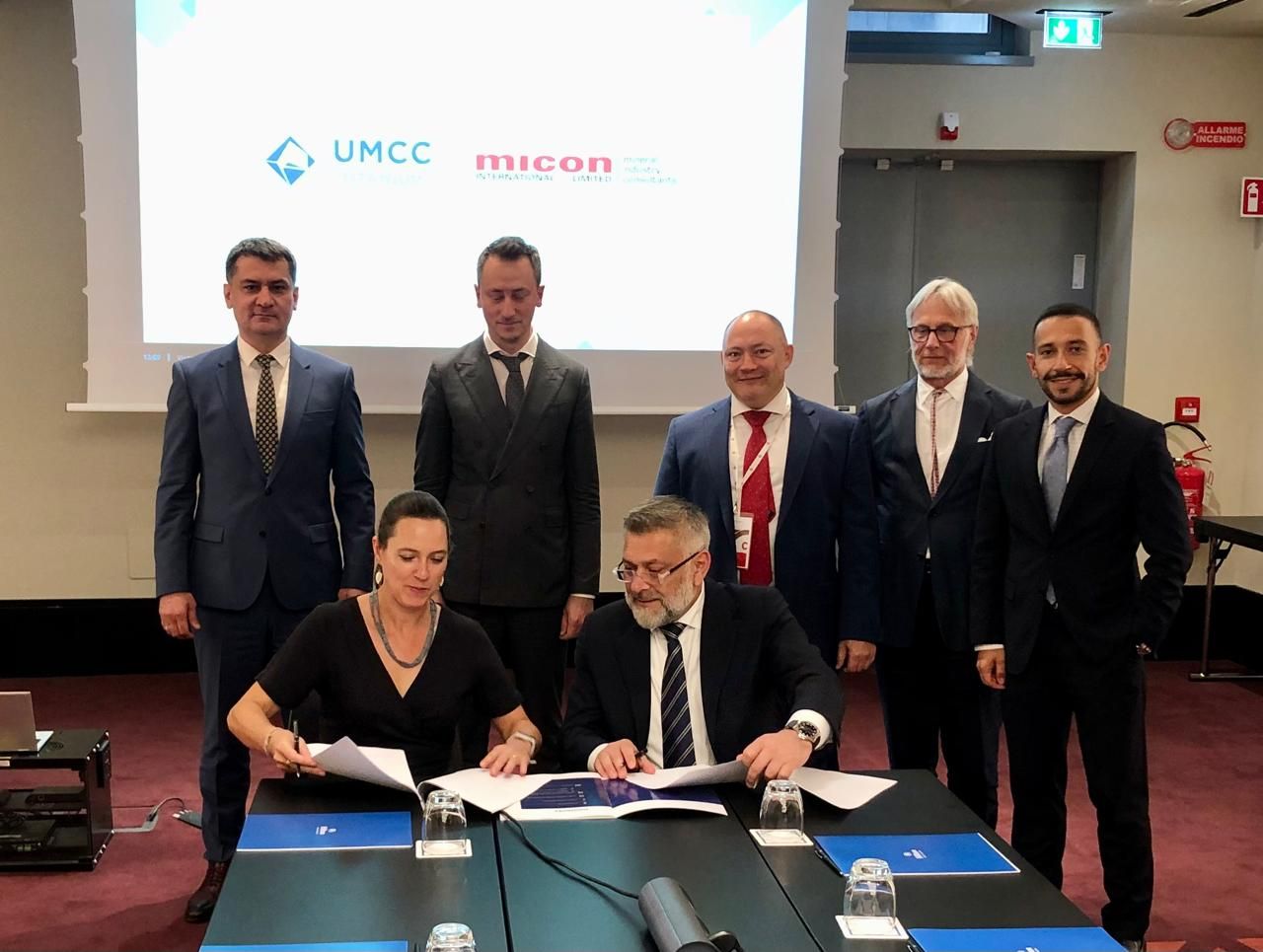
The mining and industrial focus is not incidental. NEQSOL's 2025 acquisition of Ukraine's United Mining and Chemical Company (UMCC) — one of the world's largest titanium and rare-earth raw material producers — gave the group a strategic entry point into a sector Western capitals have spent several years trying to de-risk from concentrated supply chains. A Gulf industrial and mining relationship would extend that positioning well beyond Eastern Europe, into a region actively courting exactly this kind of advanced-manufacturing and critical-minerals investment as part of its own economic diversification agenda.
For a Chairman whose public strategic priorities — the Kardesa submarine cable and the critical minerals push chief among them — already span telecommunications infrastructure and raw materials on two continents, a Bahrain relationship reads as a continuation of the same thesis: long-horizon, physical-asset bets in sectors where NEQSOL can bring capital and operational depth that smaller regional players cannot.
The visit also lands at a moment when Gulf states are competing aggressively for exactly the kind of industrial and critical-minerals capital NEQSOL represents, with Bahrain positioning itself as a lower-cost, policy-stable alternative within a Gulf Cooperation Council landscape dominated by larger neighbours. Whether the exploratory talks convert into a formal NEQSOL presence in Bahrain — through a joint venture, a processing facility, or a direct investment — remains to be seen; the visit was explicitly framed as opportunity assessment rather than deal announcement.
What is clearer is the direction of travel: under Jabbarov's chairmanship, NEQSOL has continued expanding its industrial and mining footprint even as day-to-day execution has shifted to Rubinski's CEO mandate — a division of labour the two executives have each described publicly in similar terms since the leadership transition.