Business
Kirill Rubinski Named NEQSOL Holding CEO

August 23, 2026

4
Min
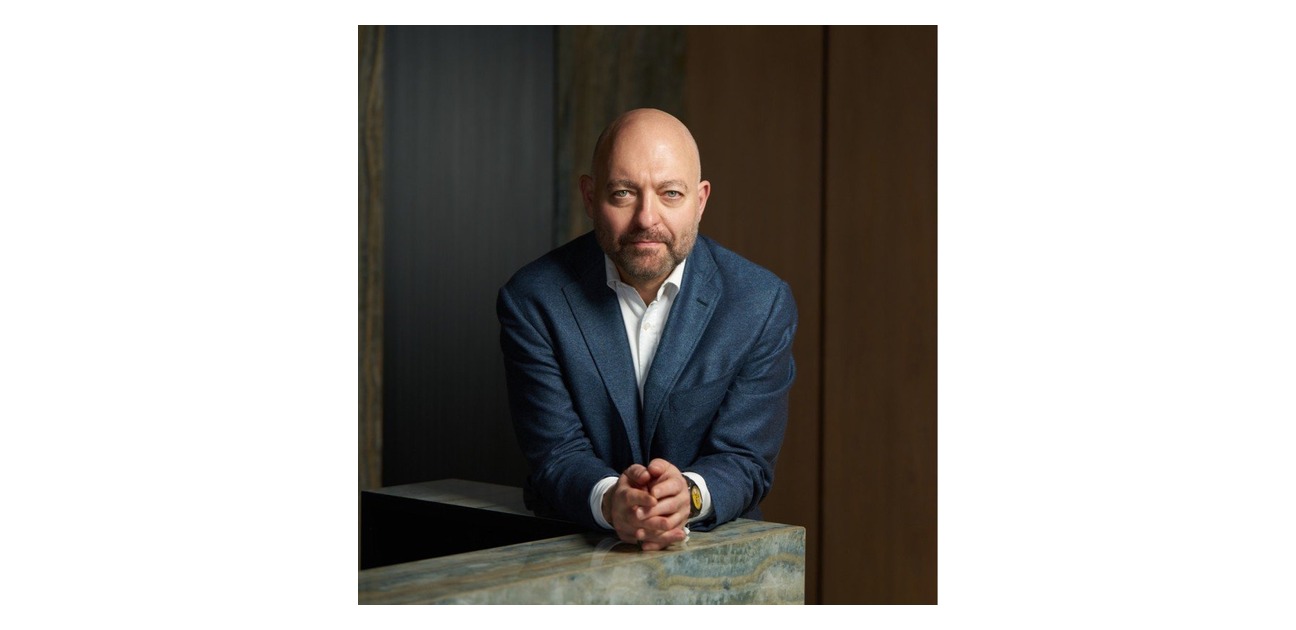
NEQSOL Holding has named Kirill Rubinski its new Chief Executive Officer, effective immediately, as the Amsterdam-headquartered conglomerate accelerates an international expansion spanning telecoms, energy, and mining across 11 countries. Rubinski takes the reins from Yusif Jabbarov, who moves to Chairman of the Board.
Rubinski is a 30-year veteran of international investment banking and private equity. Prior senior roles include Executive Director of European Structured Finance at Marsh & McLennan, Executive Vice President at Crédit Lyonnais, and Chief Executive Officer and President of East One Group, the London- and Kyiv-based investment management firm. He also operates a Dubai-based family office focused on direct investments and venture capital across infrastructure, energy, technology, and industrial assets in Europe and the United States. Rubinski joined NEQSOL in 2025 as Senior Advisor to the Shareholder and a member of the Holding's Advisory Board, the role from which he now ascends. He also sits on the boards of NEQSOL portfolio companies including Nobel Energy, Nobel Upstream, Azerconnect Group, and Norm — the largest cement producer in the South Caucasus.
The leadership transition is framed by NEQSOL as a deliberate move toward what the company calls "institutional governance" — a model increasingly adopted by family-founded conglomerates seeking to attract outside capital and professionalize cross-border operations. "Kirill brings the entrepreneurial vision, executive leadership, and exceptional network needed to guide NEQSOL Holding through its new phase of development," Jabbarov said in the official PR Newswire announcement. Rubinski's mandate, the company says, centers on four priorities: tighter integration across the Group's business units, accelerated digital transformation, strengthened governance frameworks, and unlocking new opportunities in international markets.
The appointment matters disproportionately to the South Caucasus. NEQSOL's portfolio includes AzerTelecom, the Azerbaijani wholesale carrier currently building the 380-kilometer Trans-Caspian Fiber Optic Cable Line with Kazakhtelecom, a 400 Tbps submarine link slated to commission in Q3 2026. The group also owns mobile operators Bakcell in Azerbaijan and Vodafone Ukraine, and is preparing a separate Black Sea submarine cable system with Vodafone Group. On the energy side, Nobel Energy carries upstream exposure across the Caspian basin, and Norm operates the largest cement plant in the region. Rubinski's deal-making background — with a documented track record across infrastructure, alternative energy, and applied technology investments — signals that capital deployment, partnerships, and potentially M&A will accelerate across these regional assets.
The timing is consequential. Azerbaijan's energy footprint in Europe is expanding fast, with a 33 BCM annual gas supply agreement with Turkey and first deliveries reaching Germany and Austria. BP has greenlit a new Caspian project and renewed its long-term operations contract in Azerbaijan, while SOCAR has tapped SLB to revamp key Caspian platforms. The macro environment is one of accelerating institutional capital, sovereign wealth deals — including SOFAZ's $1.5 billion infrastructure commitment with BlackRock and GIP — and a peace dividend that the IMF says could reshape South Caucasus investment. NEQSOL's regional concentration positions it as one of the most direct beneficiaries.
Industry observers familiar with NEQSOL's structure note that Jabbarov's transition to chairman follows a pattern common among large privately held emerging-market groups: as operations grow more complex and geographically dispersed, founders separate strategic oversight from day-to-day execution, often bringing in executives with broader international profiles. Rubinski himself struck a continuity-and-acceleration tone. "The Group has built a strong and resilient platform, supported by exceptional teams and a clear long-term vision," he said. "Our priority is to build on that foundation, driving greater alignment across our businesses and positioning NEQSOL as a truly global, institutionally led organization."
For Caucasus-focused investors, the practical questions now sharpen: will Rubinski's network accelerate hyperscaler interest in the Trans-Caspian fiber asset; will Nobel Energy pursue more aggressive upstream investment as Azerbaijani gas exports to Europe scale; and how quickly will the new institutional governance posture translate into credit ratings, debt-market access, and strategic capital partnerships. The next 12 months will reveal which levers move first.