Energy
Masdar and SOCAR Green Close Financing on 760MW of Azerbaijani Solar

September 22, 2026

4
Min
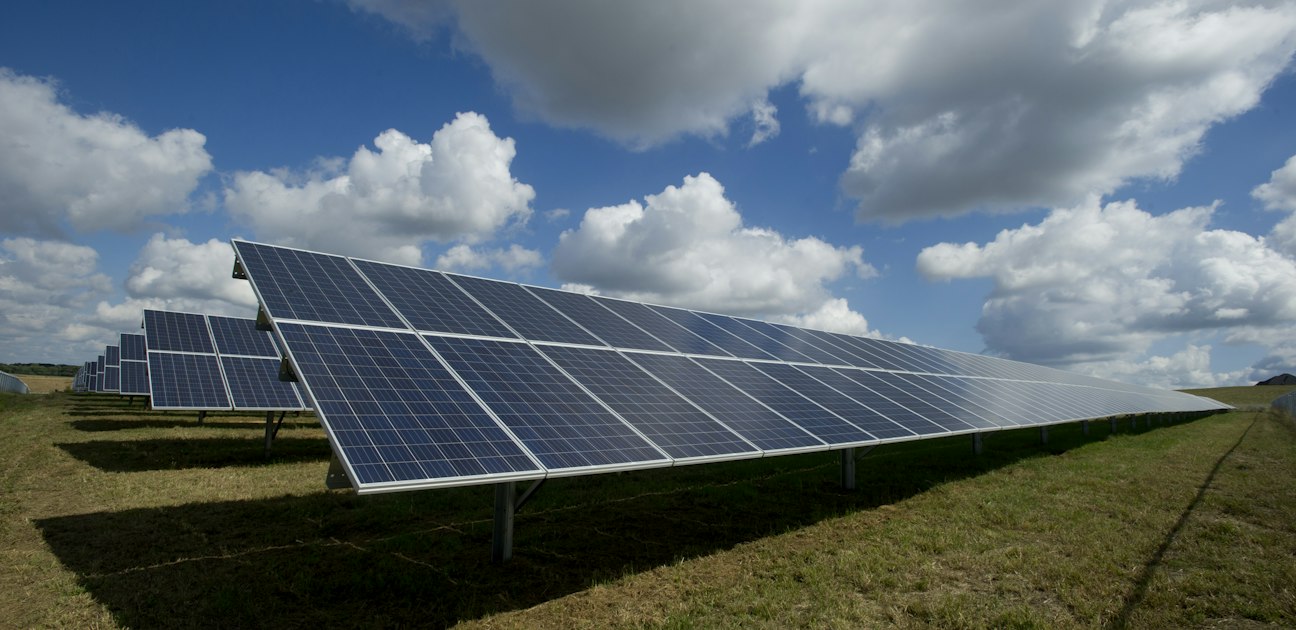
Abu Dhabi's Masdar and SOCAR Green, the renewable energy arm of Azerbaijan's state oil company, have reached financial close on two utility-scale solar plants with a combined capacity of 760 megawatts — the largest single renewable financing package assembled in the country to date.
The two projects are the 445MW Bilasuvar plant and the 315MW Neftchala plant, both in southern Azerbaijan. Total project cost is expected to exceed $600 million, with debt provided by a syndicate of three multilateral lenders: the European Bank for Reconstruction and Development, the Asian Infrastructure Investment Bank and the Asian Development Bank. Construction on both plants is scheduled for completion by the first quarter of 2027.
The Neftchala project alone is expected to generate more than 686 million kilowatt-hours of electricity a year — enough, on the developers' estimate, to supply roughly 140,000 households and displace about 280,000 tonnes of carbon dioxide annually. Taken together with Bilasuvar, the two sites represent a material addition to a grid that still leans heavily on domestic natural gas for power generation.
That dependence is the strategic point. Azerbaijan exports gas to Turkey and, through the Southern Gas Corridor, to southern Europe. Every megawatt-hour generated from solar at home is a megawatt-hour of gas freed for export at international prices rather than burned domestically at regulated ones. The arbitrage is the clearest commercial logic behind Baku's renewable build-out, and it explains why a state oil company is funding solar at scale.
Financial close, rather than groundbreaking, is the milestone that counts for investors. It means lenders have completed due diligence, offtake arrangements are documented and the projects are contractually bankable. The participation of three separate multilateral institutions in a single Azerbaijani power transaction also signals that development finance institutions are willing to underwrite long-tenor renewable risk in the South Caucasus — a precedent that should lower the cost of capital for the projects that follow.
Masdar has been Azerbaijan's most consistent renewable partner, having already delivered the 230MW Garadagh plant. The company has said it is examining further solar and battery storage opportunities in the country, and a memorandum framework covering several gigawatts of additional capacity remains on the table.
For anyone tracking Caucasus infrastructure, three things follow. First, Azerbaijan's renewable pipeline has moved from memoranda to financed assets, which is where the sector's credibility is actually established. Second, multilateral lenders are now comfortable taking construction and merchant exposure in the market. Third, SOCAR is diversifying its balance sheet into regulated, contracted cash flows at precisely the point when Fitch expects its hydrocarbon production decline to stabilise only from 2028.
The open question is grid capacity. Adding 760MW of intermittent generation to a system built around dispatchable gas requires transmission upgrades and, eventually, storage. Neither has yet been financed at comparable scale.