Business
Georgia's Economy Grows 7.9% in First Half of 2026, Outpacing IMF Forecast

August 26, 2026

4
Min

Georgia's economy grew 8.6% in June, bringing average growth for the first six months of 2026 to 7.9% — a pace that significantly exceeds the International Monetary Fund's initial forecast for the year, according to figures cited by Georgia Today.
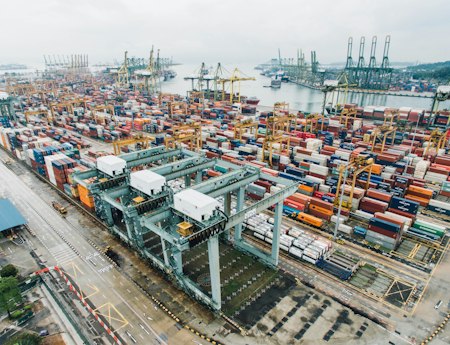
Transit is doing much of the heavy lifting. Since the beginning of the year, 9,200 more trucks have passed through Georgia's transport corridor than in the same period of 2025, per a roundup by JAMnews. The increase tracks with the Baku–Tbilisi–Kars railway's return to full commercial operation in June and rising east–west cargo flows across the Middle Corridor.
Prime Minister Irakli Kobakhidze has attributed the strong performance in part to reduced corruption, though independent economists point to more mechanical drivers: transit fees, re-exports, construction and a still-buoyant financial sector.
The first-half number puts official data well ahead of private-sector expectations. TBC Capital's base scenario for full-year 2026 growth stands at 4.5%, per GBC, while the bank's research arm has held a 7.4% forecast in its more recent updates — implying a second-half slowdown either way. The gap between an 7.9% first half and mid-single-digit full-year projections suggests forecasters expect base effects and softer external demand to bite from autumn.
For investors, the headline is less about one strong quarter than about Georgia's positioning: the country is capturing a growing share of Eurasian transit at exactly the moment the EU is preparing roughly €2 billion in mobilization for Black Sea and South Caucasus infrastructure. If even part of that capital lands, transit-linked growth becomes less cyclical and more structural.
The risks are familiar — political friction with Brussels, dependence on re-export flows, and a narrow domestic base. But at mid-year, Georgia is running one of the fastest growth rates in the wider region for the second year running.