Global
Georgia's Domestic Exports Climb 20% to $3.87 Billion in First Half of 2026

July 27, 2026

3
Min
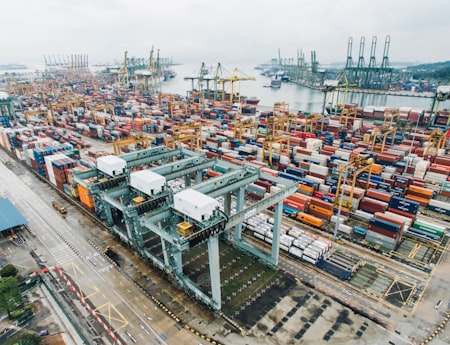
Georgia's domestic exports rose 20% year-on-year to $3.87 billion in the first half of 2026, national statistics office Geostat reported, as a boom in re-exported petroleum products and copper concentrates more than offset a sharp slump in the country's dominant car-trade business. Total foreign trade turnover expanded 5.8% to $12.92 billion over the January-June period, with imports edging up 0.7% to $9.04 billion and the trade deficit settling at $5.17 billion.
The headline export gain matters because it points to a rebalancing of what has long been a narrow, transit-driven trade profile. For years, Georgia's export ledger leaned heavily on used and new passenger cars shipped onward to Central Asia and the wider region. That single line remained the largest export category at $938 million, but it fell 22.9% from a year earlier, a decline that in previous cycles would have dragged the whole export total lower. This time, other commodities filled the gap and then some.
The standout was oil and petroleum products, which surged 974.3% to $486.9 million, vaulting the category into second place among Georgia's exports. Copper ores and concentrates, a genuine domestic resource, climbed 287.4% to $142 million. Kyrgyzstan was the single largest destination at $431.8 million, narrowly ahead of China at $428.6 million and Azerbaijan at $335.9 million, underscoring how tightly Georgian trade flows are now woven into both Central Asian and East Asian markets. The figures were confirmed in reporting by Georgia Today.
For investors and regional businesses, the composition of the growth carries as much weight as the top-line number. The explosive gains in oil products and copper suggest Georgia is capturing more value from its role as a transit and processing hub along the Middle Corridor, the trade route linking China and Central Asia to Europe via the Caspian and the South Caucasus. Rising volumes moving toward Kyrgyzstan and China reinforce that the corridor's eastward and westward legs are both active. At the same time, the double-digit fall in car exports is a reminder that re-export categories can be volatile, sensitive to sanctions enforcement, currency swings and shifting demand in destination markets. Persistent import strength and a $5.17 billion deficit also keep pressure on the lari and on the current account, factors that lenders and rating agencies will watch closely. The trade data lands alongside expectations that the International Monetary Fund will assess Georgia's external position in its coming Article IV review.
Whether the export surge is durable will hinge on the second half. If petroleum and copper flows hold and the car trade stabilizes rather than deteriorates further, Georgia could close 2026 with its strongest domestic export performance in years and a modestly healthier trade balance. Sustained investment in the Middle Corridor's rail and road capacity, deeper commercial ties with China and continued diversification of export destinations would all help lock in the gains. For now, the H1 numbers show an economy quietly broadening its export base beyond the cars that once defined it.