Diplomacy
European Leaders Back Armenia as Russia Curbs Its Exports

November 15, 2026

3
Min
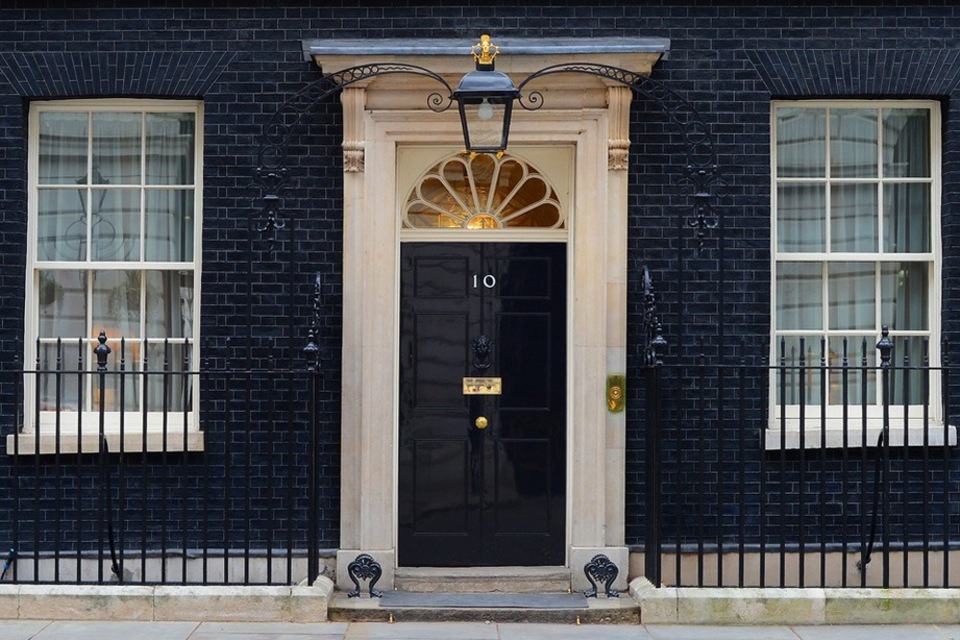
European leaders have pledged to help Armenia diversify its trade and energy partnerships, saying Russia "has imposed unprecedented restrictions on Armenian exports". The commitment came in a statement issued on 12 November 2026 after a leaders' meeting of the Armenia Core Group, published by the UK Prime Minister's Office.
The statement is political rather than financial: it contains no new funding figure. But it is a clear joint European signal that Armenia's partners see Russian trade pressure as a problem they should help to solve.
The United Kingdom, Estonia, France, Lithuania and the High Representative of the European Union for Foreign Affairs and Security Policy met as the Armenia Core Group, joined by Germany, Norway, Poland, the President of the European Council and the President of the European Commission, according to the UK government text. They met Prime Minister Nikol Pashinyan on the sidelines of the European Political Community summit in Dublin, Tert.am reported.
The leaders said Russia "is now threatening to use energy supplies as a means of intimidation." They said they would support Armenia's trade and energy diversification, "building on the European Union's decision to suspend duties on 80% of Armenian exports to the EU."
They described their goal as an Armenia with "a prosperous economy, fully integrated into regional connectivity networks and international trade flows." The statement also backed the Armenia and Azerbaijan peace process and the progress made since the Washington meeting of August 2025, and the normalisation of relations between Armenia and Türkiye.
The EU duty suspension took effect on 10 October 2026 and runs until 11 October 2028, Massis Post reported. Armenian trade with the bloc was already growing: exports to the EU rose 51% to $717 million in January to September, as CBJ reported last month.
The statement's reference to energy is the most significant line for business. An energy squeeze would hit households and industry faster than export restrictions.
For investors, the statement lowers political risk at the margin but does not change the near-term economics. It offers no money, no new market access beyond the existing EU tariff step, and no energy supply guarantee. Its value lies in coordination: the seven European governments named in the UK text and the EU's top institutions putting their names to the same diagnosis of Russian pressure.
The practical test will be whether this turns into concrete projects. Armenia's connectivity plans, including the route agreed with the United States and ratified by parliament in October, as CBJ reported, depend on financing and on progress with Azerbaijan and Türkiye.
Watch for any Russian response affecting gas supply or prices, follow-up funding from the EU or individual core group members for energy and transport projects, and data on Armenian exports to Russia and the EU in the fourth quarter.
Sources: UK Prime Minister's Office, 12 November 2026; Tert.am, 13 November 2026; Massis Post, November 2026.
Image: UK Prime Minister's Office, via gov.uk