Energy
China Datang and Azerbaijan Discuss 200 MW Offshore Wind Plan

October 25, 2026

4
Min
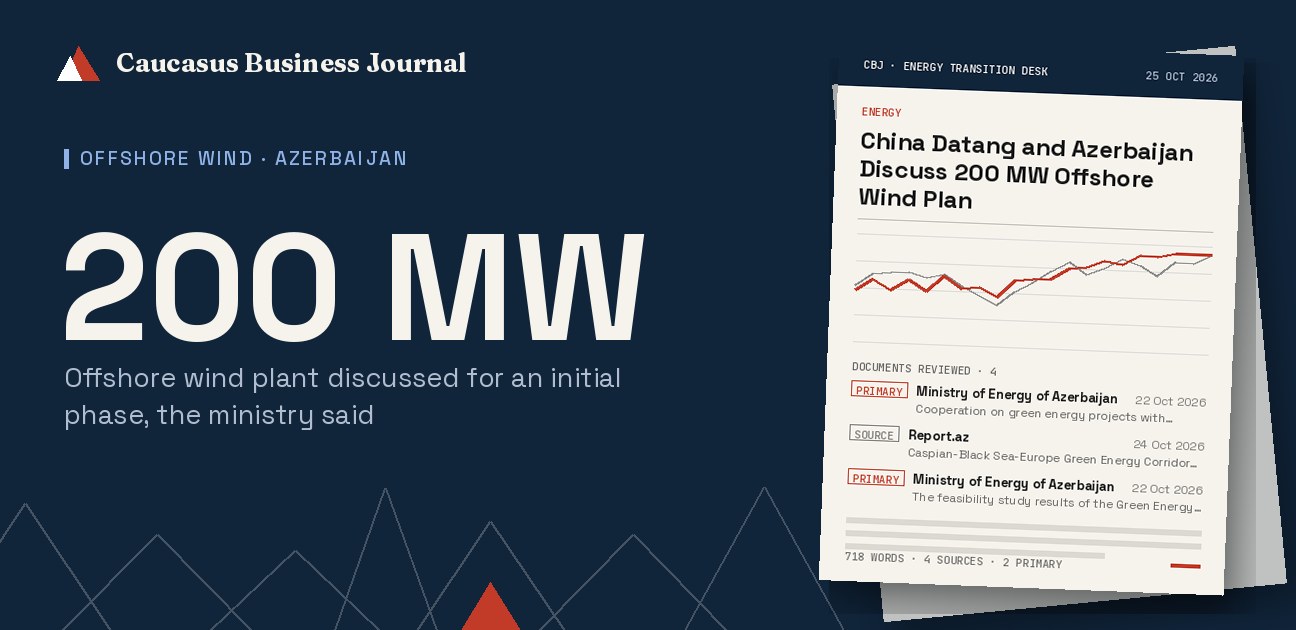
China Datang Overseas Investment Co., Ltd. reviewed the implementation status of a 100 MW solar power plant project in Azerbaijan and discussed the possibility of a 200 MW offshore wind power plant in an initial phase with Minister of Energy Parviz Shahbazov, Azerbaijan's Ministry of Energy said on 22 October. The company's delegation was led by Zhao Yongli, Chairman of China Datang Overseas Investment Co., Ltd., and the meeting was held within the Caspian-Black Sea-Europe Green Energy Corridor forum in Baku.
According to the ministry, the company stated its readiness to advance work on solar and offshore wind energy projects and to explore opportunities for participation in the corridor, a planned power link to Europe launched by Azerbaijan, Georgia, Romania and Hungary. The release gave no site, cost or timetable for either plant, did not say where the offshore plant would be built and did not mention a signed agreement. The two sides also reviewed continued cooperation on personnel training and technical experience exchange.
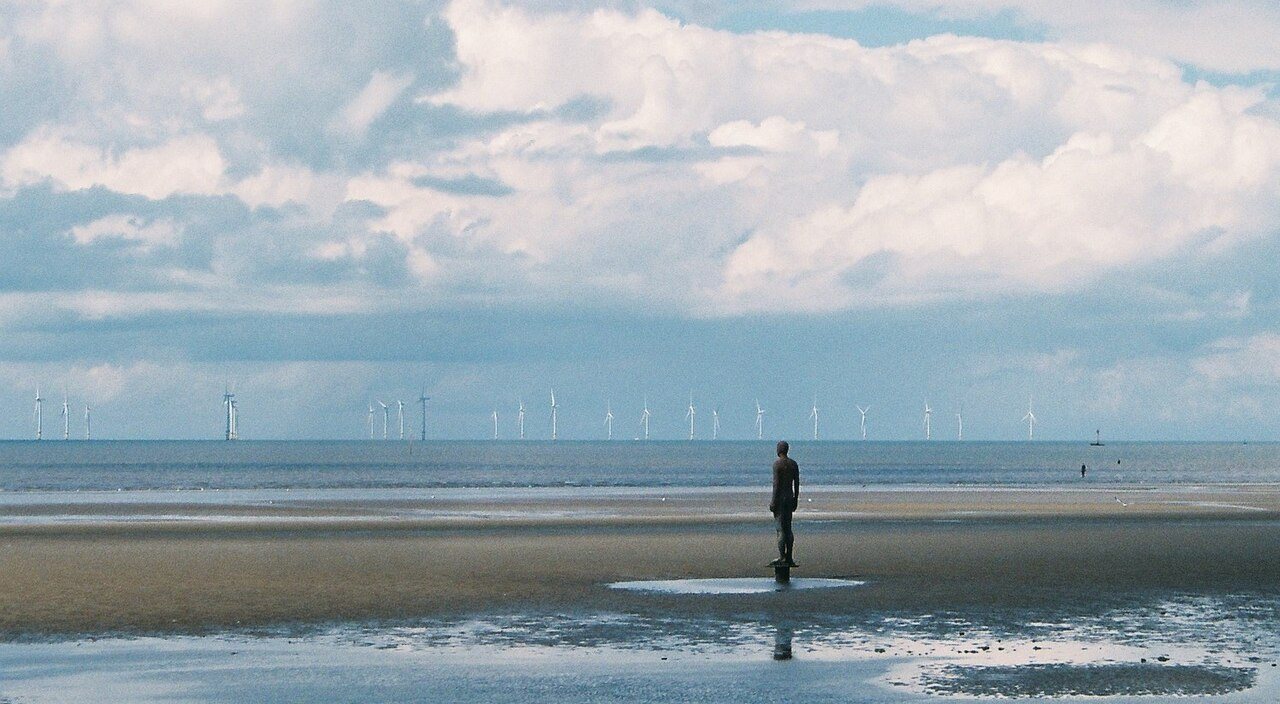
Caspian offshore wind is the corridor's main resource, according to figures from the Green Energy Corridor Power Company (GECO) that Report published on 24 October. GECO put Azerbaijan's offshore wind potential in the Caspian Sea at about 25 GW, or roughly 96 TWh of generation a year, with 19 GW of solar and onshore wind as supplementary sources. It plans a first 1.3 GW transmission line in 2032 and supplies of 20 TWh a year to the EU by 2040. For scale, 200 MW would equal less than 1% of that offshore estimate.
Datang was not the only Chinese group at the forum. The ministry's list of participants also included State Grid Corporation of China and PowerChina. PowerChina joined Masdar and ACWA Power on a panel about European demand for green electricity and long-term power purchase agreements, while ZTT, Hengtong and Orient Cable took part in a session on HVDC technology and subsea cable production with Siemens Energy, Prysmian and NKT. The ministry said the forum aimed to speed preparations for a final investment decision on the corridor in 2029.
The nearer-term additions are solar and wind plants already under way. In an article in the official press, reported by Trend on 20 October, Shahbazov said renewables supplied 20% of the 21.2 billion kWh generated in January to September 2026, up from 13.4% of 28.7 billion kWh in 2025, and saved 840 million cubic meters of gas. Three of the 11 solar and wind plants in the first phase of the green energy development plan, which total 2 GW, are operating with 570 MW combined, he wrote. The 445 MW Bilasuvar and 25 MW Shams 1 solar plants are scheduled for commissioning by the end of 2026, Masdar is implementing a 200 MW wind project, and the renewables share of installed capacity is to reach 33.3% by 2027.
CBJ reported earlier this month on the minister's plan for 11 solar and wind plants by the end of 2027 and on renewable output of 4.2 billion kWh in the first nine months of the year.
For developers, contractors and lenders, the meeting is an early signal rather than a commitment. An offshore plant would need marine works, foundations and subsea connections that land-based plants do not, and offshore wind is the resource on which GECO's export case for the corridor rests. Chinese groups now appear at more than one point in the chain, from generation (China Datang) to transmission (State Grid Corporation of China), which adds competition for developers already active in Azerbaijan, such as Masdar, and for other equipment suppliers.
The 100 MW solar plant is the nearer-term item. The ministry did not say where it was or when it would start operating, which leaves its place in the national pipeline unclear.