Diplomacy
China's CCCC Exits Georgia's Anaklia Port as State Adopts Landlord Model

July 27, 2026

3
Min
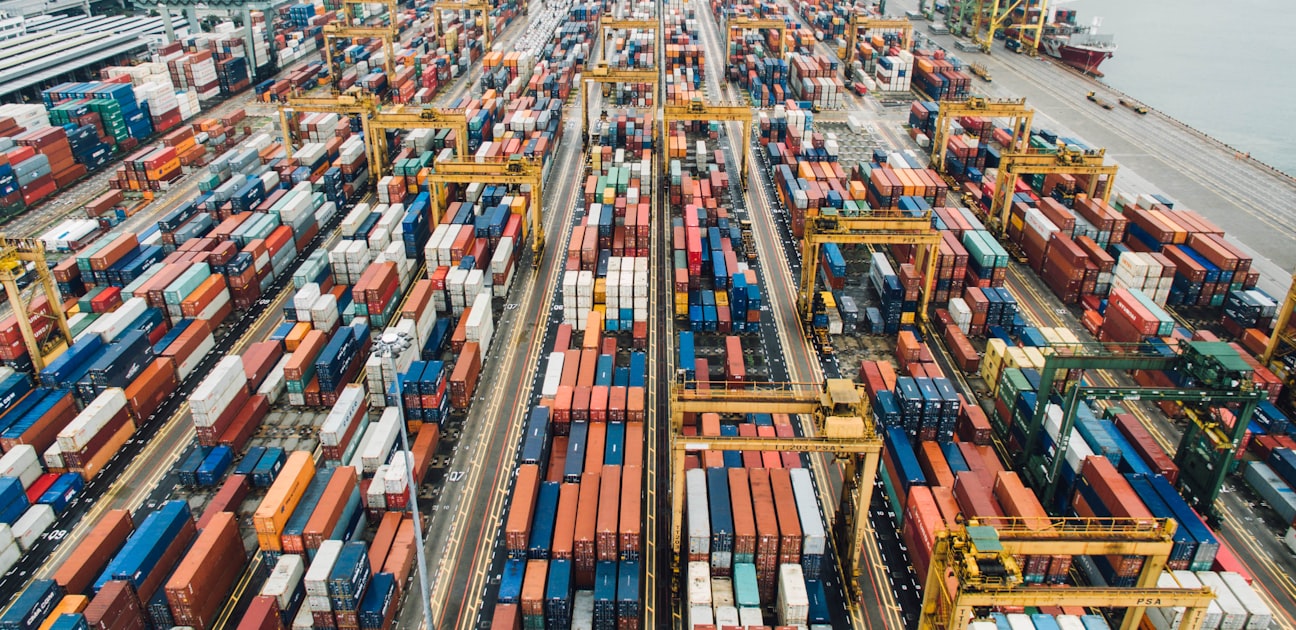
Georgia has taken full control of its long-delayed Anaklia Deep Sea Port after China Communications Construction Company (CCCC) and China Harbour Investment formally withdrew from the flagship Black Sea project, Economy Minister Mariam Kvrivishvili confirmed. The Chinese consortium, which had secured a 49% stake in 2024 alongside an initial construction phase valued at roughly $600 million, is now out, leaving Tbilisi to develop the strategic terminal itself under a state-led landlord model that keeps core infrastructure in public hands.
The exit marks one of the sharpest geopolitical turns in the Anaklia saga, a project that has cycled through Georgian, Western and Chinese backers over nearly a decade. Positioned on Georgia's Black Sea coast, Anaklia is meant to be the country's only deep-water port capable of handling the largest container vessels, anchoring the Middle Corridor trade route that links China and Central Asia to Europe while bypassing Russia. Chinese involvement had drawn scrutiny in Washington and Brussels over strategic control of a critical node on the trans-Caspian corridor, making the consortium's quiet departure as significant as its arrival.
Under the revised framework, Kvrivishvili said the state will remain the sole owner of the port's maritime and core infrastructure, ruling out any sale of shares. International operators would instead be invited only to manage terminal operations, rather than lead development through a single foreign-controlled venture. The minister framed the shift as a way to retain sovereign control over an asset increasingly viewed as central to Georgia's economic future, with the government now directing construction rather than delegating it. Details of the announcement were reported by OC Media, which noted no official rationale from CCCC accompanied the withdrawal.
For investors and regional trade planners, the reset carries mixed signals. The landlord model, common at major global ports from Rotterdam to Singapore, can lower political risk for terminal operators by separating public infrastructure ownership from commercial management, potentially widening the pool of Western and Gulf logistics firms willing to bid. Yet it also loads more capital and execution risk onto the Georgian state at a time when Tbilisi is planning some $7 billion in broader transport-sector investment through 2032. The removal of a deep-pocketed construction partner raises questions about financing the first phase without slippage, even as it eases Western concerns about Chinese leverage over Middle Corridor throughput. Coverage of the strategic dimensions was detailed by Eurasianet.
The stakes extend beyond Georgia. Regional shippers in Azerbaijan and Kazakhstan have been counting on Anaklia to relieve congestion at Poti and Batumi and to add Black Sea capacity for eastbound and westbound cargo. A credible, state-owned Anaklia could reinforce the corridor's appeal as trans-Caspian volumes climb, but delays would push more traffic toward competing Turkish and Romanian gateways.
With first operations still targeted for 2029, Georgia now faces the harder task of proving it can deliver a multibillion-dollar port on schedule without its Chinese partner. Attention will turn to how quickly Tbilisi secures construction financing and lines up terminal operators under the new model, a test of both its fiscal capacity and its balancing act between East and West.