Business
Armenia Seeks 'Friendly' Rework of Russian Railway Concession as Freight Halves

August 25, 2026

4
Min
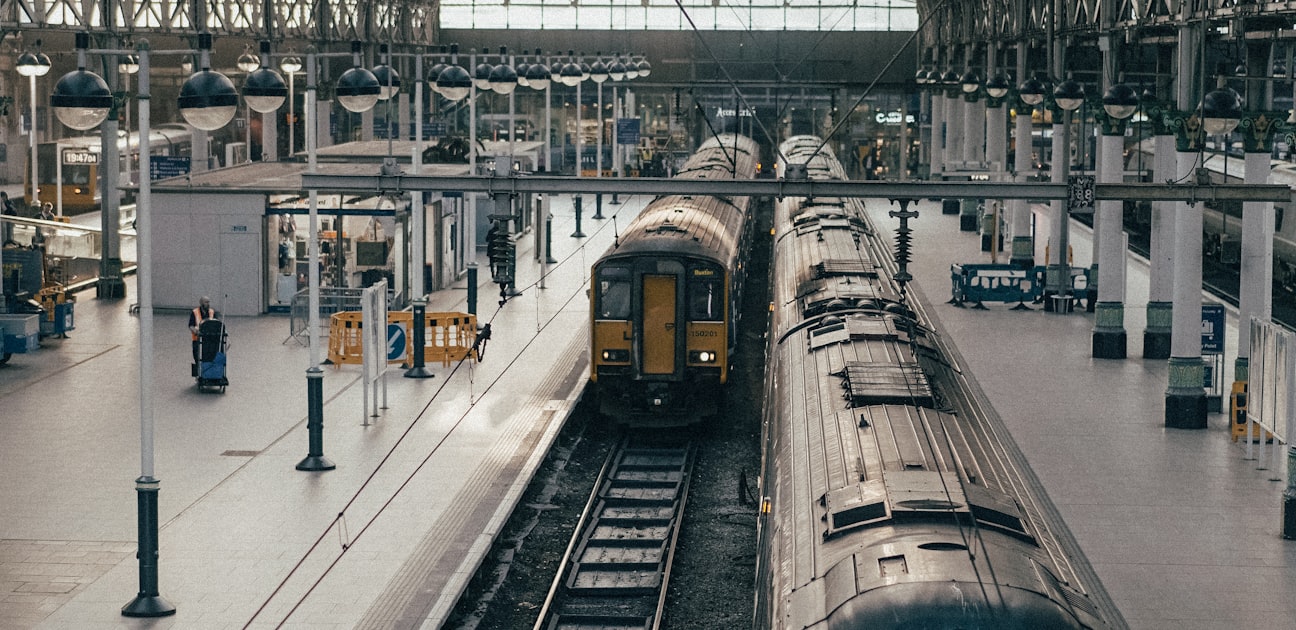
Armenia is exploring ways to restructure the 30-year railway concession it granted to a Russian operator in 2008, as the government concludes that the agreement is now an obstacle to reopening the country's rail links with Azerbaijan and Türkiye.
Since the concession — held by South Caucasus Railway, a subsidiary of Russian Railways — was signed, freight traffic on the Armenian network has halved, some routes have ceased operating entirely, and mandatory investment commitments have largely gone unfulfilled, according to Armenian officials cited in regional media. Prime Minister Nikol Pashinyan says Yerevan does not want to terminate the agreement outright and is working with experts to find solutions acceptable to both sides, resolving the matter "in a friendly manner."
The stakes have risen sharply since the August 2025 peace framework with Azerbaijan. Full reopening of regional transport links requires restoring railway connections to the borders with Azerbaijan and Türkiye — sections that have sat idle for three decades. Because the Russian operator has not undertaken reconstruction of those lines, Yerevan is now exploring ways to implement the project independently.
The timing is not incidental. Engineering surveys for the railway component of the TRIPP transit route are already underway in Armenia, and the United States and Armenia have agreed to establish a TRIPP Development Company to oversee infrastructure development. Across the border, Azerbaijan says construction of its own connecting road and railway is practically complete, and work has begun on the first seven-kilometre section of the Nakhchivan railway running from the Armenian border toward Ordubad.
A concession structured for a closed-border, Russia-oriented network is thus colliding with an open-border, East–West future. Under the current agreement, any reconstruction of the dormant border sections would fall to a concessionaire that has shown no appetite for the investment — while Armenia's Western partners are preparing to fund precisely that work through other vehicles.
How Moscow responds will be telling. Russia retains significant economic leverage in Armenia, from gas pricing to the near-total ban on Armenian agricultural imports currently squeezing the country's farmers. Untangling the railway concession amicably, without triggering retaliation elsewhere, may prove one of the more delicate commercial negotiations Yerevan attempts this year.
Sources: JAMnews