Business
What Is the Middle Corridor? The Trade Route, Explained

August 28, 2026

7
Min
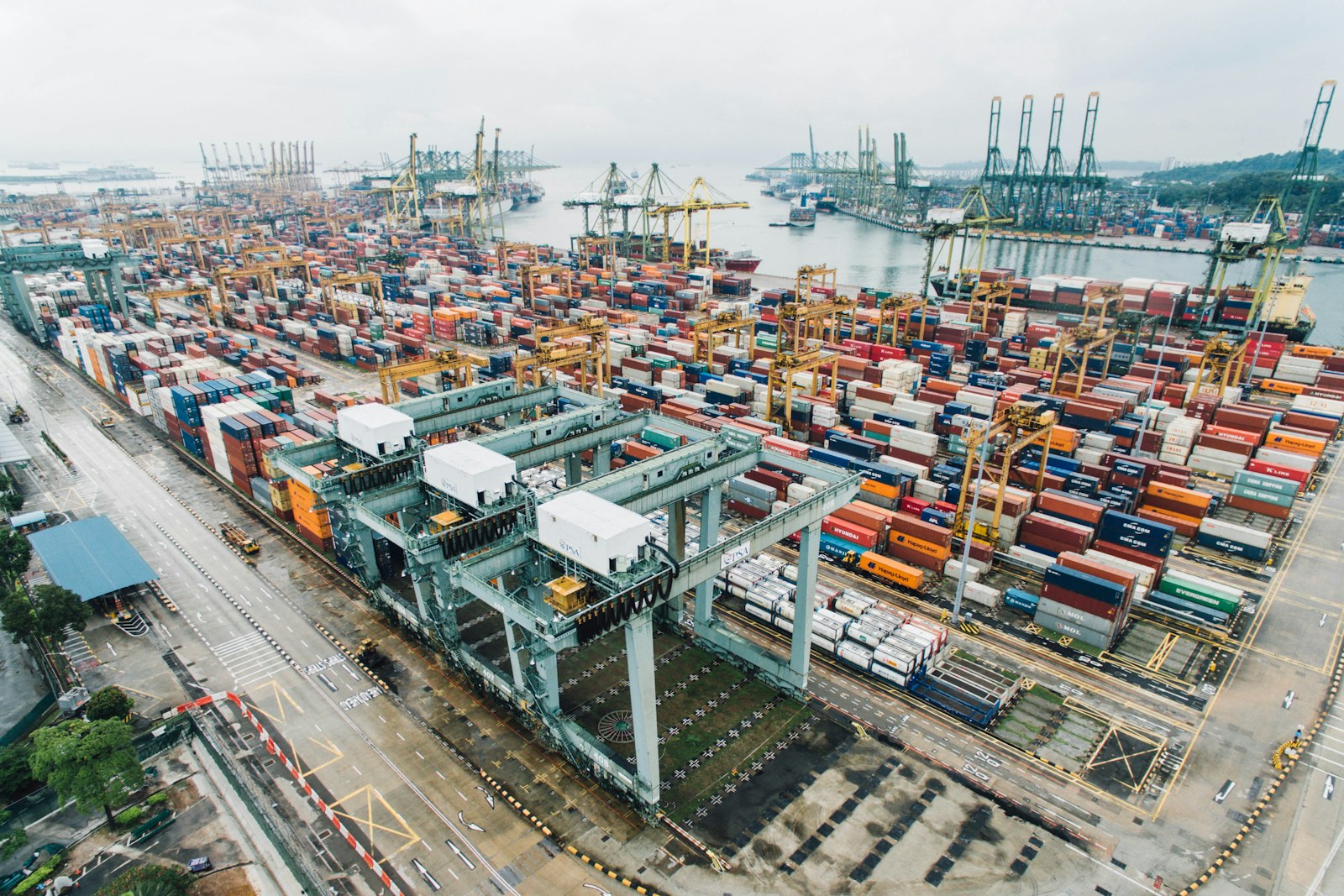
The Middle Corridor, formally the Trans-Caspian International Transport Route (TITR), is the trade route that moves goods between China and Europe through Kazakhstan, across the Caspian Sea, and through Azerbaijan and Georgia, bypassing both Russia and Iran. It is the middle option among three east-west land routes: south of Russia's Northern Corridor, north of the Iran-based Southern Corridor.
Cargo leaves China by rail into Kazakhstan, crosses the Caspian Sea by ferry or feeder vessel between Aktau or Kuryk (Kazakhstan) and Alat near Baku (Azerbaijan), continues by rail through Azerbaijan into Georgia, and then exits toward Europe, either through Georgia's Black Sea ports of Poti and Batumi, or by rail into Türkiye on the Baku-Tbilisi-Kars railway. End to end, the route runs roughly 7,000 kilometres.
Until 2022, the default land route between China and Europe was the Northern Corridor through Russia. Sanctions, insurance risk and reputational exposure pushed shippers to look for an alternative, and the Middle Corridor was the only one that avoided both Russia and Iran. The numbers followed: cargo on the Trans-Caspian route has grown roughly fivefold in seven years, Georgia's transit corridor handled 286,000 trucks in a single year, and the BTK railway is running at full capacity after its upgrade.
The corridor's constraint is not demand, it is steel on the Caspian. Ferry capacity between Aktau and Alat caps throughput; port handling has improved but remains the slowest link; and the gauge break between the Caspian region's 1,520 mm track and Türkiye's 1,435 mm standard adds time at Akhalkalaki. Congestion pricing, customs digitisation and new vessels are all in progress, but announced capacity still runs ahead of operational capacity, the gap where, as our analysis of the corridor's build-out put it, most infrastructure announcements quietly expire.
Two projects could reshape the corridor's economics. The TRIPP corridor through Armenia's Syunik province would add a second trans-Caucasus route linking Azerbaijan to Türkiye directly. And Georgia's Anaklia deep-water port, if completed, would remove the Black Sea's draft limits on vessel size. Both remain unbuilt; both are the difference between a niche route and a structural one.
Kazakhstan monetises transit and reduces dependence on Russian routes. Azerbaijan converts geography into fees and positions Baku as the Caspian's logistics hub. Georgia captures transit value on effectively all Azerbaijan-Türkiye cargo today, a position TRIPP could dilute. For Europe, the corridor is less about cost than resilience: a second land option that no single sanctioned or unstable state can switch off.