Energy
Absheron Licence Stretched to 2057 to Pay for One Well

November 24, 2026

4
Min
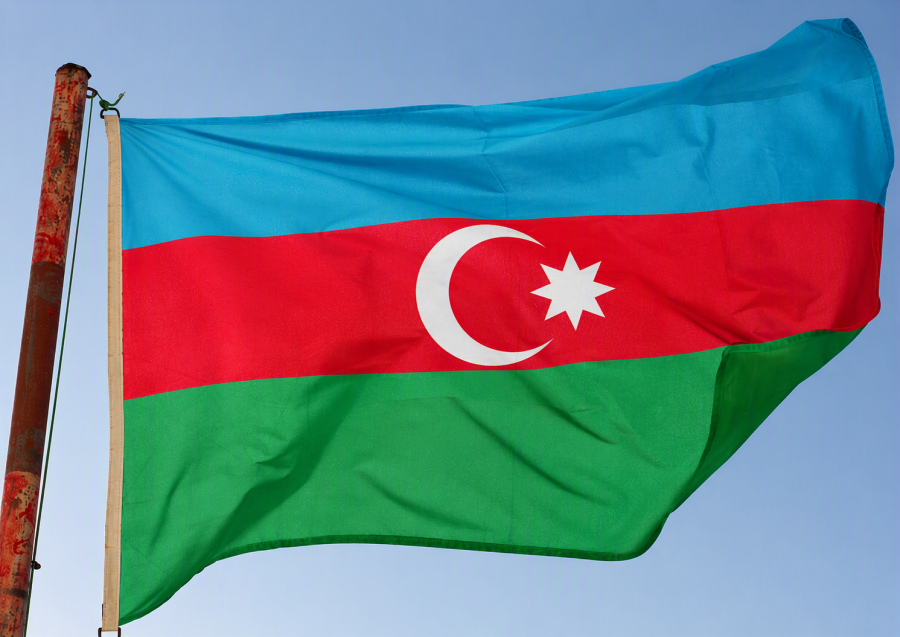
Azerbaijan's parliament on 24 November ratified a restated production sharing agreement (PSA) for the Absheron gas and condensate field that lengthens its development and production period from 30 to 40 years. The period started on 1 March 2017, so the licence now runs to 2057 instead of 2047. The stated reason is narrow: one subsea well.
According to the parliamentary briefing reported by Trend, the extension is tied to the fourth well in the Full Field Development that partners sanctioned on 25–26 September. That well is expected to sustain additional gas production through 2057, raise the block's recovery factor, and give the contractors time to recover what they spend on it. The draft law passed in a single reading.
Simple arithmetic shows why the old term was too short. TotalEnergies puts recoverable reserves at about 140 billion cubic metres (bcm). Phase one has produced at 1.5 bcm a year since July 2023; the full-field project lifts output to 6 bcm a year and 47,000 barrels a day of condensate from a planned 2029 start-up. Even if the field held a 6 bcm plateau every year from 2029 to the old 2047 cut-off, it would deliver roughly 108 bcm, plus around 9 bcm from phase one before then — well under 140 bcm. Real fields decline rather than plateau, so the gap under the old licence was likely larger.
The mechanism is cost recovery. Under a PSA, contractors recoup capital spending from production before profit gas is split with the state. A well that comes on late in a field's life needs production years ahead of it to earn its cost back. Without the extension, the fourth well's tail volumes would have fallen outside the licence, and the investment case would not have closed.
The restated agreement also makes the cost of building and operating the facilities that connect Absheron's gas and condensate to transport infrastructure a recoverable petroleum-operations cost. Those facilities are financed by the contractors — SOCAR Absheron, TotalEnergies EP Absheron (35%, operator) and ADNOC's XRG (30%), with SOCAR holding 35%. Classifying them as recoverable means they are repaid from production before profit sharing. In practice that moves the state's profit-gas share later in the project, in exchange for a longer-lived field.
The remaining changes are housekeeping: six annexes from the 2009 agreement are folded into one consolidated document, with editorial amendments.
For gas buyers in Türkiye and Europe, the extension matters more than the date. TotalEnergies says full-field gas will supply Azerbaijan's domestic market and go to Türkiye through existing infrastructure linked to the European grid; XRG has said Absheron gas could reach up to 16 markets. A licence to 2057 turns Absheron from a 2030s supply story into a source that can back long-term contracts.
For the state budget, the trade-off is timing. More cost recovery up front means less profit gas in the early years of full-field production, against more total gas over the field's life.
Neither the parliamentary briefing nor the partners have disclosed the cost of the fourth well, the expected plateau length, or whether profit-split terms changed. The figures above use TotalEnergies' published reserve and capacity numbers; the 108 bcm figure is our illustration, not a company forecast.
Background: TotalEnergies, SOCAR and XRG sanction the Absheron expansion; XRG says Absheron gas could reach 16 markets; Vallourec to supply 16,000 tonnes of pipe. More on SOCAR's portfolio on our SOCAR hub and Azerbaijan desk.
Sources: Trend, Azerbaijan extends development term for Absheron gas field to 40 years (24 Nov 2026); Milli Majlis, draft law; TotalEnergies, FID for Absheron Full Field Development (26 Sep 2026).
Photo: TotalEnergies