Business
South Caucasus Logistics Sector Rides Wave of Eurasian Trade Realignment

April 23, 2026

4
Min
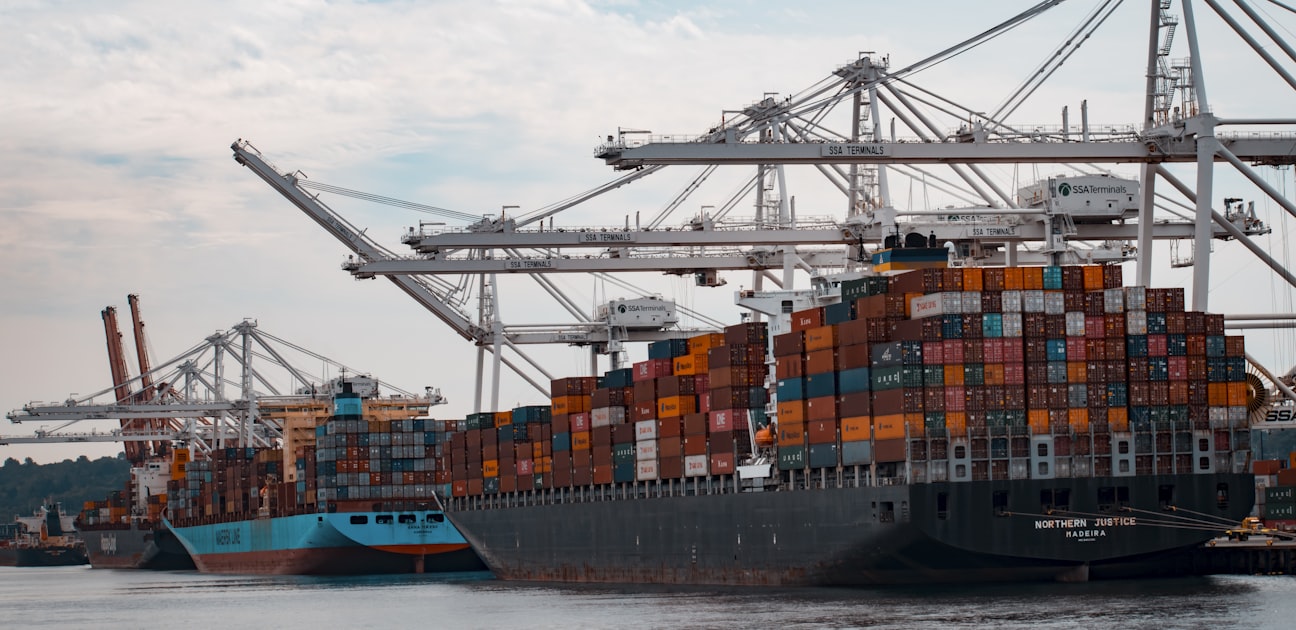
The South Caucasus logistics sector is experiencing a transformational period as Azerbaijan and Georgia emerge as critical nodes in the reorganization of Eurasian trade flows. Driven by geopolitical shifts, European demand for non-Russian transit alternatives, and Central Asian export growth, the region is attracting unprecedented investment in port infrastructure, rail networks, and logistics services.
Total freight along the Middle Corridor — the Trans-Caspian route linking China and Central Asia to Europe via Azerbaijan and Georgia — grew from 840,000 tons in 2021 to 4.5 million tons in 2024. Container traffic surged approximately 260 percent, and expectations for 2026 point to continued acceleration. The dramatic growth has turned the South Caucasus from a secondary trade corridor into a strategic transit region with global significance.
"We are witnessing a once-in-a-generation shift in Eurasian trade geography," said a logistics executive based in Baku. "The South Caucasus is at the crossroads of this transformation, and the companies and countries that invest now will capture the value for decades to come."
The Aze.Media reported that the logistics wave is creating new business opportunities across the value chain, from warehousing and distribution to customs brokerage and freight forwarding. International logistics companies are establishing regional offices in Baku and Tbilisi, and local firms are scaling operations to meet growing demand.
Azerbaijan's Port of Alat has become the primary Caspian transshipment hub, handling the majority of freight moving between Central Asia and the South Caucasus. The Alat Free Economic Zone, located adjacent to the port, is attracting investment in logistics facilities, light manufacturing, and value-added services that capitalize on the growing flow of goods through the region.
Georgia's Black Sea ports are the western terminus of the Middle Corridor, connecting Caspian freight to European and Mediterranean markets. Port upgrades at Poti and Anaklia, coupled with road and rail improvements, are designed to increase Georgia's transit capacity and reduce turnaround times for cargo moving through the country.
The European Union has committed more than 30 million euros to customs efficiency and logistics harmonization along the Middle Corridor, while the United States has pledged $2 billion in Development Finance Corporation guarantees to de-risk private investments in corridor infrastructure. These commitments reflect the growing strategic importance that Western governments attach to the South Caucasus transit route.
Challenges remain significant. Port congestion, vessel shortages on the Caspian Sea, and locomotive and wagon deficits on Azerbaijani and Georgian railways are creating bottlenecks that could constrain growth. However, investment in new ferry services, rail infrastructure, and digital logistics systems is underway to address these constraints. The German Marshall Fund analysis noted that the Middle Corridor is now firmly in the spotlight of international policy attention, with multiple stakeholders working to ensure that the route can fulfill its potential as a reliable alternative to established Eurasian trade routes.