Energy
SOCAR Pitches Batteries and Geothermal to Italian Partners

November 24, 2026

4
Min
SOCAR used the Azerbaijan-Italy Business Forum in Baku on 23 November to market something other than oil and gas. Vice President Afgan Isayev said the state company wants to start developing two geothermal projects in 2027 and is looking for an investor with geothermal and district-heating experience to do it, while weighing sodium-ion and vanadium flow batteries to stabilise Azerbaijan's grid.
The logic is straightforward. Geothermal projects need wells, and SOCAR drills wells. Isayev said preliminary desk studies of geothermal potential in the territories regained in 2020 were done with SLB, and that Neftchala, on the Kura delta, was assessed with Baker Hughes. Neftchala, he said, could use geothermal heat for both electricity and district heating.
The constraint is exploration risk: the first wells can come up cool or dry, and investors usually want that risk shared. Isayev said the ministries of energy and economy and the government will start designing mechanisms to mitigate risks for the geothermal industry. That is the piece to watch. Without a risk-sharing scheme, the 2027 start depends on finding a partner willing to carry exploration losses alone — and SOCAR named none.
On the grid, Isayev argued that existing networks cannot absorb unlimited power from variable renewables, so storage has to arrive alongside new wind and solar. SOCAR is looking at sodium-ion batteries, which he said could become cheaper because sodium is abundant and less environmentally damaging than lithium, and vanadium flow batteries. It is working with the Renewable Energy Agency (AREA), the Ministry of Energy and Azerenerji, the transmission operator. He also highlighted grid-forming inverters and microgrids for the industrial parks being built in the regions.
The reframing fact is the timeline. Isayev floated a move to vanadium batteries at the Baku Energy Forum in 2025, as reported by APA at the time. Eighteen months on, the technologies are still described as being "considered": no tender, capacity figure or budget has been published.
The timing pressure is real. Azerbaijan is building out a 500 kV backbone to move renewable power across the country, and on 23 November the Caspian-Black Sea-Europe Green Energy Corridor partners set a 2029 investment decision target, with first power in 2032. Export-scale wind needs a grid that can balance it at home first.
SOCAR's renewables message sat inside a broader energy agenda with Rome. Isayev said SOCAR intends to become a company with a balanced portfolio of hydrocarbons and low-carbon businesses by 2035. On the same day, Italian Deputy Prime Minister Antonio Tajani told Trend that Italy fully supports expanding the Trans Adriatic Pipeline (TAP), which reached 11.2 bcm a year of capacity this March after its first expansion step. SOFAZ, the state oil fund, reported $2.8 billion invested in Italy, about 4% of its portfolio.
SOCAR did not name candidate partners, megawatt targets or costs for either geothermal site or the storage plans. Its interest in joining Masdar and Arge's planned uninterrupted-power project was described as an interest, not an agreement. Trend's interview with Tajani is behind a paywall; we rely on its headline.
Related: Green Energy Corridor partners set 2029 FID target; Azerbaijan starts 235 km 500 kV grid backbone line; Azerbaijan pushes smart grid and battery storage. More on our SOCAR hub.
Sources: Trend, SOCAR plans geothermal projects starting in 2027 (23 Nov 2026); Trend, SOCAR explores energy storage technologies (23 Nov 2026); APA, SOCAR vice president on vanadium batteries (2025); Trend, Italy fully supports TAP's capacity expansion (23 Nov 2026); TAP AG.
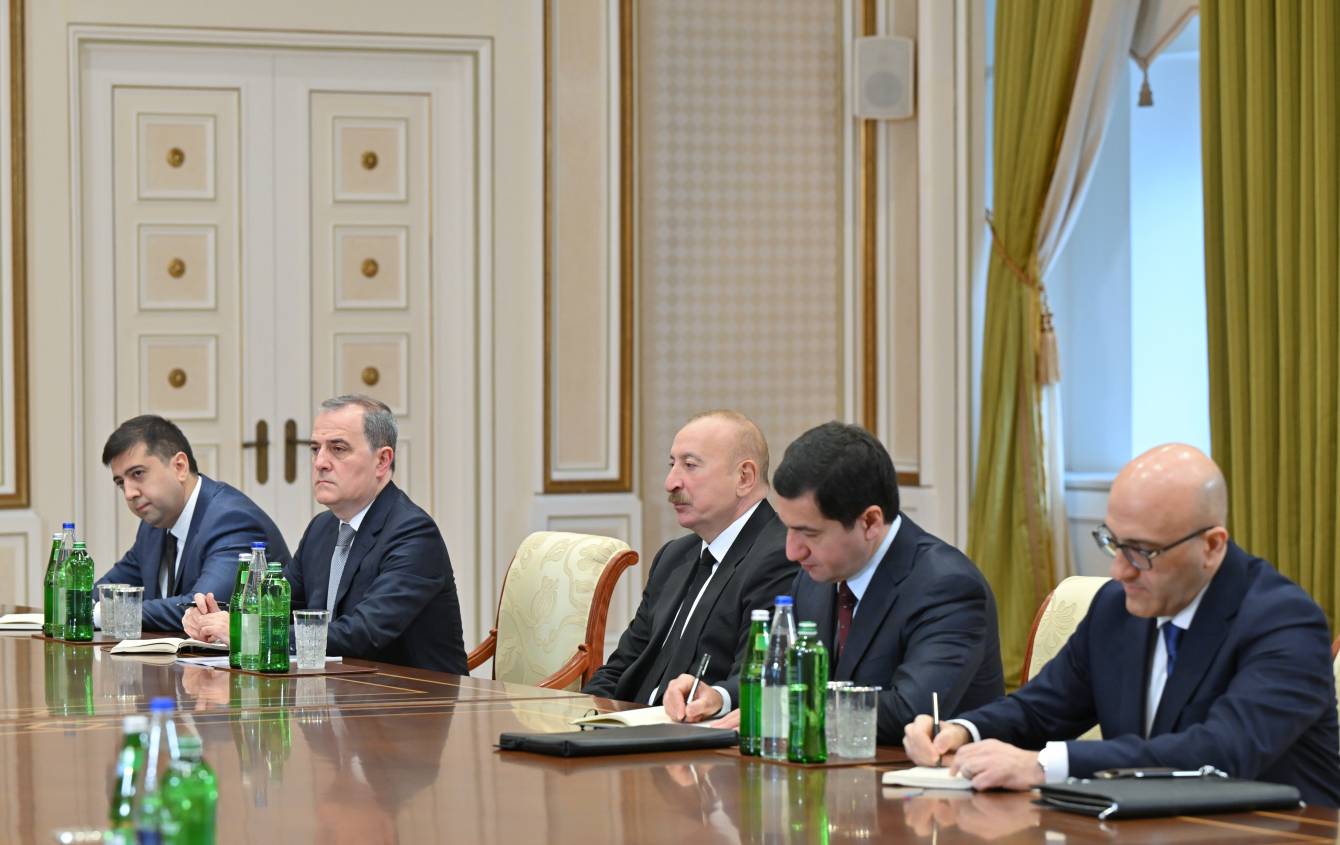
Photo: Press Service of the President of Azerbaijan (president.az) — President Aliyev receives Italy's Antonio Tajani, 23 November 2026