Energy
NDB Signs First $300m Loan With Uzbekistan for Clean Power

November 22, 2026

4
Min
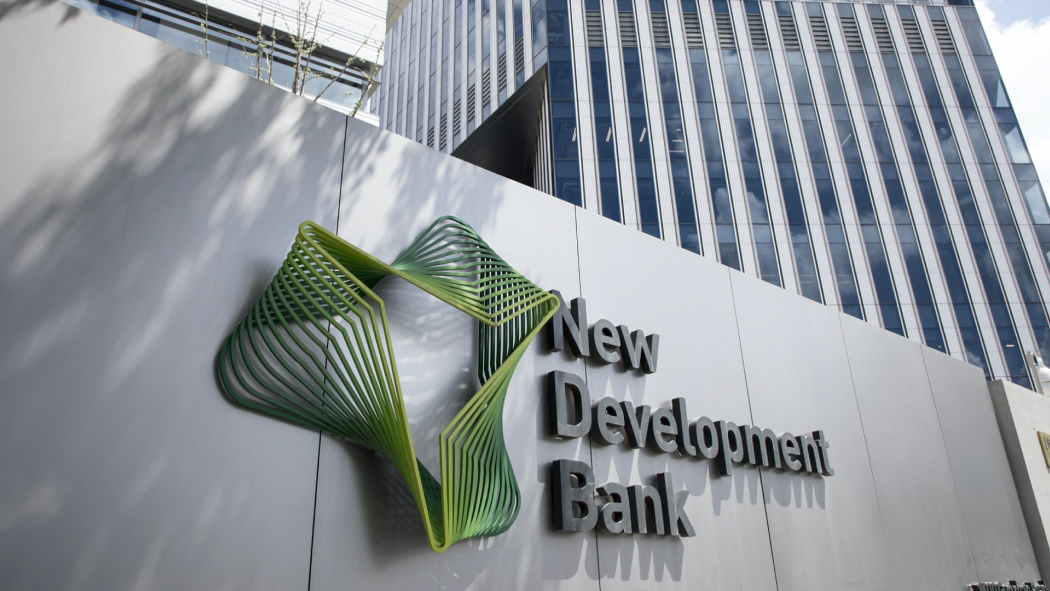
The New Development Bank (NDB), the Shanghai-based lender founded by the BRICS countries, signed a $300 million loan agreement with the government of Uzbekistan on 17 November to finance the first phase of a low-carbon power programme, the bank said in a press release. According to Xinhua, it is the bank's first project in Uzbekistan, which became a member in June.
The money goes to the first phase of the Low Carbon Energy Sector Development Project, which covers solar, wind, hydro and nuclear power. The NDB said the programme is meant to scale up low-carbon sources to meet fast-growing demand, diversify an energy mix that leans heavily on natural gas, improve energy security and support Uzbekistan's climate commitments. The Ministry of Economy and Finance will coordinate the project, which the bank described as aligned with the Uzbekistan 2030 Strategy.
"This loan marks an important step in the New Development Bank's partnership with Uzbekistan," Roman Serov, the bank's Vice-President and Chief Operating Officer, said in the release.
Uzbekistan joined the NDB on 5 June 2026 as its first member from Central Asia, according to Xinhua, carried by China's Belt and Road Portal. The bank was set up in 2015 by Brazil, Russia, India, China and South Africa and has since admitted Bangladesh, the United Arab Emirates, Egypt and Algeria as well.
Interfax reported that President Shavkat Mirziyoyev signed the law on accession in May, that Uzbekistan holds a 0.23% stake with $121.5 million of subscribed capital, and that the two sides have compiled a pipeline of projects worth $2.6 billion in water management, transport, infrastructure and private sector support. In the release, Mr Serov said the bank is developing a strong project pipeline in the country.
The $300 million is modest against the ambitions on the table. In October, at an investor dialogue chaired by Mr Mirziyoyev, Uzbekistan signed six fuel and energy agreements worth $4.7 billion covering 3,000 MW of generation and 400 MW of storage, UzDaily reported. The same report set out 2030 targets of 22,000 MW of new capacity, a 54% renewable share of energy, 4.5 GW of storage and 5,000 km of new transmission lines.
The bank's stated aim of reducing heavy reliance on natural gas is the core of the case. Other renewable projects are also moving, including the 500 MW Fergana solar term sheet signed with Oman's Voltamp this month.
The inclusion of nuclear power in the scope is also notable, because it widens the range of projects the loan can touch beyond wind and solar. The bank's press release does not say how the first phase will be divided between technologies.
The Times of Central Asia reported that the programme runs from 2026 to 2037, and that separately Uzbekistan and Saudi developer Acwa will assess four wind projects for carbon credits under Article 6.4 of the Paris Agreement, starting with the 1.5 GW Kungrad wind farm in Karakalpakstan.
The key details still to come are the loan's tenor and pricing, which the bank's release does not give, and the list of sub-projects in the first phase. A second phase would show whether the NDB intends to become a lasting lender in Central Asia or a single-project participant. The bank's share of Uzbekistan's $2.6 billion pipeline will be the clearest test.
Sources: New Development Bank, New Development Bank and Uzbekistan Signed Loan Agreement for Low Carbon Energy Sector Development; Belt and Road Portal (Xinhua), New Development Bank signs first loan agreement with Uzbekistan; Interfax, NDB loan to Uzbekistan; UzDaily, Uzbekistan Signs US$4.7 Billion Energy Agreements for Six Projects; The Times of Central Asia, Uzbekistan's First New Development Bank Loan Totals $300 Million
Image: New Development Bank, via ndb.int