Business
Middle Corridor Container Traffic Surges 260 Percent Amid Growing Bottlenecks

April 23, 2026

4
Min
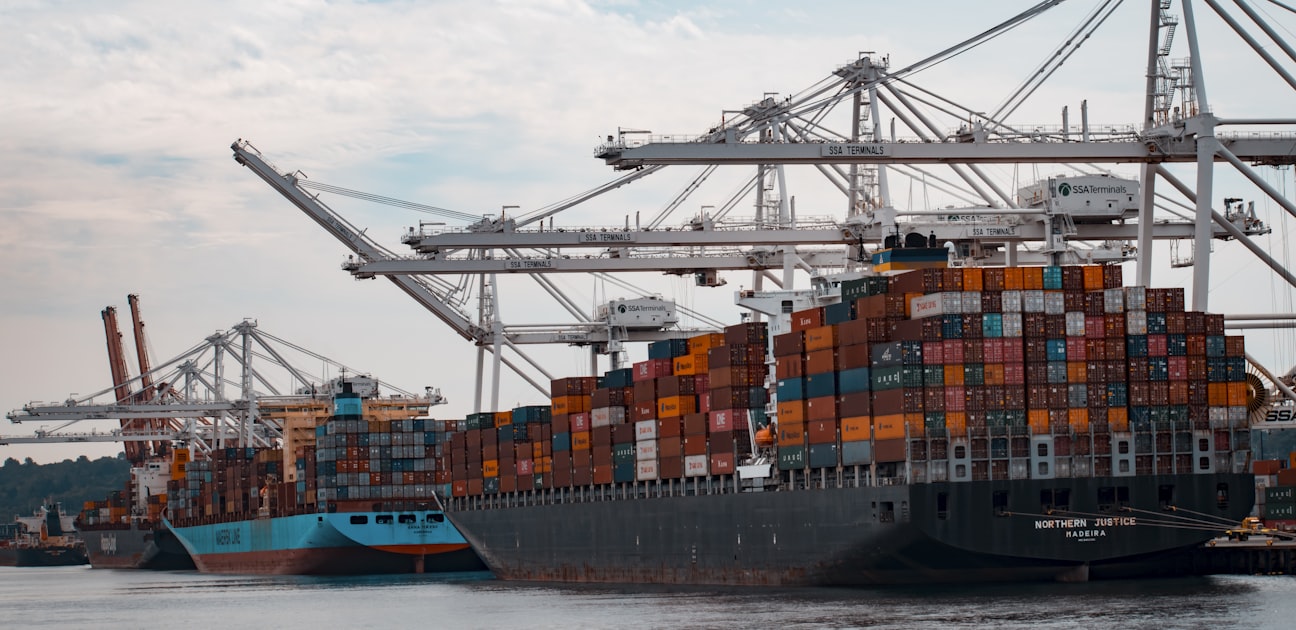
The Trans-Caspian International Transport Route, commonly known as the Middle Corridor, has experienced explosive growth in container traffic over the past three years, with volumes rising approximately 260 percent to more than 50,500 Twenty-foot Equivalent Units (TEUs). Total freight moved along the route grew from 840,000 tons in 2021 to 4.5 million tons in 2024, reflecting surging European demand for non-Russian transit options connecting to Central Asian and Chinese markets.
However, the rapid growth is now running up against severe infrastructure constraints. Cargo processing times at the ports of Aktau in Kazakhstan and Alat in Azerbaijan have increased roughly threefold, creating bottlenecks that threaten to cap further expansion. Rail networks in Azerbaijan and Georgia are struggling with shortages in locomotives and wagons, and maritime transport across the Caspian Sea is hampered by limited vessel availability.
"The Middle Corridor is a victim of its own success," said a logistics analyst at a Baku-based advisory firm. "Demand has outpaced infrastructure investment, and without rapid action, we risk losing cargo to competing routes."
The Caspian Post's analysis identified maritime transport as the most acute bottleneck, noting that the limited number of vessels operating on the Caspian Sea is constraining throughput at both Kazakhstani and Azerbaijani ports. A plan envisages six new ferries on the Kuryk-Alat route, with the first two expected to enter service in the first half of 2026 and additional vessels to follow through 2028.
Rail infrastructure is receiving attention as well. In January 2026, the railway authorities of Azerbaijan and Georgia signed two agreements to facilitate the full launch of a joint enterprise operating on the Baku-Tbilisi-Kars railway line. The BTK line, which connects the South Caucasus directly to Turkey and onward to European rail networks, is seen as a critical component of the corridor's long-term capacity.
Azerbaijan is also nearing completion of the Horadiz-Aghband railway, part of the TRIPP route that will connect the Nakhchivan exclave to the main Azerbaijani rail network. The line is designed with an initial throughput capacity of 15 million tons per year, creating additional north-south connectivity that could feed into the BTK east-west corridor.
Despite the bottlenecks, transit times along the Middle Corridor remain competitive. Cargo typically reaches European markets within 15 days, compared to 45-55 days via traditional maritime routes. This time advantage continues to attract logistics companies and manufacturers seeking faster, more predictable supply chains.
The European Union has signaled its commitment to supporting the corridor's development, with a meta-study identifying priority investment areas and more than 30 million euros committed to customs efficiency, logistics harmonization, and feasibility programs. The Astana Times reported that Azerbaijan's growing role as a key trade gateway is central to the corridor's expansion strategy, with the Port of Alat serving as the primary Caspian transshipment hub.