Global
Aliyev Confirms Middle Corridor Extension Through Armenia

August 30, 2026

4
Min
Azerbaijan is actively developing a new extension of the Middle Corridor that will run through Armenian territory — a route that would represent a fundamental transformation of regional trade infrastructure and Armenia's economic role in Eurasia — President Ilham Aliyev announced at the opening of the 13th Global Baku Forum in Baku on March 12, 2026.
"Now we are working closely, after peace with Armenia, on a new extension of the Middle Corridor, which will go through the territory of Armenia," Aliyev told forum delegates, adding that the development could turn Armenia into a transit country "for the first time in its history of independence." The statement at a major international gathering — the Global Baku Forum is one of the region's most significant annual diplomatic events — signals that the post-peace economic architecture is being actively shaped, not merely discussed.
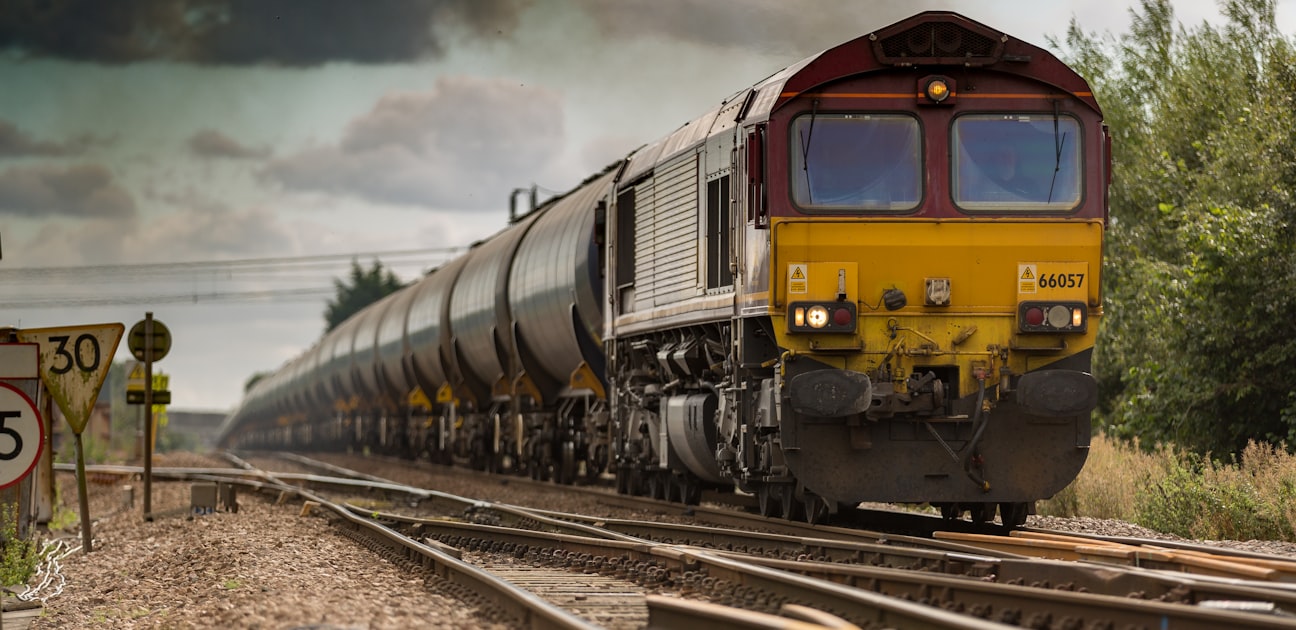
The announcement came against a backdrop of already-operational rail trade that would have been unthinkable twelve months ago. According to Caspian News, more than 10,000 tonnes of oil products — including diesel fuel and petroleum — have been shipped from Azerbaijan to Armenia by rail since January 2026, transiting through Georgian territory. On March 11 alone, a train of 31 tank wagons carrying 1,984 tonnes of Azerbaijani diesel fuel and two wagons with 135 tonnes of Russian fertilizer departed for Armenia. In addition to fuel, Azerbaijan has facilitated the transit of more than 22,000 tonnes of grain across 320 wagons and 610 tonnes of fertilizer since the trade corridor opened.
The logistics of these initial shipments illustrate both the potential and the complexity of the emerging trade architecture. Georgia's role as the transit state between Azerbaijan and Armenia has already generated friction: Azerbaijani Foreign Minister Jeyhun Bayramov noted that the tariff initially proposed by Georgia was "very high" and inconsistent with existing practice. The Georgian side subsequently confirmed that no transit fee would be charged for the first shipment, while the tariff for future shipments has not yet been finalised. That ambiguity is a microcosm of the wider challenge — establishing the commercial and regulatory framework for a trade corridor that did not exist three months ago.
The TRIPP corridor — the Trump Route for International Peace and Prosperity — is the infrastructure project at the centre of this economic transformation. The 42-kilometre segment running through Armenia represents the critical link between mainland Azerbaijan and its Nakhchivan exclave, a connection severed since the early 1990s. On the Azerbaijani side, the Horadiz–Aghband railway will connect to the Armenian segment at the interstate border, continue across Armenian territory, and link to the Nakhchivan rail system and ultimately to Turkey's network. Azerbaijan has stated its intention to complete its section by end-2026, while Armenia and the United States are working on the legal framework, regulatory mechanisms, and institutional setup required for the Armenian portion. The US is set to hold a 74% stake in the development company managing the corridor.
For Armenia, the transit country framing carries substantial economic and strategic weight. A country that has historically been isolated from east-west trade flows — sharing open borders only with Iran and Georgia after the decades-long closure of the Turkish and Azerbaijani frontiers — would gain a new economic identity as a corridor state. Transit revenue, infrastructure investment, and connectivity with both European and Central Asian markets would follow. Prime Minister Pashinyan has described this as a moment of genuine historic significance: Armenia overcoming a cycle in which independence was repeatedly constrained by geopolitical circumstances.
The broader Middle Corridor — also known as the Trans-Caspian International Transport Route — already moves goods between China, Central Asia, the Caspian, and Europe through Azerbaijan and Georgia. An Armenian extension would add redundancy to the route, reduce transit times for certain cargo flows, and create a direct rail link between Azerbaijan's exclave and the mainland for the first time in over three decades. Analysts estimate that a fully operational corridor could generate significant annual transit revenues for Armenia while reducing freight costs for the entire Eurasian logistics chain that currently routes through northern Iran or the Georgian–Russian border.
The geopolitical dimensions are equally significant. Azerbaijan's willingness to ship fuel to Armenia — a country it was at war with until 2020 — and Armenia's acceptance of that shipment despite domestic political opposition, represent a practical operationalisation of the peace framework that goes beyond diplomatic communiqués. Each train that crosses the border is a data point in the credibility of normalisation. The question now is whether the institutional and legal architecture can be built quickly enough to match the commercial momentum already in motion.