Business
Middle Corridor Freight Volumes Set to Rise 10% in 2026, OTS Summit Projects

April 23, 2026

4
Min
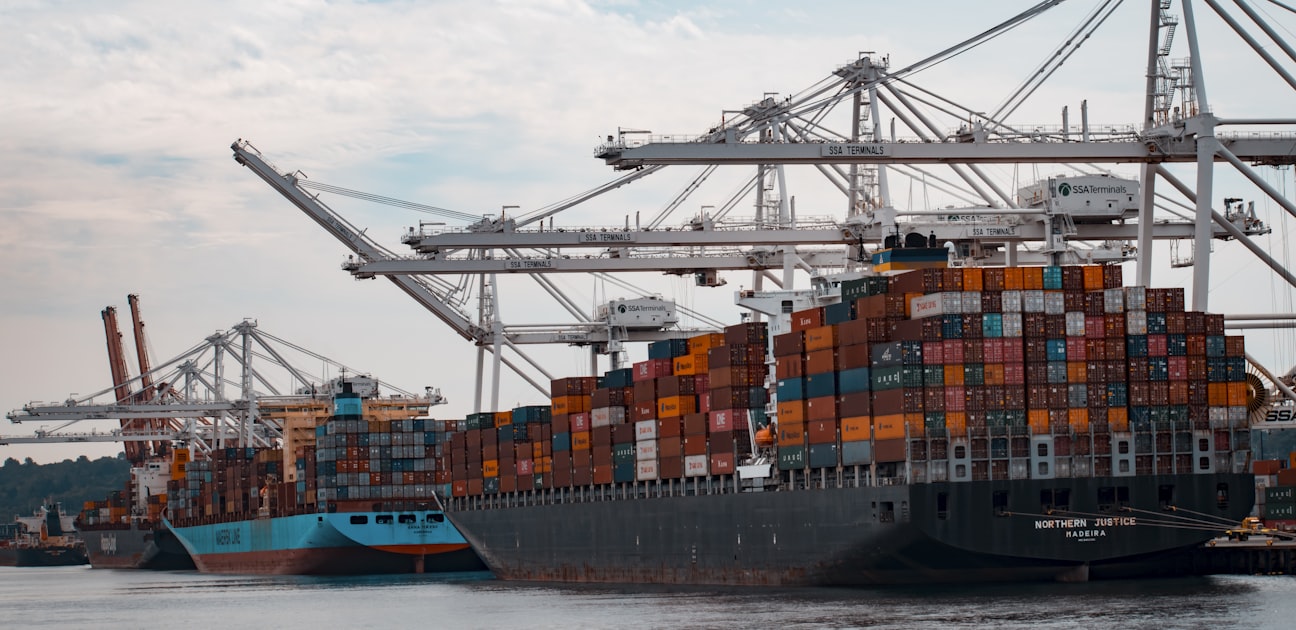
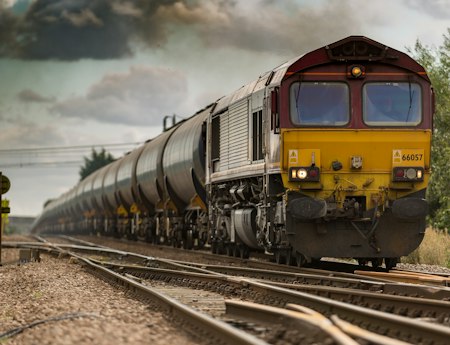
Freight volumes transiting the Middle Corridor — the overland trade route linking China and Central Asia to Europe via the Caspian Sea, Azerbaijan, Georgia, and Turkey — are projected to grow by a further 10 percent in 2026, according to projections presented at the Second Meeting of Heads of Government of the Organization of Turkic States held in Baku on 1–2 April. The forecast builds on the nearly 11 percent growth recorded in 2025, when total transit volumes reached approximately 5 million tons.
OTS Secretary-General Kubanychbek Omuraliev told the assembled heads of government that the corridor is experiencing a structural, not merely cyclical, increase in utilisation. The disruption of the northern route through Russia, which followed Western sanctions imposed after the 2022 invasion of Ukraine, initially drove a redirection of Central Asian and Chinese freight through the Middle Corridor. But logistics providers report that many of these redirections have now become permanent, as shippers prioritise route diversity and predictability over marginal cost savings.
The Baku summit produced a package of commitments from member states to remove bottlenecks constraining corridor throughput. In Kazakhstan, national logistics operators are scaling up capacity along the Trans-Caspian segment, deploying new Caspian ferries and upgrading the port of Aktau. In Georgia, the long-delayed Anaklia Deep Sea Port project is advancing toward construction tender, while the Poti Free Industrial Zone is positioning itself as a value-adding hub for goods in transit. In Azerbaijan, the Transport and Communications Holding is integrating the country's rail, maritime, and port infrastructure into a single cross-modal coordination platform.
The Middle Corridor's growing strategic importance has attracted investments from logistics real estate developers acquiring land adjacent to intermodal terminals in Baku, Tbilisi, and Kars. Container leasing companies are redirecting equipment flows toward Caspian ports, and insurance and trade finance providers are building out corridor-specific product suites.
The commercial logic of the corridor is also attracting attention from markets beyond the immediate post-Russia-sanctions context. Indian exporters have begun exploring the corridor as a faster alternative to maritime routes for time-sensitive goods destined for Central European markets. The corridor's multi-modal nature — combining rail, Caspian ferry, and road segments — provides flexibility that purely rail-based alternatives cannot match.
The OTS summit communiqué committed member states to a joint working group on tariff harmonisation across the corridor — a long-standing obstacle that has historically allowed individual countries to extract rents at the expense of overall corridor competitiveness. Kazakhstan and Azerbaijan are leading efforts to establish transparent, corridor-wide pricing that would make the route more predictable for large-volume shippers. If implemented, harmonised tariffs could catalyse a further step-change in volumes beyond the 10 percent baseline projection.
Further Reading:
Baku-Tbilisi-Kars Railway Upgrade Unlocks New South Caucasus Freight Capacity
Kazakhstan and Georgia Forge Closer Ties to Strengthen Middle Corridor Capacity