Business
Georgia Plans Joint Customs Checkpoints with Azerbaijan and Armenia to Cement Hub Status

March 17, 2026

4
Min
Tbilisi, March 17, 2026 — Georgian Prime Minister Irakli Kobakhidze has announced that Tbilisi is actively developing joint customs checkpoints with both Azerbaijan and Armenia, backed by the Asian Development Bank, as the centrepiece of Georgia's strategy to position itself as a "multifunctional regional hub" amid the most dynamic shift in Eurasian trade routes in decades.
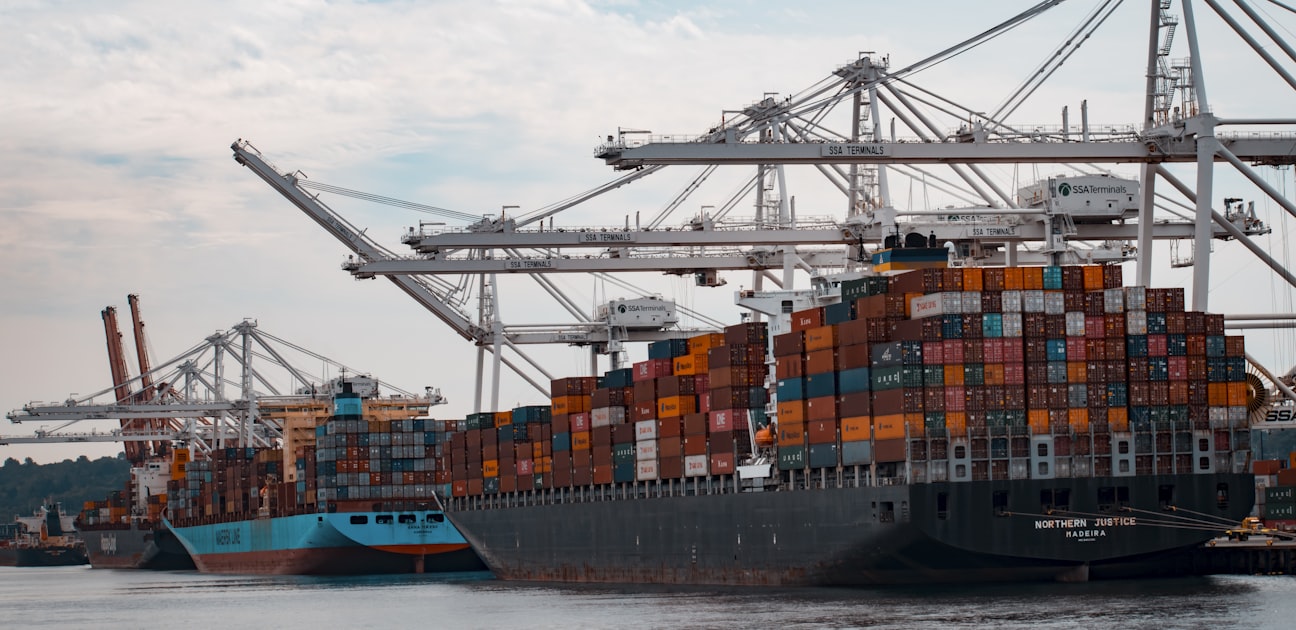
"The world is currently reassessing trade routes, and Georgia is emerging as a regional hub for stability and logistics," Kobakhidze said, citing large-scale infrastructure projects designed to anchor this transformation: the East-West Highway, the Baku-Tbilisi-Kars (BTK) railway, dry ports, and the Anaklia deep-water port on the Black Sea. He emphasised that Georgia currently provides essential Black Sea access for seven landlocked countries, including Azerbaijan, Armenia, and five Central Asian states — a geographic advantage Tbilisi is now moving to institutionalise through upgraded border infrastructure.
Joint customs checkpoints — where officials from both countries process cross-border movements at a single point — would significantly reduce transit times and administrative costs for cargo moving between Georgia and its neighbours. For the South Caucasus trade corridor, which has seen surging volumes since Russia's 2022 Ukraine invasion rerouted Central Asian cargo westward, this is a material operational upgrade. According to Anadolu Agency, work on the checkpoints with Baku and Yerevan is "actively underway" with ADB support, alongside the BTK railway completion and the Anaklia dredging operations scheduled for July 2026.
The initiative comes as Georgia faces emerging competition for its corridor role. The TRIPP corridor through Armenia creates a potential alternative Caucasus path that bypasses Georgia entirely for certain cargo flows. Kazakhstan has explicitly flagged a new route via Armenia and Nakhchivan to Turkish ports. Kobakhidze's hub strategy — combining customs modernisation, railway upgrades, and deep-water port development — is Georgia's answer to this competitive pressure. The Caspian Post confirmed Economy Minister Kvrivishvili's explicit identification of the BTK railway, Anaklia port, and energy sector as Georgia's three infrastructure priorities for 2026.
For multinationals and logistics operators, the joint customs checkpoint initiative is a practical signal of institutional intent. Combined with Anaklia dredging, BTK completion, and the approaching TRIPP construction, Georgia is assembling the full stack of a world-class transit corridor — one that could offer genuinely competitive alternatives to Russian and Iranian routes for China-Europe cargo flows within three to five years.