Global
Georgia GDP Growth Hits 8.4 Percent in Early 2026 as IMF Projects Expansion

April 23, 2026

4
Min

Georgia's economy posted real GDP growth of 8.4 percent in January-February 2026, accelerating from 7.5 percent in the same period of 2025, according to preliminary estimates released by the national statistics office. The strong start to the year comes as the International Monetary Fund completed its 2026 Article IV mission to the country, projecting full-year growth of 5.3 percent before a convergence toward the economy's potential rate of around 5 percent in the medium term.
The IMF's staff concluding statement, published on April 7, painted a broadly positive picture of Georgia's macroeconomic trajectory while flagging several areas requiring policy attention. The Fund noted that Georgia's banking sector remains solid but urged authorities to continue monitoring fast-growing lending, foreign currency exposure, real estate financing, and digital asset activity.
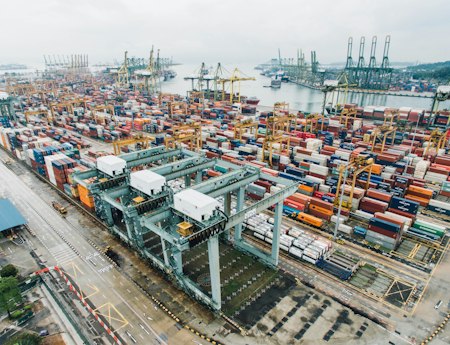
The growth momentum has been driven by a combination of strong domestic consumption, expanding transit and logistics revenues linked to the Middle Corridor, and continued inflows of foreign direct investment. Georgia's positioning as a regional logistics hub connecting Central Asia to Europe has generated significant economic spillovers, with port and railway infrastructure projects contributing to both employment and output growth.
The tourism sector has also contributed to the expansion, with visitor arrivals continuing to grow in early 2026. However, the IMF cautioned that external risks remain elevated, including potential spillovers from geopolitical tensions in the wider region and the possibility of tighter global financial conditions.
On fiscal policy, the Fund recommended maintaining a prudent stance while creating space for priority investments in infrastructure and human capital. Georgia's public debt remains manageable, but the IMF emphasized the importance of building fiscal buffers against potential shocks.
The real estate sector presents a mixed picture. While commercial development has slowed relative to the boom years, residential demand remains robust, particularly in Tbilisi and the Black Sea coastal city of Batumi, where foreign buyer interest continues to support prices. The IMF's warning about real estate financing suggests that regulators are watching for signs of overheating in the property market.
Aliyev Visits Georgia to Strengthen Trilateral Economic Corridor