Energy
Baku Hosts Ministerial Talks on 1,300 MW Caspian-Black Sea Green Energy Corridor

June 26, 2026

5
Min
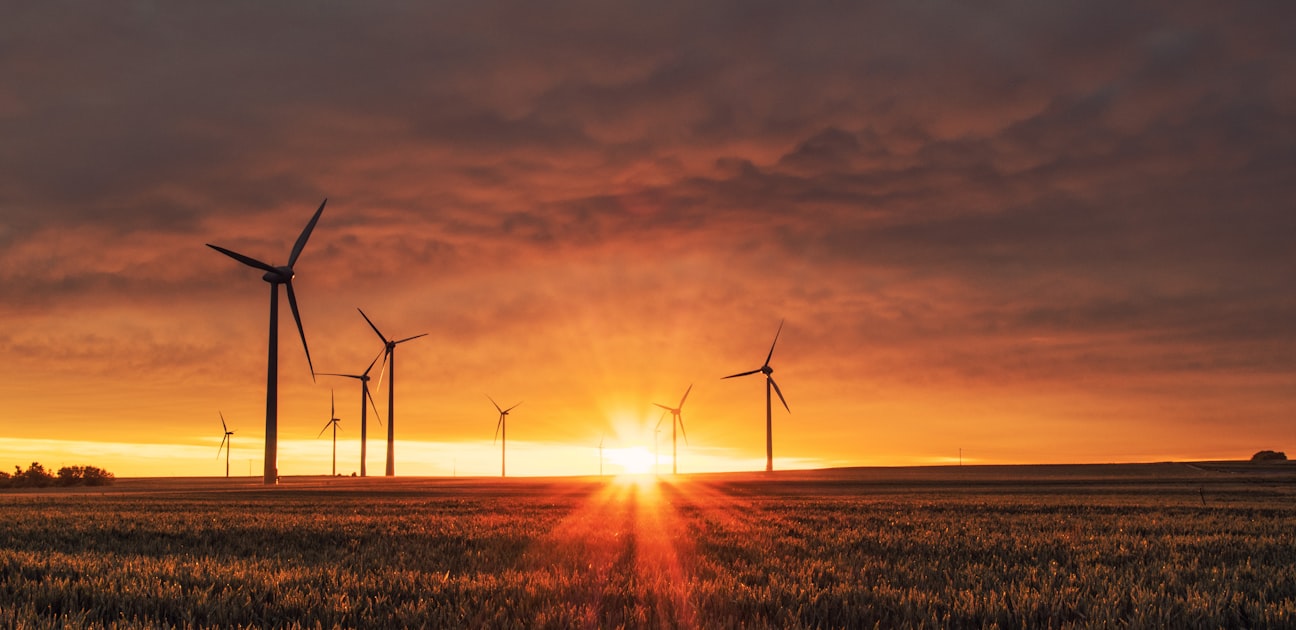
Wind turbines like those expected to feed the green electricity that the Caspian-Black Sea corridor will carry from Azerbaijan to Europe. Photo: Unsplash.
Baku has stepped up diplomacy around its flagship clean-power export plan, hosting a ministerial-level gathering in late June 2026 to advance the Caspian-Black Sea-European Green Energy Corridor. The meeting, flagged by Farhad Mammadov, General Director of the Green Energy Corridor JV (GECO), brought together the partner governments to align on the financing, governance and engineering steps needed to move the mega-project from study to delivery.
At the heart of the scheme is a high-voltage direct-current submarine cable running across the floor of the Black Sea from Georgia to Romania, linking the South Caucasus power system with south-eastern Europe. The link is designed to span more than 1,155 kilometres, of which roughly 1,115 km lie underwater and 40 km on land, operating at 525 kV with a transmission capacity of 1,300 MW. Completion is currently targeted for 2032.
The project's credibility has been bolstered by its entry into the European grid planning process. The Caspian-Black Sea-European Green Energy Corridor's Phase 1 and Phase 2 were included in the ENTSO-E Ten-Year Network Development Plan (TYNDP 2026) portfolio, with cost-benefit results expected later in the year. Azerbaijan's energy minister has indicated that the corridor's full feasibility study, covering market, transmission, route and financial modelling, should be ready in the summer of 2026.
Ahead of the Baku session, the project board reviewed stakeholder engagement, budget planning for the 2027-2028 period and technical matters tied to the Black Sea seabed survey. Dedicated talks were also held with prospective developers, including Xlinks and Zhero, who set out cooperation models and possible next steps. The corridor is intended to feed off Azerbaijan's rapidly growing renewable fleet, which already includes ACWA Power's newly inaugurated 240 MW wind plant and Masdar's 230 MW Garadagh solar facility.
The corridor is also gaining a Central Asian dimension. In July 2025 Azerbaijan, Kazakhstan and Uzbekistan established the "Green Corridor Union" joint venture to build the Caspian leg, extending the concept so that wind and solar generated across Central Asia could ultimately reach the EU's internal electricity market. For Baku, the corridor offers a route to monetise its renewable potential while reinforcing its broader pitch as a future green-electricity exporter to Europe, not merely a gas supplier.