Diplomacy
Armenia Courts the EU, Romania and the EAEU in Two Days

November 24, 2026

4
Min
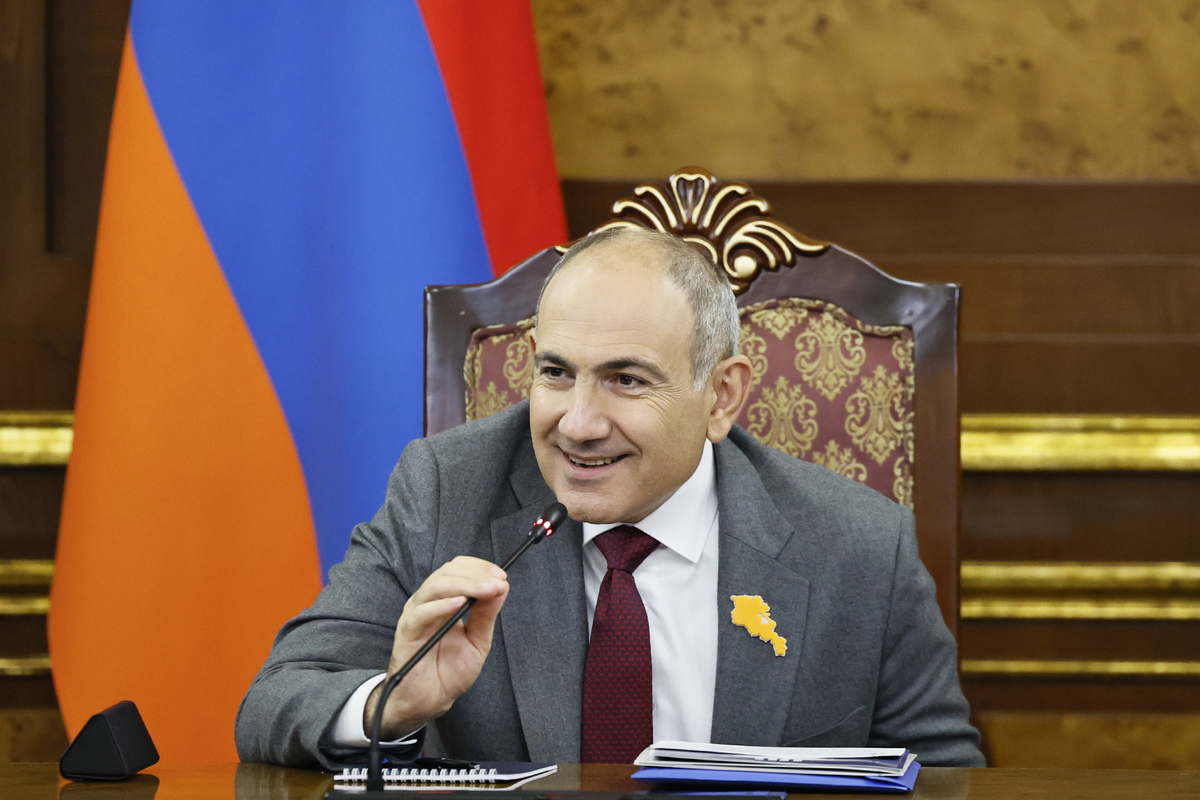
In the space of two days Armenia's government has been in three capitals that pull in different directions. On November 23 Prime Minister Nikol Pashinyan received the ambassadors of EU member states in Yerevan to discuss visa liberalisation and economic diversification. On November 24 he was in Bucharest, the first official visit to Romania by an Armenian prime minister since 2011. The same day, Deputy Prime Minister Mher Grigoryan arrived in Moscow for talks with Russian Deputy Prime Minister Alexei Overchuk and a meeting of the Council of the Eurasian Economic Commission (EEC).
Read together, the schedule says something more useful than any single meeting: Armenia is not choosing between the European Union and the Eurasian Economic Union yet. It is building options on both sides and pricing the cost of leaving neither.
Pashinyan met President Nicușor Dan at the Cotroceni Palace and was scheduled to meet Prime Minister Luca Niculescu and Senate President Mircea Abrudean, according to the Armenian government and Romanian media. Armenpress reported that a joint declaration on strategic partnership was scheduled to be signed after the talks. Romania's foreign minister Oana Țoiu said in September that the partnership text had been finalised at negotiation level. The visit falls weeks before the 35th anniversary of diplomatic relations on December 17.
The commercial logic is geographic. Romania is an EU and NATO member on the Black Sea, and it is the EU landing point of the Caspian–Black Sea–Europe Green Energy Corridor that Azerbaijan, Georgia, Romania and Hungary are developing, with a 2029 investment decision now targeted, as CBJ reported today. Armenia is not a party to that corridor. A strategic partnership with the corridor's European end is one way to stay close to the routes being built around it while the TRIPP transit project on its southern border moves into construction.
At the meeting with EU ambassadors, the government said, the discussion covered progress on the visa-liberalisation dialogue, steps toward Armenia's economic diversification, regional cooperation after peace with Azerbaijan and the launch of the practical phase of TRIPP. For Armenian businesses, visa-free travel to the Schengen area would lower a practical barrier to selling services and building supply relationships in the EU. No timetable was announced.
Grigoryan's working visit runs to November 25 and includes the regular EEC Council session, the body that sets customs and trade rules for the EAEU. His presence contrasts with Economy Minister Gevorg Papoyan, who declined to attend an EAEU ministerial meeting in Moscow on customs-tariff regulation last week and said Armenia could take restrictions on Armenian goods to the union's court if they are not lifted, according to ARKA.
Two other threads tie Yerevan to Moscow. Armenia and Russia held the first meeting of a working group on modernising the railway network, which Russian Railways operates under concession, on November 17. Pashinyan has said Armenia will look for other investors if Russian Railways will not fund the work. And Pashinyan has said the question of choosing between the EU and the EAEU stems from internal processes and could eventually require a referendum.
The finding is in the division of labour. Pashinyan takes the European and Black Sea meetings; a deputy prime minister handles the Eurasian institutions; the economy minister signals that Armenia will litigate rather than concede on market access. That keeps Armenia inside the EAEU's customs rules, on which exporters to Russia depend today, while it negotiates the EU relationship it says it wants.
For an exporter of Armenian brandy or food to Russia, the near-term risk is not a sudden exit from the EAEU but friction inside it: inspections, restrictions and slower clearances while the political argument plays out. For an investor in transit or energy, Bucharest and TRIPP point to where new infrastructure money may come from.
Trade restrictions inside the EAEU could escalate faster than legal remedies work. The rail concession talks could stall, leaving Armenia's main freight network underfunded during the TRIPP build-out. A strategic partnership with Romania is a framework, not a funding line; without concrete transport or energy projects it adds little to trade.
At publication, CBJ had not seen official confirmation that the Armenia–Romania strategic partnership declaration was signed, or its text. Romanian outlet Atlasnews reported that no bilateral agreements had been announced in advance. The agenda of Grigoryan's talks with Overchuk has not been published.
Whether the Bucharest declaration names specific transport, energy or digital projects; what the EEC Council decides on the restrictions Armenia has complained about; and the next meeting of the Armenia–Russia railway working group. Follow developments on our Armenia desk, including the start of TRIPP's building phase.
Photo: Office of the Prime Minister of Armenia (primeminister.am), CC BY-ND 3.0