Global
Armenia Economic Activity Jumps 8% in January-May 2026 as Construction, Industry Surge

June 26, 2026

4
Min

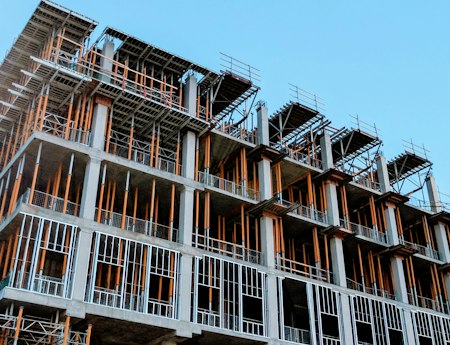
Construction cranes over Yerevan capture the building boom now powering Armenia's economy, the single biggest driver of double-digit sector growth in 2026. Photo: Unsplash.
Armenia's economy carried strong momentum into the summer of 2026, with the country's economic activity index rising 8% in January through May compared with the same period a year earlier, according to data from the Statistical Committee of Armenia. The reading confirms that the rapid expansion recorded at the start of the year has held up, even as exports softened and the wider South Caucasus navigated a fragile post-conflict transition.
Construction remained the standout performer. Output in the sector climbed 24.1% year-on-year in the first five months, reaching 207.34 billion drams, with May activity alone up 27.1% against the same month in 2025. Industrial production rose 12.2% over the period to 1.266 trillion drams, underpinned by a powerful recovery in mining and quarrying, which posted 35.5% growth in the first quarter. The construction and industrial surge has more than offset weakness in re-export trade that had inflated headline figures in prior years.
The buoyant data arrived alongside an upgraded external assessment. In its June 2026 Global Economic Prospects report, the World Bank improved Armenia's growth forecast for the year to 5.3%, up from the 4.9% it projected in January. The revision aligns the bank with other lenders: the Eurasian Development Bank also sees 5.3% growth, while the Asian Development Bank and EBRD both forecast 5.5%, and the IMF projects 5.25%. The cluster of estimates points to a broad-based consensus that Armenia's underlying expansion is durable rather than driven by one-off flows. The latest figures published by ARKA show the breadth of the gains across sectors.
Beneath the headline growth, however, policymakers are watching two pressure points. Inflation has remained sticky, and the IMF has cautioned that price growth will stay elevated in the near term, complicating the Central Bank's path on interest rates. The bank intervened heavily in currency markets through 2025, purchasing roughly $1.8 billion, and combined with a March Eurobond issuance lifted gross reserves to about $5.1 billion, or 3.9 months of import cover. That buffer gives Yerevan room to manage external shocks, but officials acknowledge that sustaining 6% average annual growth, the government's medium-term target, will require deeper structural reform rather than cyclical construction strength.
For investors, the signal is that Armenia is consolidating its position as one of the faster-growing economies in the region, even as nominal GDP growth of 4% in the first quarter reflects a normalisation from the extraordinary 2022-2024 boom. The challenge now is converting public construction activity and mining receipts into diversified, export-oriented capacity. With multilateral lenders deepening engagement and the World Bank's Armenia programme expanding, the macro story for the second half of 2026 hinges on whether reform momentum keeps pace with the construction cranes now reshaping Yerevan's skyline.