Diplomacy
Azerbaijan and Georgia Deepen Trade and Energy Alliance

August 30, 2026

4
Min
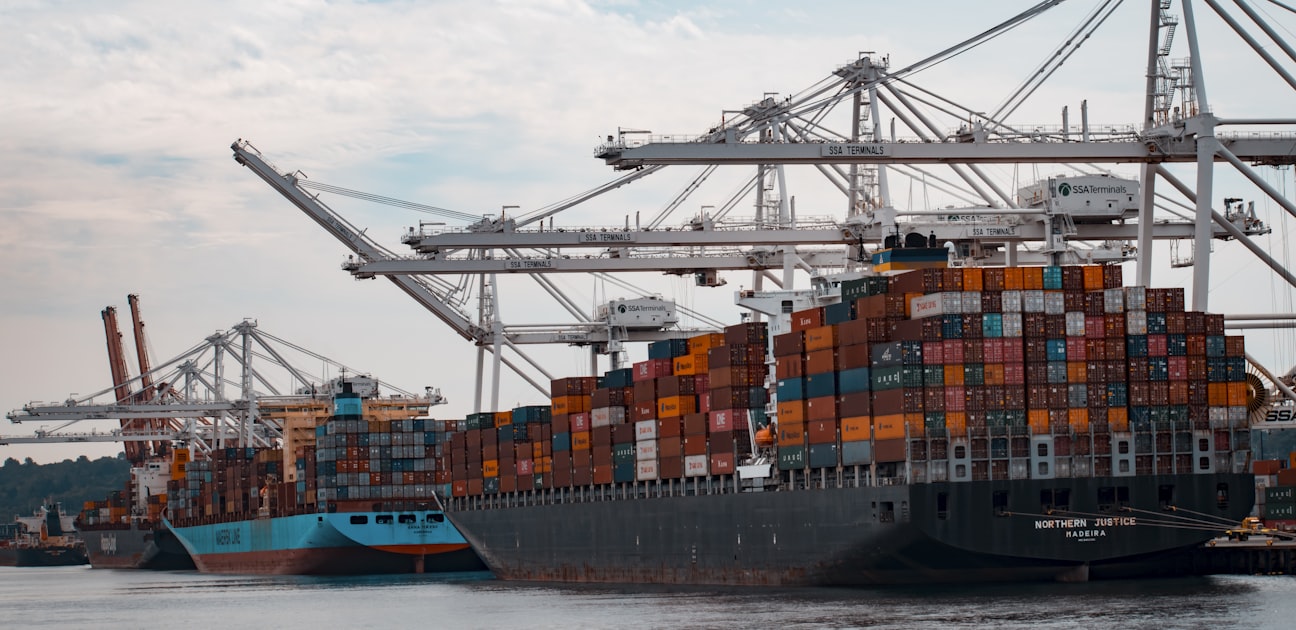
Azerbaijani President Ilham Aliyev made an official visit to Tbilisi on April 6, 2026, meeting with Georgian Prime Minister Irakli Kobakhidze in a summit that underscored the two countries' deepening strategic and economic alignment. The meeting produced new agreements on transport, energy, and digital connectivity — and came at a moment when the South Caucasus corridor is experiencing its most intense international attention since the region emerged as a post-Soviet geopolitical space.
Bilateral trade between Azerbaijan and Georgia exceeded $800 million last year, a figure that both governments described as a baseline to be surpassed significantly as Middle Corridor infrastructure expands and regional transit volumes grow. Azerbaijan's cumulative investment in Georgia now stands at $3.7 billion, making Baku one of Tbilisi's largest individual foreign investors. New investment projects in manufacturing, logistics, and green energy were reported to be under active discussion during the summit.
Prime Minister Kobakhidze stated that "cooperation among the South Caucasus countries opens new horizons for the entire region," pointing specifically to the strategic importance of the Middle Corridor — the Trans-Caspian International Transport Route linking China and Central Asia to Europe via the Caspian Sea, Azerbaijan, Georgia, and onward to Turkey and the Black Sea. "Global geopolitical shifts have made this corridor more important than ever," Kobakhidze added. AzerNews reported that the summit also addressed expanding the capacity of the Baku-Tbilisi-Kars railway, which has seen demand grow sharply in recent years.
The energy dimension of the Azerbaijan-Georgia relationship is equally substantial. Georgia serves as a critical transit state for Azerbaijani oil and gas exports to Europe, with both the Baku-Tbilisi-Ceyhan crude oil pipeline and the Southern Gas Corridor passing through Georgian territory. These pipelines represent strategic lifelines for Europe's energy diversification efforts following the reduction in Russian gas supplies.
The two countries are also collaborating on the next frontier of energy exports: the Black Sea submarine power cable designed to carry Azerbaijani and Georgian green electricity to Romania, Hungary, and deeper into the European grid. That project, backed in part by EU financing, is expected to have a capacity of 1 GW upon completion and could eventually scale to 4 GW of annual exports — a transformative project for both countries' energy export revenues.
Geopolitically, the deepening Azerbaijan-Georgia axis is being closely watched in Moscow, Brussels, and Washington. Carnegie Endowment for International Peace published a March 2026 analysis characterising the South Caucasus connectivity surge as a fundamental rewiring of Eurasian trade and energy geography — one in which Azerbaijan and Georgia are the dual anchors of a new infrastructure architecture that bypasses Russian territory entirely.
For business investors, the Aliyev-Kobakhidze summit signals continued institutional stability in two of the region's most investment-accessible markets. Both governments have consistently prioritised investor protection and infrastructure development over the past decade, creating a track record that international capital markets increasingly reward with lower risk premiums.
The April 2026 meeting is expected to be followed by a joint ministerial commission session before mid-year, at which specific project agreements will be formalised and new memoranda of understanding signed.