Diplomacy
Aliyev's Georgia Visit Deepens Baku-Tbilisi Alliance

August 30, 2026

4
Min

Azerbaijani President Ilham Aliyev arrived in Tbilisi on April 6 for a state visit accompanied by a high-level delegation, underscoring what Georgia's Foreign Ministry has characterized as relations that are "close to allied." The trip comes at a pivotal moment for South Caucasus geopolitics, as both nations deepen cooperation on energy transit, infrastructure, and regional connectivity.
The visit centered on expanding the strategic partnership between Baku and Tbilisi across several dimensions. Energy cooperation remains the cornerstone of the relationship, with Georgia serving as the primary transit corridor for Azerbaijani oil and gas heading to European markets via the Southern Gas Corridor. The two leaders discussed accelerating upgrades to the Baku-Tbilisi-Kars (BTK) railway, which is being expanded to handle up to five million tons of cargo annually as part of the Middle Corridor initiative linking China to Europe.
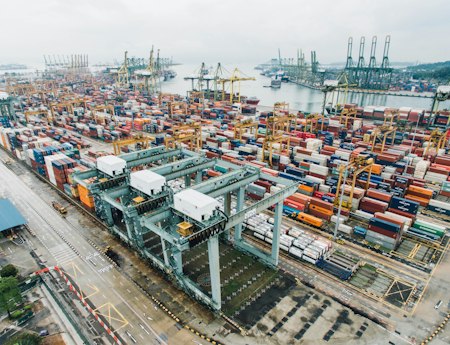
Bilateral trade between Azerbaijan and Georgia has grown steadily, supported by joint investments in logistics hubs and Caspian port infrastructure. Georgian officials highlighted the importance of the Anaklia deep-sea port project, which will serve as a critical Black Sea node for goods transiting the Middle Corridor. Baku has signaled interest in participating in the port's development, which could transform Georgia into a major transshipment hub.
The diplomatic dimension of the visit also carried weight. Aliyev's trip followed his declaration that "peace has already been achieved" with Armenia, and both Azerbaijani and Georgian leaders emphasized the stabilizing effects of the normalization process on the broader region. Georgian Prime Minister Irakli Kobakhidze noted that Tbilisi is uniquely positioned to facilitate economic links between its two neighbors, a role that Armenian Prime Minister Nikol Pashinyan has publicly acknowledged.
Security cooperation was also on the agenda. The two sides discussed border management, cybersecurity, and joint approaches to regional threats. Azerbaijan's growing defense budget and Georgia's aspirations for deeper Euro-Atlantic integration create both opportunities and complexities in their security relationship.
Economic analysts view the visit as a signal that the Baku-Tbilisi axis will remain the backbone of South Caucasus connectivity for years to come. With the Middle Corridor experiencing a 150 percent surge in trans-Caspian rail traffic in early 2026, the infrastructure investments discussed during the summit could have far-reaching implications for regional trade flows.
The visit also touched on cultural and educational exchanges, with agreements to expand student mobility programs and joint research initiatives between universities in both countries.